
Google Unveils Willow – A State-of-the-Art Quantum Computing Chip That Achieves Mindboggling Results
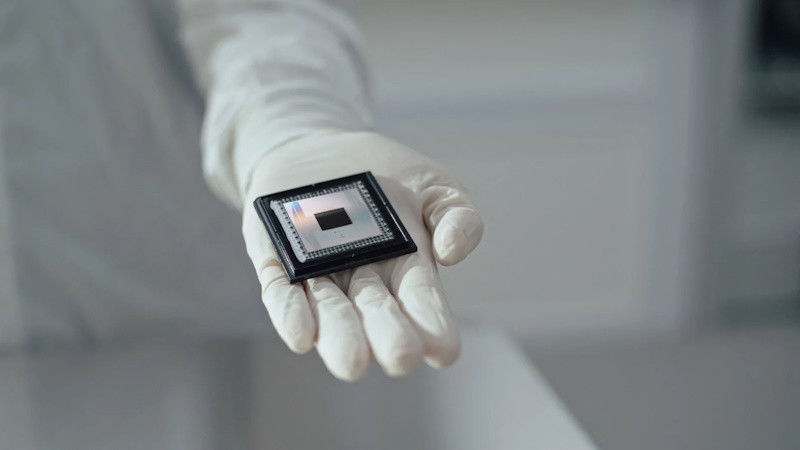
On December 9, 2024, Google’s Quantum AI team, under the leadership of Hartmut Neven, unveiled Willow, a state-of-the-art quantum computing chip that has the ability to not only exponentially correct errors, but also process certain computations orders of magnitude faster than today’s fastest supercomputers. For example, Willow performed a standard benchmark computation in less than five minutes that would take one of today’s fastest supercomputers 10 septillion (that is, 1025) years — a number that vastly exceeds the age of the Universe. Most folks are familiar with classical computing based on binary digits (or “bits”) that can be either 1’s or 0’s. They power everything from video games, to smart phones, to graphics computers, to the most massive data centers. Classical computers underlie all of the digital innovations of the past half-century. Quantum computing, on the other hand, is an entirely new style of computing. Rather than using classical bits, quantum computers use quantum bits, or “qubits.” Qubits behave according to the laws of quantum physics. Instead of being confined to the “either/or” of binary 1’s and 0’s, they can exist as a blend of both. Qubits can store information in states of superposition (multiple states at the same time) of 0 and 1. They can also be entangled with each other to make even more complex combinations — e.g., two qubits can be in a blend of 00, 01, 10 and 11. When you entangle lots of qubits together, you open up a vast number of states they can be in, which provides massive amounts of computational power. Those two special properties enable quantum computers to solve some of the most difficult problems much, much faster than regular, classical computers can. Unlike classical computing chips — which are produced by a huge and well-established industry — quantum computing is a new style of computing that requires Google to make its own qubit chips in-house with superconducting materials in the integrated circuits. By patterning superconducting metals in a unique way, Google forms circuits with capacitance (the ability to store energy in electrical fields) and inductance (the ability to store energy in magnetic fields), along with special nonlinear elements called Josephson junctions. By carefully choosing materials and dialing in the fabrication processes, Google can build chips with high-quality qubits that can be controlled and integrated into large, complex devices. (Image Credit: Google)
Google Unveils Willow – A State-of-the-Art Quantum Computing Chip That Achieves Mindboggling Results
Google has developed a new quantum chip called Willow, which significantly reduces errors as it scales up -- a major breakthrough in quantum error correction. Willow also performed a computation in under five minutes that would take a supercomputer 10 septillion years, demonstrating its potential for solving complex problems beyond the reach of classical computers. This achievement marks a significant step towards building commercially relevant quantum computers that can revolutionize fields like medicine, energy, and AI.
On December 9, 2024, Google announced their latest quantum chip, Willow. Willow has state-of-the-art performance across a number of metrics, enabling two major achievements:
- The first is that Willow can reduce errors exponentially as it scales up using more qubits. This cracks a key challenge in quantum error correction that the field has pursued for almost 30 years.
- Second, Willow performed a standard benchmark computation in under five minutes that would take one of today’s fastest supercomputers 10 septillion (that is, 1025) years — a number that vastly exceeds the age of the Universe.
The Willow chip is a major step on a journey that began 12 years ago. When Google Quantum AI was founded in 2012, the vision was to build a useful, large-scale quantum computer that could harness quantum mechanics — the “operating system” of nature to the extent we know it today — to benefit society by advancing scientific discovery, developing helpful applications, and tackling some of society's greatest challenges. As part of Google Research, the team has charted a long-term roadmap, and Willow significantly moves the company along that path towards commercially relevant applications.
Errors are one of the greatest challenges in quantum computing, since qubits, the units of computation in quantum computers, have a tendency to rapidly exchange information with their environment, making it difficult to protect the information needed to complete a computation. Typically the more qubits you use, the more errors will occur, and the system becomes classical.
However, Google has published research that shows the more qubits that are used in Willow, the more they are able to reduce errors, and the more quantum the system becomes. Google tested ever-larger arrays of physical qubits, scaling up from a grid of 3x3 encoded qubits, to a grid of 5x5, to a grid of 7x7 — and each time, using their latest advances in quantum error correction, Google was able to cut the error rate in half. In other words, they achieved an exponential reduction in the error rate. This historic accomplishment is known in the field as “below threshold” — being able to drive errors down while scaling up the number of qubits. You must demonstrate being below threshold to show real progress on error correction, and this has been an outstanding challenge since quantum error correction was introduced by Peter Shor in 1995.
There are other scientific “firsts” involved in this result as well. For example, it’s also one of the first compelling examples of real-time error correction on a superconducting quantum system — crucial for any useful computation, because if you can’t correct errors fast enough, they ruin your computation before it’s done. And it’s a "beyond breakeven" demonstration, where our arrays of qubits have longer lifetimes than the individual physical qubits do, an unfakable sign that error correction is improving the system overall.
As the first system below threshold, this is the most convincing prototype for a scalable logical qubit built to date. It’s a strong sign that useful, very large quantum computers can indeed be built. Willow brings us closer to running practical, commercially-relevant algorithms that can’t be replicated on conventional computers.
As a measure of Willow’s performance, Google used the “Random Circuit Sampling (RCS) Benchmark.” Pioneered by Google researchers and now widely used as a standard in the field, RCS is the classically hardest benchmark that can be done on a quantum computer today. You can think of this as an entry point for quantum computing — it checks whether a quantum computer is doing something that couldn’t be done on a classical computer. Any team building a quantum computer should check first if it can beat classical computers on RCS. Otherwise there is strong reason for skepticism that it can tackle more complex quantum tasks. Google has consistently used this benchmark to assess progress from one generation of chip to the next — they reported Sycamore results in October 2019 and again recently in October 2024.
Willow’s performance on this benchmark is astonishing. It performed a computation in under five minutes that would take one of today’s fastest supercomputer (the Department of Energy’s Oak Ridge National Laboratory Frontier supercomputer). 1025 or 10 septillion years. If you want to write it out, it’s 10,000,000,000,000,000,000,000,000 years. This mind-boggling number exceeds known timescales in physics and vastly exceeds the age of the universe. It lends credence to the notion that quantum computation occurs in many parallel universes, in line with the idea that we live in a multiverse, a prediction first made by David Deutsch.
Google’s assessment of how Willow outpaces one of the world’s most powerful classical supercomputers, Frontier, was based on conservative assumptions. For example, they assumed full access to secondary storage, i.e., hard drives, without any bandwidth overhead — a generous and unrealistic allowance for Frontier. Google expected classical computers to keep improving on this benchmark, but the rapidly growing gap shows that quantum processors are peeling away at a double exponential rate and will continue to vastly outperform classical computers as they scale up.
Willow was fabricated in Google’s new, state-of-the-art fabrication facility in Santa Barbara, California — one of only a few facilities in the world built from the ground up for this purpose. System engineering is key when designing and fabricating quantum chips: All components of a chip, such as single and two-qubit gates, qubit reset, and readout, have to be well engineered and integrated. If any component lags or if two components don't function well together, it drags down system performance. Therefore, maximizing system performance drives all aspects of Google’s process, from chip architecture and fabrication to gate development and calibration.
Google is focusing on quality, not just quantity — because just producing larger numbers of qubits doesn’t help if they’re not high enough quality. With 105 qubits, Willow now has best-in-class performance across the two system benchmarks discussed above: quantum error correction and random circuit sampling. Such algorithmic benchmarks are the best way to measure overall chip performance. Other more specific performance metrics are also important; for example, T1 times, which measure how long qubits can retain an excitation — the key quantum computational resource — are now approaching 100 µs (microseconds). This is an impressive 5x improvement over previous generations of chips.
The next challenge for the field is to demonstrate a first "useful, beyond-classical" computation on today's quantum chips that is relevant to a real-world application. Google is optimistic that the Willow generation of chips can help achieve this goal. So far, there have been two separate types of experiments. On the one hand, Google has run the RCS benchmark, which measures performance against classical computers but has no known real-world applications. On the other hand, they’ve done scientifically interesting simulations of quantum systems, which have led to new scientific discoveries but are still within the reach of classical computers. Google’s goal is to do both at the same time — to step into the realm of algorithms that are beyond the reach of classical computers and that are useful for real-world, commercially relevant problems.
Google invites researchers, engineers, and developers to join them on this journey by checking out Google’s open source software and educational resources, including our new course on Coursera, where developers can learn the essentials of quantum error correction and help us create algorithms that can solve the problems of the future.
For more information:
https://blog.google/technology/research/google-willow-quantum-chip/
https://blog.google/technology/research/behind-the-scenes-google-quantum-ai-lab/
https://quantumai.google/software
https://www.coursera.org/learn/quantum-error-correction
Astromart News Archives:
https://www.astromart.com/news/search?category_id=3&q=.
This is my personal deep sky observing list. I use it to line up my DSO targets on any particular night:
Check out some of my favorite Words of Wisdom:
https://astromart.com/news/show/words-of-wisdom-my-favorite-quotable-quotes
https://astromart.com/news/show/words-of-wisdom-my-favorite-proverbs-from-around-the-world
Do you enjoy reading these postings?
Then click here and buy the Astromart crew a cup of coffee (and maybe even some donuts):
https://astromart.com/support-options
Funding Member