
Google Unveils Willow – A State-of-the-Art Quantum Computing Chip That Achieves Mindboggling Results
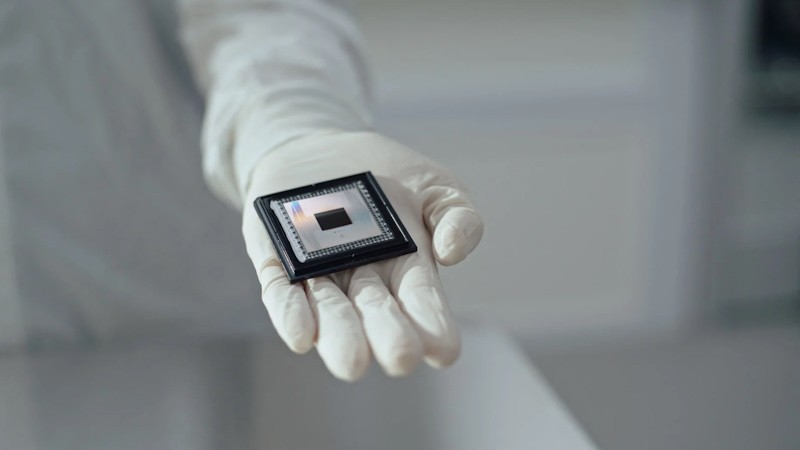
On December 9, 2024, Google’s Quantum AI team, under the leadership of Hartmut Neven, unveiled Willow, a state-of-the-art quantum computing chip that has the ability to not only exponentially correct errors, but also process certain computations orders of magnitude faster than today’s fastest supercomputers. For example, Willow performed a standard benchmark computation in less than five minutes that would take one of today’s fastest supercomputers 10 septillion (that is, 1025) years — a number that vastly exceeds the age of the Universe. Most folks are familiar with classical computing based on binary digits (or “bits”) that can be either 1’s or 0’s. They power everything from video games, to smart phones, to graphics computers, to the most massive data centers. Classical computers underlie all of the digital innovations of the past half-century. Quantum computing, on the other hand, is an entirely new style of computing. Rather than using classical bits, quantum computers use quantum bits, or “qubits.” Qubits behave according to the laws of quantum physics. Instead of being confined to the “either/or” of binary 1’s and 0’s, they can exist as a blend of both. Qubits can store information in states of superposition (multiple states at the same time) of 0 and 1. They can also be entangled with each other to make even more complex combinations — e.g., two qubits can be in a blend of 00, 01, 10 and 11. When you entangle lots of qubits together, you open up a vast number of states they can be in, which provides massive amounts of computational power. Those two special properties enable quantum computers to solve some of the most difficult problems much, much faster than regular, classical computers can. Unlike classical computing chips — which are produced by a huge and well-established industry — quantum computing is a new style of computing that requires Google to make its own qubit chips in-house with superconducting materials in the integrated circuits. By patterning superconducting metals in a unique way, Google forms circuits with capacitance (the ability to store energy in electrical fields) and inductance (the ability to store energy in magnetic fields), along with special nonlinear elements called Josephson junctions. By carefully choosing materials and dialing in the fabrication processes, Google can build chips with high-quality qubits that can be controlled and integrated into large, complex devices.
Comments:
Funding Member
