Irregular Heartbeat of the Sun is Driven by a Double Dynamo

07/18/2015 06:17PM

Irregular Heartbeat of the Sun is Driven by a Double Dynamo
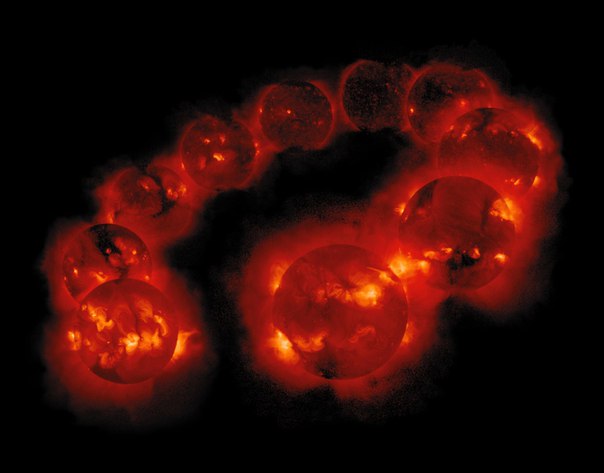
It has been 172 years since a scientist first spotted that the Sun's activity varies over a cycle lasting around 10 to 12 years. But every cycle is a little different and none of the models to date have fully explained the fluctuations. A new model of the Sun's solar cycle, developed by Dr. Valentina Zharkova of Northumbria University in the UK, is producing unprecedentedly accurate predictions of irregularities within the Sun's 11 year heartbeat. The model draws on dynamo effects in two layers of the Sun -- one close to the surface and one deep within its convection zone. Predictions from the model suggest that solar activity will fall by 60 per cent during the 2030s to conditions last seen during the "mini ice age" that began in 1645.


Comments:

<br>Thanks to Robert Yoesle for finding this interesting news item and pointing it out to me.<br><br>Thanks,<br><br>Guy Pirro

  • ks1u [George Blahun]
  • 07/19/2015 08:28PM
It should be noted that Dr. Zharkova never mentioned "ice age" in her paper. She did say Maunder Minimum. Her research is certainly interesting and she is a well regarded astrophysicist and mathematician, but I hope no one thinks this means there is an impending ice age in our near future, even a mini version. The heat now trapped in our atmosphere is likely to far exceed the impact of any reduction in the output from the sun. One of the issues this opens us to is the bombardment of cosmic rays due to a decrease in the intensity of the protective field around the earth an active sun helps provide. As a Ham radio operator, I am not looking forward to a decrease in sunspots. It's always been nice to have and look forward to worldwide communications during sunspot maximums, day and night.
<br>George:<br><br>Yes -- You are correct.<br><br>The term "mini-ice age" was used by the Royal Astronomical Society in their article on Dr. Zharkova's work, but was not used by Dr. Zharkova in her paper.<br><br>For those who may be interested, Dr. Zharkova's paper can be found at:<br><br>http://computing.unn.ac.uk/staff/slmv5/kinetics/shepherd_etal_apj14_795_1_46.pdf<br><br>Thanks,<br><br>Guy<br><br><br><br><blockquote class="blockquote"><div class="italic"><i>George Blahun said:</i><br><br>It should be noted that Dr. Zharkova never mentioned "ice age" in her paper. She did say Maunder Minimum. Her research is certainly interesting and she is a well regarded astrophysicist and mathematician, but I hope no one thinks this means there is an impending ice age in our near future, even a mini version. The heat now trapped in our atmosphere is likely to far exceed the impact of any reduction in the output from the sun. One of the issues this opens us to is the bombardment of cosmic rays due to a decrease in the intensity of the protective field around the earth an active sun helps provide. As a Ham radio operator, I am not looking forward to a decrease in sunspots. It's always been nice to have and look forward to worldwide communications during sunspot maximums, day and night. </div></blockquote>
