Kiss the Sky Tonight -- Month of December 2018
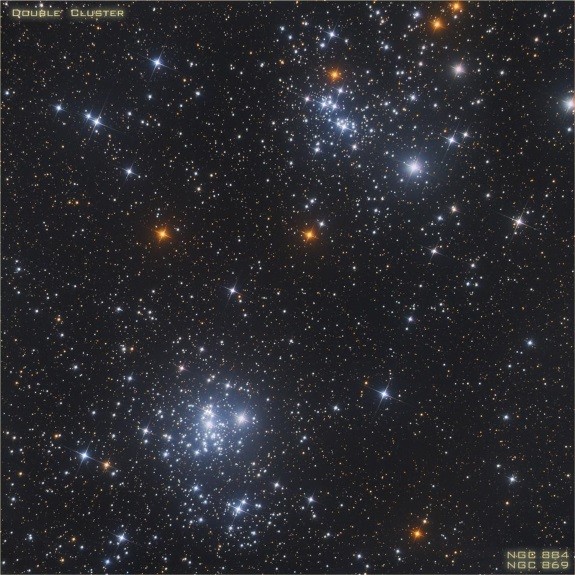
Few star clusters are seen to be so close to each other. Some 7000 light-years away, this pair of open star clusters is an easy binocular target, a lovely star field in the constellation Perseus. Visible to the unaided eye from dark sky areas, it was cataloged in 130 BC by Greek astronomer Hipparchus. Now known as NGC 869 (above right) and NGC 884, the clusters themselves are separated by only a few hundred light-years and contain stars much younger and hotter than the Sun. In addition to being physically close together, the clusters' ages based on their individual stars are similar -- evidence that both clusters were likely a product of the same star-forming region. (Credits: NASA and the Office of Public Outreach – STScI, NASA Jet Propulsion Laboratory - JPL) (Image Credit: F. Antonucci, M. Angelini, and F. Tagliani - ADARA Astrobrallo)
Kiss the Sky Tonight -- Month of December 2018
Welcome to the night sky report for December 2018 -- Your guide to the constellations, deep sky objects, planets, and celestial events that are observable during the month. Saturn’s iconic rings are clearly visible with backyard telescopes in early December. Mercury and Venus appear later in the month. Also look for Eta Cassiopeiae, a double star, with binoculars or a small telescope to discern its gold and blue hues. Finally, don’t miss the mid-December Geminid meteor shower. You could see as many as 60 colorful meteors per hour. The night sky is truly a celestial showcase. Get outside and explore its wonders from your own backyard.
Look for Saturn low in the southwestern sky at dusk, early in the month. Its iconic rings are clearly visible with backyard telescopes in early December. But by the middle of the month, the planet slips into the glare of the Sun.
Mars glints red in the southwestern sky against the stars of Sagittarius. Modest telescopes readily reveal its ocher disk. As the Earth-Mars distance increases throughout the month, it grows steadily smaller and dimmer in the sky.
Two prominent constellations in the December night sky represent notable individuals of ancient Greek mythology. The great hero Perseus holds the head of Medusa the Gorgon. Located in Perseus is M34, an open star cluster about 1,400 light-years away from us. Open star clusters are groups of young stars that all formed at the same time within a large cloud of dust and gas. Look for it with the naked eye or with binoculars in a dark sky.
Queen Cassiopeia was punished for her conceit and vanity by being tied to her throne. Cassiopeia’s “W” shape makes this constellation easy to identify. Eta Cassiopeiae is a wonderful and colorful double star. Use binoculars or a small telescope to discern its gold and blue hues. M103 in Cassiopeia is a fine open star cluster with a prominent red star near the center. Its fan shape is evident in binoculars.
Lying between Cassiopeia and Perseus is the lovely Double Cluster, NGC 869 and NGC 884. This pair of open star clusters is easy to see with binoculars. The Double Cluster resembles a handful of diamonds scattered on black velvet, with a ruby in between.
Look for Venus blazing in the eastern sky before the chilly December sunrise.
In the middle of the month, diminutive Mercury joins Venus in the morning sky, popping briefly above the eastern horizon before the Sun. A modest telescope will show both disks in their moon-like phases, as we see only part of their sunlit sides.
The mid-December night sky hosts the lovely Geminid meteor shower. The shower peaks on the night of December 13 to 14. Under a dark sky, you could see as many as 60 colorful meteors per hour.
The night sky is always a celestial showcase. Explore its wonders from your own backyard.
The following Deep Sky Objects are found in constellations that peak during the month. Some can be viewed with a small telescope, but the majority will require a moderate to large telescope. The following is adapted from my personal viewing list: "The Guy Pirro 777 Best and Brightest Deep Sky Objects."
Constellation: Camelopardalis
IC 342 Galaxy C5
IC 356 Galaxy P127
IC 361 Open Cluster P213
IC 3568 Planetary Nebula P128
NGC 1501 Planetary Nebula Herschel 400 H53-4
NGC 1502 Open Cluster Herschel 400 H47-7
NGC 1708 Open Cluster P129
NGC 1961 Galaxy Herschel 400 H747-3
NGC 2146 Galaxy P130
NGC 2336 Galaxy P70
NGC 2403 Galaxy C7, Herschel 400 H44-5
NGC 2408 Open Cluster P131
NGC 2655 Galaxy Herschel 400 H288-1
Constellation: Cassiopeia
IC 10 Galaxy P77
IC 59 Diffuse Nebula P21 - Gamma Cassiopeiae Nebula (West)
IC 63 Diffuse Nebula P22 – Gamma Cassiopeiae Nebula (East)
IC 166 Open Cluster P217
IC 1795 Diffuse Nebula P122
IC 1805 Emission Nebula P2 Heart Nebula
IC 1848 Emission Nebula P3 Soul Nebula
IC 1871 Diffuse Nebula P136
NGC 103 Open Cluster P137
NGC 129 Open Cluster Herschel 400 H79-8
NGC 133 Open Cluster P138
NGC 136 Open Cluster Herschel 400 H35-6
NGC 146 Open Cluster P204
NGC 147 Galaxy C17 Satellite of Andromeda
NGC 185 Galaxy C18, Herschel 400 H707-2 Satellite of Andromeda
NGC 189 Open Cluster P5
NGC 225 Open Cluster Herschel 400 H78-8 Sailboat Cluster
NGC 278 Galaxy Herschel 400 H159-1
NGC 281 Emission Nebula P4 Pacman Nebula
NGC 381 Open Cluster Herschel 400 H64-8
NGC 436 Open Cluster Herschel 400 H45-7
NGC 457 Open Cluster C13, Herschel 400 H42-1 Owl Cluster
NGC 559 Open Cluster C8, Herschel 400 H48-7
NGC 581 Open Cluster M103
NGC 609 Open Cluster P219
NGC 637 Open Cluster Herschel 400 H49-7
NGC 654 Open Cluster Herschel 400 H46-7
NGC 659 Open Cluster Herschel 400 H65-8
NGC 663 Open Cluster C10, Herschel 400 H31-6
NGC 1027 Open Cluster Herschel 400 H66-8
NGC 7635 Diffuse Nebula C11 Bubble Nebula
NGC 7654 Open Cluster M52
NGC 7788 Open Cluster P139
NGC 7789 Open Cluster Herschel 400 H30-6 White Rose Cluster
NGC 7790 Open Cluster Herschel 400 H56-7
NGC 7795 Open Cluster P23
Constellation: Eridanus
IC 1898 Galaxy P228
NGC 1084 Galaxy Herschel 400 H64-1
NGC 1232 Galaxy P28
NGC 1291 Galaxy P29
NGC 1300 Galaxy P81
NGC 1332 Galaxy P82
NGC 1407 Galaxy Herschel 400 H107-1
NGC 1535 Planetary Nebula Herschel 400 H26-4
NGC 1537 Galaxy P229
Constellation: Perseus
IC 348 Open Cluster P95
IC 2003 Planetary Nebula P237
NGC 650 Planetary Nebula M76 Little Dumbell Nebula
NGC 651 Planetary Nebula Herschel 400 H193-1 Part of M76
NGC 744 Open Cluster P96
NGC 869 Open Cluster C14a, Herschel 400 H33-6 Double Cluster (West)
NGC 884 Open Cluster C14b, Herschel 400 H34-6 Double Cluster (East)
NGC 957 Open Cluster P97
NGC 1023 Galaxy Herschel 400 H156-1
NGC 1039 Open Cluster M34 Spiral Cluster
NGC 1220 Open Cluster P238
NGC 1245 Open Cluster Herschel 400 H25-6
NGC 1275 Galaxy C24 Perseus A Seyfert Galaxy
NGC 1342 Open Cluster Herschel 400 H88-8
NGC 1444 Open Cluster Herschel 400 H80-8
NGC 1496 Open Cluster P174
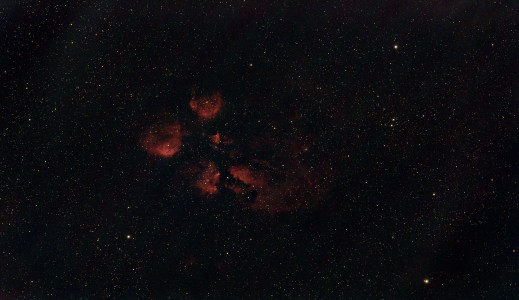
NGC 1499 Diffuse Nebula P44 - California Nebula
NGC 1513 Open Cluster Herschel 400 H60-7
NGC 1528 Open Cluster Herschel 400 H61-7
NGC 1545 Open Cluster Herschel 400 H85-8
NGC 1582 Open Cluster P45
NGC 1605 Open Cluster P239
NGC 1624 Open Cluster P240
Constellation: Taurus
Messier 45 Open Cluster M45 Pleiades
Caldwell 41 Open Cluster C41 Hyades
IC 1995 Diffuse Nebula P64
NGC 1514 Planetary Nebula P120
NGC 1554 Diffuse Nebula P200 Von Struve’s Lost Nebula
NGC 1555 Diffuse Nebula P201 Hind’s Variable Nebula
NGC 1647 Open Cluster Herschel 400 H8-8
NGC 1750 Open Cluster Herschel 400 H43-8
NGC 1807 Open Cluster P65
NGC 1817 Open Cluster Herschel 400 H4-7
NGC 1952 Diffuse Nebula M1 Crab Nebula
For more information:
Northern Latitudes:
http://hubblesite.org/videos/tonights_sky
https://nightsky.jpl.nasa.gov/planner.cfm
https://www.youtube.com/playlist?list=PLTiv_XWHnOZrT_ppDGiT__fI3yjD4t7dI
https://www.cfa.harvard.edu/skyreport
https://www.cfa.harvard.edu/skyreport/whats-new
http://outreach.as.utexas.edu/public/skywatch.html
http://griffithobservatory.org/sky/skyreport.html
http://www.beckstromobservatory.com/whats-up-in-tonights-sky-2/
http://www.jb.man.ac.uk/astronomy/nightsky/
http://blogs.cardiff.ac.uk/physicsoutreach/engagement/the-sky-tonight/
http://www.schoolsobservatory.org.uk/learn/astro/nightsky/maps
https://www.astromart.com/news/search?category_id=3&q=kiss+the+sky&from=&to
Equatorial Latitudes:
http://www.caribbeanastronomy.com/index.php?option=com_content&task=blogcategory&id=30&Itemid=51
Southern Latitudes:
https://www.stardome.org.nz/astronomy/star-charts/
Astromart News Archives:
https://www.astromart.com/news/search?category_id=3&q=.
Do you enjoy reading these News Items?
Then click here and buy the Astromart staff a cup of coffee (and maybe even some donuts):
https://www.astromart.com/support-options