NASA's Dawn Mission Produces First High Resolution Map of Ceres

08/05/2015 08:31PM

NASA's Dawn Mission Produces First High Resolution Map of Ceres
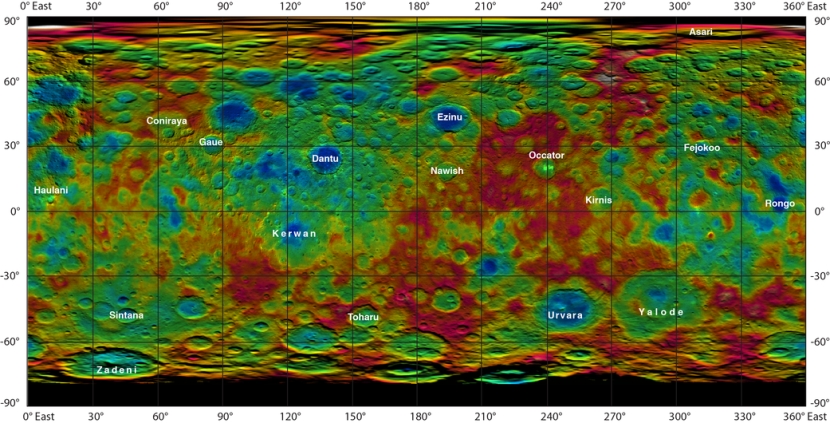
2015 has certainly turned out to be the year of the Dwarf Planet. On March 6, 2015, Dawn made history as the first mission to reach Ceres. Then in mid-July 2015, New Horizons visited Pluto, truly the "Capo di tutti capi" of the Dwarf Planets. Although Ceres is about 40 percent the size of Pluto, it is beginning to show a diverse topography, with height differences from crater bottoms to mountain peaks as great as 9 miles (15 kilometers). Scientists continue to analyze the latest data from Dawn as the spacecraft makes its third mapping orbit. And now some of these craters and other surface features are being assigned official names by the International Astronomical Union (IAU), the inventors of the "Dwarf Planet."


Comments:

  • 1953 [Jeff Blazey]
  • 08/06/2015 03:27PM
While Pluto has captured the public's imagination, as it should, it's a spectacular mission, the Ceres mission has held great interest for me.<br><br>I'm a martian tera-formation enthusiast and I find the idea of having a small planetary body with a very stable low gravity, a composition that could readily support Martian atmospheric modification AND is almost right next door, terribly exciting. <br><br>An Orion type of project (NOT the wimpy one NASA's working on now but the original one from the 60's) could place several manned and/or automated bases on Ceres whose purpose would be to mine Ceres (or some other minor planets) and export materials to the martian atmosphere to set off an extended atmospheric warming and thickening cycle on Mars. Magnetic rail guns could be used to precisely launch the mined material towards Mars. <br><br>No new inventions needed except that manufacturing several kilo-scores of sub-kiloton A bombs might not go over so well with the public and anti-proliferation groups.<br><br>Jeff
