Image of the day

Captured by
Ralph Ford

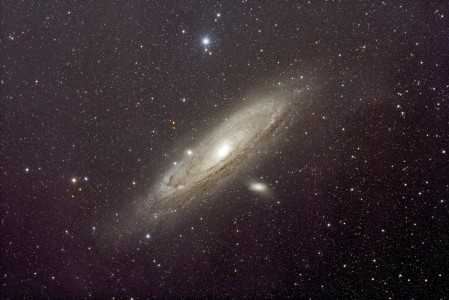
M31 with Redcat 51

My Account

New to Astromart?

Register an account...

Need Help?

Brute force vs. Finesse

Started by Tifft, 07/06/2004 07:51PM
Posted 07/06/2004 07:51PM Opening Post
Always wondered about this.
At what point in refractor size does brute force (aperature) equal finesse (quality optics)?
Would a 6" Meade, Celestron, Orion, etc. decent achromat give the same/better/worse view than a 4" top notch TeleVue, Takahashi, A.P., etc. apo?
At some point size wins out, if taken to the extreme. Forget all the very valid arguments on portability for the smaller scope, and the brag factor.
Anybody ever compare side by side?
Clear skies
Tom

Posted 07/06/2004 08:31PM #1
Tom,

See Message #226406 in the Refractors forum for some information that will be helpful to your question. In fact, the entire thread has some useful discussion that should be of interest to you.

Don
Posted 07/06/2004 08:42PM #2
Since I make various size scopes, both refractor and reflector, here is my opinion:
It all depends on your local seeing conditions. I'm assuming that you are talking planetary and not deep sky. There are many times here in the midwest that my 5" F8.35 refractor shows clean crisp views of planets and double stars. It is usually a lot cleaner than my 8" F12.5 Mak-Cass and my 10" F14.6 Mak-Cass. The reason is that there is normally always some upper level disturbance in the air here. It is unusual for the air to be really steady in the Midwest.

My 6" refractor beats all three in image clarity 90% of the time at my location. It has just enough more aperture to edge out the 5 incher, but not so much that it is affected by the local seeing. Going to a 7" refractor at my location usually produces less satisfying views than the 6", but better than the 8" Mak.

Going down to Florida in the Keys, the opposite is true. The 10" Mak-Cass beats all the others 95% of the time.

All five of these instruments are figured to very high Strehl and are well below the diffraction limit with ultra-smooth optics.

Roland Christen