
Anyone ever just didn't want to put away the scope because they are addicted and followed through into the daylight and bag some bright stars just for the fun of it and maybe a planet like Saturn with their goto scope?
That's just what I did this morning, the Sun rose and I punched in Saturn, and there it was, faint but visible. Then I bagged Arcturus, Pollux and Castor and back to Saturn. This was as late as 11:15 AM.
The way to do it is to have the scope already dialed in before sunrise and key is to have a wide field low power eyepiece already focused and locked in the scope as focusing is very difficult if not impossible if your goto is slightly off and then finding the target star is just about impossible, because even if it is the field of view your eye won't find it easily if out of focus and you tend to past focus and not see it.
This was done with the lowly LXD-55 which I had aligned the previous night at about 9 PM and had not once performed a sync! I actually feel doing a sync throws off the averaging and limits you to that part of the sky synced and so you are always having to sync on a new location to have accuracy.
Anyway thats the semi technical part, the main reason for the post is, you don't have to put that scope away just yet because the Sun came up and it may surprise many that you can see stars in the day! (This morning was exceptionally clear as was the atmosphere all day).
Greg
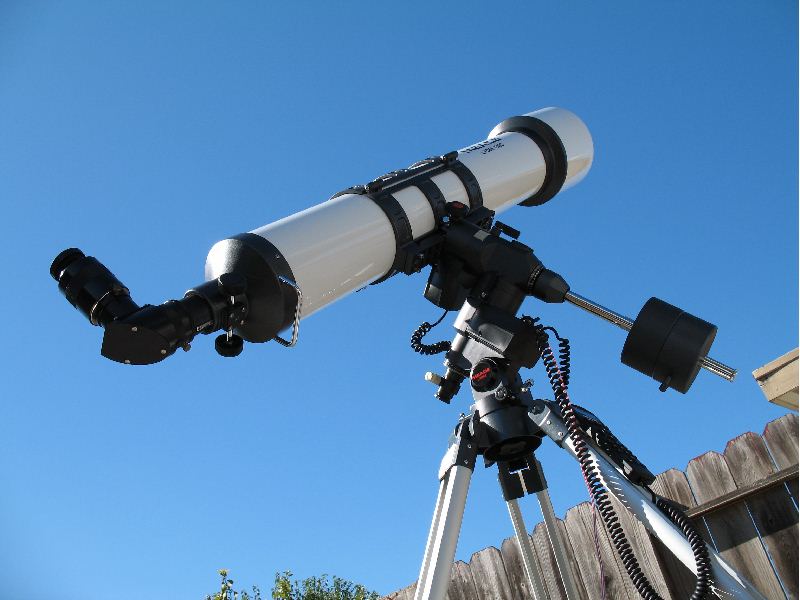
That's just what I did this morning, the Sun rose and I punched in Saturn, and there it was, faint but visible. Then I bagged Arcturus, Pollux and Castor and back to Saturn. This was as late as 11:15 AM.
The way to do it is to have the scope already dialed in before sunrise and key is to have a wide field low power eyepiece already focused and locked in the scope as focusing is very difficult if not impossible if your goto is slightly off and then finding the target star is just about impossible, because even if it is the field of view your eye won't find it easily if out of focus and you tend to past focus and not see it.
This was done with the lowly LXD-55 which I had aligned the previous night at about 9 PM and had not once performed a sync! I actually feel doing a sync throws off the averaging and limits you to that part of the sky synced and so you are always having to sync on a new location to have accuracy.
Anyway thats the semi technical part, the main reason for the post is, you don't have to put that scope away just yet because the Sun came up and it may surprise many that you can see stars in the day! (This morning was exceptionally clear as was the atmosphere all day).
Greg
Attached Image:


 That's hard core, man!

