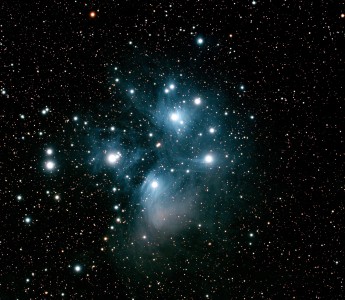
Image of the day

Captured by
Philip Imbrogno

Pleiades M 45 with the Pleiades 68

My Account

New to Astromart?

Register an account...

Need Help?

Help! I'm getting my equations mixed up!

Started by benkokes, 09/28/2005 09:54PM
Posted 09/28/2005 09:54PM Opening Post


I was told that to find the focal length of a scope, you multiply the Aperature by the focal ratio. So a typical 8" cassegrain telescpe has a focal ratio of 80" (of course the ratio is f/10).. Now using this equation, It would follow (to me, at least) that the larger the aperature, or primary mirror, the longer the focal length would be to keep the same f-ratio. When I look at mirrors that are about 20", it seems to have a ratio of 4.5, which would shorten the focal length(to about the same as the 8" f/10 reflector). I thought that when you do that, you dont collect as much light???

So why on earth is a smaller f-ratio better for collecting light? Or is it some sort of optical distortion issue (a less severe curve on the primary mirror somehow distorts the light less???)

thanks!
Posted 09/28/2005 10:17PM #1
Light collection as you describe it is a function of aperture, not a function of focal length.
Please see articles pages on this site.
Posted 09/28/2005 11:24PM #2
>When I look at mirrors that are about 20", it seems to have a ratio of 4.5, which would shorten the focal length(to about the same as the 8" f/10 reflector). I thought that when you do that, you dont collect as much light???
----

The amount of light collected is simply the amount of light that falls on the mirror, the larger the mirror the more light.

The focal length of a simple scope is the distance from the objective to the place where the light is brought to focus, the "focal point."

The focal point and focal ratio have nothing to do with how much light is collected...

The reason most 20 inch scopes are F4 to F4.5 is simply because it makes the telescope shorter and more managable.

A 20 inch F4 Newtonian will be about 80 inches long. As scope this size doesn't require a tall ladder. Were this same 20 inch scope F10, it would be about 200 inches long and the eyepiece could be 18 feet or so in the air, pretty scary at night.

Light gathering = Aperture x Aperture

jon
Posted 09/29/2005 06:03AM #3
Ben,

You said So a typical 8" cassegrain telescpe has a focal ratio of 80" (of course the ratio is f/10).. when you meant to say So a typical 8" cassegrain telescpe has a focal LENGTH of 80" And, if you meant focal length, you are right.

The amount of light one gathers is generally dependent on the aperture. It determines how faint a star one can see. But, as has been pointed out, the larger apertures usually come with shorter focal ratios (lower numbers). This is partly for convenience--it they did not, the tube wouold be too long, and the ladder too high.

So, why does one want more focal length--Well, focal length determines magnification, for any given eyepiece. The more focal length, the more magnification.

Also, it is harder to make a quality short focal ratio telescope. It is much easier to make an F10 than an F4.5.

Alex
