Image of the day

Captured by
Byron Davies

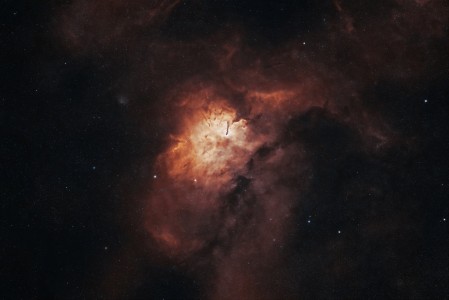
Sh2-86 (NGC-6820)

My Account

New to Astromart?

Register an account...

Need Help?

"Quantum" step telescope apertures?

Started by BoyntonStu, 03/09/2006 02:25AM
Posted 03/09/2006 02:25AM | Edited 03/09/2006 02:26AM Opening Post
Quantum Theory states that there are specific energy steps.

When I read about telescope apertures, they seem to also fall into noticeable steps.

for example: 10" or 12" Dob. Not too much difference, I am told.

My question: What are the steps whereby the next step gets us into the Law of diminishing returns and we would not make that purchase?

If you have a 4.5 would you bypass a 6" and go to 8"?

Is it 4.5", 8", 12"

and 6", 10", 16"


Posted 03/09/2006 02:37AM #1
I have owned over the last 5 years, the 4.5", the 8", the 10", and the 12" and while I have never owned a 6" I would agree that you pretty much hit the nail on the head with increment steps that a person might want to take, except that I think you may have forgotten 36" scope in there. 8)

Real men play Golf
Posted 03/09/2006 02:47AM #2
IF I understand it correctly, each magnitude of star brightness is approximately 2.54 times dimmer than the previous step. Therefore, to gain one magnitude of light gathering power, the next bigger instrument than the one you now have MUST have at least 2.54 times the area of the current objective or mirror. Say a 10 square inch mirror will let you see "x" magnitude, to go one more magnitude dimmer, you need 25.4 square inches.

I am sure there is someone brighter than me out there that can either affirm or correct my statement.

FWIW,
bill
Posted 03/09/2006 05:50AM #3
Stu,

While it is fun to speculate about why telescope blanks come in such a gradation, I think the idea has more to do with increments of 50 mm.

Now, how much do you need to jump in ortrder to see a difference? I don't hink that has been determined. In a camera, it was generally considered an F-Stop, which is the doubling of the amount of light hitting the film. Yet, through the years, camera have evolved settings of half and then third of an F stop.....So, I think there is no set answer. It is just a question of what you like.

I would, in general, I not upgrade from one aperture to another unless there were a difference of 1.414 from one to the other (A doubling of the light). But, that is only if aperture is the only thing I am considering. It may be the next step up is better crafted, or lighter, or something. But then I am not upgrading based on aperture anymore.

Alex
