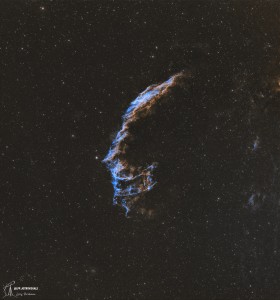
Image of the day

Captured by
Lawrence Parchman

Eastern Veil Nebula (NGC 6992) - Wide View

My Account

New to Astromart?

Register an account...

Need Help?

Shapes of Open Clusters

Started by markvcostello3, 03/27/2012 09:24PM
Posted 03/27/2012 09:24PM Opening Post
I was out for about an hour and a half last evening with my 5" achro refractor. The waxing crescent moon had lowered to the point it was hidden by all the trees in my back yard, so I turned my attention to some open clusters: M36 and M37, having observed M35 and nearby NGC 2158 recently. I got to thinking that a lot of these open clusters are fairly irregular in shape and that begged the question: why? Presumably they are true clusters and so linked to each other by gravity. But unlike globulars, they are not spherical (or ellipsoidal) in shape but quite irregular and not even convex (that is to say that to some extent some clusters are "star shaped"). What is the prevailing theory for the reason for their shape and how they got that way?

Thanks in advance for your responses.


Mark Costello
Matthews, NC, USA

"I hear you're mechanically inclined. Did you ever do anything with perpetual motion?"

"Yeah, I nearly had it a couple of times."
Posted 03/27/2012 10:23PM #1
My guess would be the amount of stars. With globulars having hundreds of thousands of stars I think there is enough mass to form a center of gravity about which the sphere is bound. Also globulars are mostly outside the plane of the galaxy and don't get disturbed as much as open clusters. With open clusters having 10s to thousands of stars maybe there isn't enough mass to form them into a sphere. Something akin to planets having enough mass to form a sphere and much smaller bodies not.

Andreas

DSOs observed:
NGCs 2005, ICs 103, Other 70, Palomar GCs 6, Abell PNs 12, Herschel 400: 316.
Equipment
Celestron CPC 1100, Lunt 60mm Ha Solar Scope
Posted 03/28/2012 12:47PM #2
Open clusters are batches of new stars that have just formed out of molecular clouds. They don't have enough mass concentration to stay together and get torn apart by tidal forces in the galaxy. My guess is that the shapes we see are the result of the shapes of the gas clouds and maybe one star's formation triggering another one. I'm sure if you looked through some astronomy textbooks you'd find a better explanation.
Posted 03/29/2012 12:19PM #3
Hi, Mark -- There's more to be learned about globular clusters. I've read that most are composed of 'metal' poor stars which means that they formed longer ago than stars in open clusters. And it's been suggested that some globular clusters are actually remnants of minor galaxies which were incorporated into our Milky Way galaxy. So, they may be very different animals than open clusters.

Bob Polcyn
