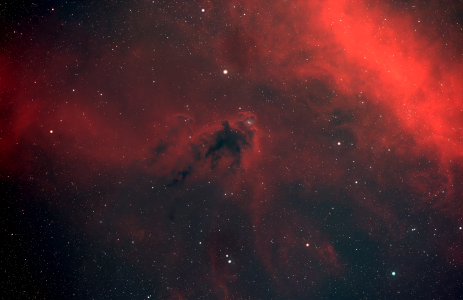
Image of the day

Captured by
Shane Yarnall

LDN 1622

My Account

New to Astromart?

Register an account...

Need Help?

M81

Started by SunSpot51, 04/16/2007 12:32AM
Posted 04/16/2007 12:32AM Opening Post
Hi all,

The nice thing about early attempts with DSO is there is always room for improvement. Here is my first attempt at a galaxy with my ST2000 camera. I am sure I will do better. The seeing was not good (FWHM was about 4.5"), but guiding was good. Details are on the image. I'm guessing I probably need more than 65 minutes, but I'm not sure if 10 or 15 minute subs would have been better than my 5 minute subs. Processing fuzzies has some differences from processing stars... **grin**.

Comments and help always welcome.
Paul Maxson

http://web.gccaz.edu/~pmaxson/DSO/M81.jpg

Paul Maxson
Moderator - CCD Imaging and Processing/Solar System
Celestron C14, Mewlon 250, Orion EON120, ASI120MM, Flea3.
http://www.sunspot51.com
Posted 04/16/2007 12:48AM | Edited 04/16/2007 12:48AM #1
Nice image Paul,

I usually like to do a few tests before I commit to a full color image myself.

I am a believer in the magic number for your scope/camera/subject combination. My E160 which is 3.3 seemed to like 10 minute subs for my M51 images. I use the information window in my software to see if I have maxed out pixels in areas of interest and work around that. Compare the information with really short ones and go long. smile With the Ha filter my FS60 loved 33 minute subs. The darks were hell though.

smile
Posted 04/16/2007 09:46AM #2
hi Paul,

with a poor seeing like You encountered that night, You sure made the very best out of it.
I understand (some guys told me) st 2000 is quite a "noise-ball".
You know this guy?
http://hubble.heim.at/
he uses a st2000 for many years now, and he told me what he does do reduce noise.
the single subs should therfore be longer,...some 10 minutes.
and
he creates a master dark out of as many single darks as light frames.
the good thing in SBIG ccd is, the darknoise is quite constant, so You can draw those at home,...choosing exactly the same temperature of the chipas used in the night of imaging.

anyway - this image shows quite a nice amount of details! so You are off to a great color image soon,...?

best wishes
dietmar

clear skies, guys!
Dietmar
---
www.stargazer-observatory.com
Posted 04/16/2007 12:19PM #3
Paul,

Before the days of CCDWare and the CCD exposure calculator, I just took subs as long as my setup could take without causing excessive blooming on my NABG cameras. For galaxies at least, and not counting the bright ones like M31, 10 minute subs seemed to work pretty well for me. And again, this was with more sensitive NABG cameras! You have an EM200, don't you? Your Orion 100ED should ride well on that.

Eric
Posted 04/16/2007 04:08PM #4
Hi Paul,
Thats a good start!
I shot this awhile back and boy,did I have a hard time trying to process it.I think it is a tough one.

I also used to use the 2000xcm and found for faint stuff that 15-20 minute subs worked well.I also used an IDAS lps for IR blocking,it worked well.

Jason
