Image of the day

Captured by
John Roach

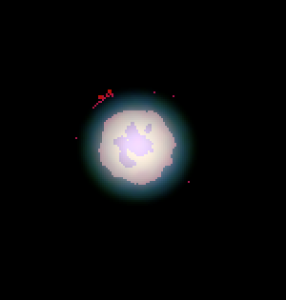
Enhanced Uranus showing Polar Cap and possible Aurora

My Account

New to Astromart?

Register an account...

Need Help?

What makes a good astrophoto

Started by Alex McConahay, 10/19/2005 12:35AM
Posted 10/19/2005 12:35AM Opening Post
I've been doing some research to get ready to present a program on astrophotography. And I have a fundamental question for which I have not found a comprehensive answer. I've looked at books and websites, and can find lots of comments about how to take and process astrophotos......But I find nothing to tell me what the goal is.

Now, I could say "pretty." But what does that mean?

When you get an exposure out of your camera and start to process it, what are you trying to get out of it? Where are you headed?

Alex
Posted 10/19/2005 02:11AM | Edited 10/19/2005 02:23AM #1
Hi Alex,

I agree with what Stu and Warren have said previously. You ask "what makes a good astrophoto"? Well I ask "what makes a good photo"? If you intend to document a specific place and time with a camera you can do it two different ways: a snap shot or a portrait. Many people have taken pictures of Yosemite, but only Ansel Adams transcended beyond the norm to create the art of Yosemite. He did not document Yosemite by taking snap shots but by creative, artistic portraiture. He manipulated the capture by placing himself deliberately in space and time, he used filters and novel techniques -- he documented the "personality" of his granite subjects.

What makes a good astrophoto? It depends on what you want out of it. If you are interested in the objects documentation then you take a "snap shot". If you are interested in composition, form, color, texture, "personality" then you take a celestial portrait. You carefully set up the place and time, the equipment and control all that you can control to get that piece of art.

I entitled my astroimaging website "Painting with Star Light", because that is what I try to do. Yes, I have taken "snap shots", but now I strive for art (I don't always get it, but I still strive).

Best,

Tom Davis
Inkom, ID
www.tvdavisastropics.com

Starsearch Observatory
Lat 42N 47' 00" Long 112W 10' 47"
Elev 1752m
www.tvdavisastropics.com
Posted 10/19/2005 02:31AM #2
Alex, thank you for bringing up this GOOD question to the Forum... I really enjoy reading the responses that our fellow Astrophotographers have to offer...

Clear skies to all! 8)

Ivan Gastaldo 8)
Coconut Creek, FL

Ivan's Observatory
Lat 26N 16' 48" Long 80W 10' 48"
[COLOR="Red"]Personal Website:[/COLOR] http://www.ivangastaldo.com

CCD Imaging and Processing/Deep Sky - Moderator
I like to complain about everything - Moderator
Posted 10/19/2005 01:38PM #3
hi,

First the technical parts must be right. Good guiding, good focus, a well collimated scope with good baffling and so on.

>>>> Composition is very important to make an beautiful astrophotograph. This may requires the right FL for the object being photographed. M31 looks best with short FL instruments and so do open clusters. A cluster surrounded by a rich star field has a lot of interest, while a close up of a cluster can be quite boring. Globular clusters can be done either wide filed or close up high resolution.

Galaxies and planetary nebula generally look better to me with long FL high resolution images. An exception is galaxy groups such as the Leo Trio or others that have several galaxies close together and these are presented in a more interesting fashion with wide field images.

>>>> Processing the images can make or break an astrophotograph. Too often the images are grainy with a low S/N ratio. Noise reduction software helps but even better are long integration times.

The photo should look "natural" and too often they are over sharpened giving them a "computer" look. Try and balance the amount of detail you pull out of the image with a natural overall appearance.

Color balance is important. Astronomical objects do have natural hues such as the teal green in planetary nebulas, the red of H alpha regions and the blues of reflection nebulas and colors in between where they overlap. Most importantly color saturation of astro objects is subtle and too often we oversaturate the colors in the image. This of course is an artistic processing choice but I tend to favor subtle colors.

>>>> Monochrome images such a H alpha and straight lum images can be most interesting. The key here is to present them with a wide latitude of grays and don't make then too back/white with few grays in between, make sure all the shades of gray are there.

I'm sure there are many other things that come into play , but this is my short list.

clear skies,

Larry Citro
