Image of the day

Captured by
Byron Davies

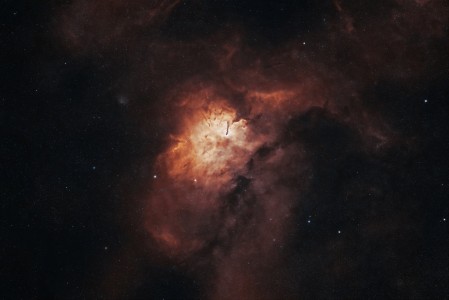
Sh2-86 (NGC-6820)

My Account

New to Astromart?

Register an account...

Need Help?

To all DSO imagers, question... ;)

Started by IGastaldo, 12/13/2004 07:18PM
Posted 12/13/2004 07:18PM Opening Post
Well, there are many that seem to believe that AstroImaging is a piece of cake, and that you should be getting pretty decent shots within a week (or two) of using your brand new equipment. (bare in mind, user has no previous experience, besides what they have read here or there...)

To all my Pro and Semi-Pro Astrophotographer friends out there...

HOW LONG BEFORE YOU WERE "REALLY" SATTISFIED WITH YOUR FIRST CCD SHOTS?
HOW LONG BEFORE YOU "REALLY" KNEW HOW TO USE YOUR CAMERA?
(referring to first CCD camera/experience)


I'm doing this just to have a rough point of reference, and to make things clear to some, that I guess expect to get first-class results out of the box.


Thank you for your attention, and clear skies!


Ivan
8)

P.D.
I'm having a blast with the DSI, lots to learn (not that my shots are great... at least not yet), and man, where do the hours go? yesterday I played with it for 4 hours straight, and could not believe how fast they went!

Ivan Gastaldo 8)
Coconut Creek, FL

Ivan's Observatory
Lat 26N 16' 48" Long 80W 10' 48"
[COLOR="Red"]Personal Website:[/COLOR] http://www.ivangastaldo.com

CCD Imaging and Processing/Deep Sky - Moderator
I like to complain about everything - Moderator
Posted 12/13/2004 07:58PM | Edited 12/13/2004 10:03PM #1
Ivan,

It took me at least a year of trial and error (lots of error) to begin to be somewhat happy with my images. I'm sure this would depend on how often you image, what equipment you use, what objects you try, and how savvy you are at this imaging game.

I've been imaging over three years now, and I still struggle, particularly with the challenges of processing. Still, I'm not a visual astronomer. I like pretty pictures. Even my first images done with film motivated me to keep going. It has been quite a ride (my wife would add "quite an expensive ride!).

Even though it can be challenging, imaging is still fun. Keep it fun. Remember, this is a hobby!!

Tom Davis
Inkom,ID

My latest:

Attached Image:

tvdavis's attachment for post 85874

Starsearch Observatory
Lat 42N 47' 00" Long 112W 10' 47"
Elev 1752m
www.tvdavisastropics.com
Posted 12/14/2004 12:05AM #2
Well Ivan, as most have said so far, its going to take time. I've been imageing for a couple of years. There have been times when I was so frustrated trying to learn all this stuff I felt like just quitting. But the next clear night I was back out side.
We love what we do. All of us have dedicated ourselves to this hobby to some degree. My advice. Stay within your means. Acheive your personal best and as hard as it may seem some times, try to have fun. The sky aint goin nowhere smile
Posted 12/14/2004 12:28AM #3
Ivan, I has taken 5 years and I still am not sure I knwo what I am doing :-) Actually, someone asked me the same question a year or so ago so I looked back at my early images and built a quick we page. The reality is that it takes probably a year or so to nail down imaging, autoguiding, focusing and finally processing. If you are luck enough to afford a good mount and a good scope your learning curve will be shorter.
Chris Woodruff
http://c-woodruf.tripod.com/early_images.html
Posted 12/14/2004 12:32AM #4
Guys, seems as some of you might have understood my questions as if I WAS the one thinking all this (specially the "piece of cake" section)... and I'M NOT... (I'm pretty much asking for others to see, and for me to keep as useful info) wink

I DO KNOW what it takes, and believe me, I'm not one to drop the ball when it comes to challenges..., but I've seen lots of posts here & in some other forums in which members believe that they should be getting drop dead gorgeous shots within the first week of CCD imaging... or the product is just garbage! (without the required experience/equipment mind you...)

I know that marketing strategies from certain manufacturers could be blamed for some of this, as they portray some products as some magical piece of equipment, plug it and you'll be shooting like a Pro in no time at all... (to me, marketing is somewhat like politics... you just can't believe it all!)

I certainly DO APPRECIATE all of you and your hard work behind the awesome images you post here on a daily basis.
I DO KNOW how much work you put behind each shot... and what kind of equipment goes behind it, and also what to expect from such combination.
After all, unless you keep your expectation according to your experience/equipment, you are setting yourself up for quite a frustrating ride...


Thank you all, very much, for you input.


Ivan
8)

P.S.
Keep those GREAT DSO shots coming!

Ivan Gastaldo 8)
Coconut Creek, FL

Ivan's Observatory
Lat 26N 16' 48" Long 80W 10' 48"
[COLOR="Red"]Personal Website:[/COLOR] http://www.ivangastaldo.com

CCD Imaging and Processing/Deep Sky - Moderator
I like to complain about everything - Moderator
Posted 12/14/2004 02:39PM #5
Hi Ivan,

There are a number of variables here, but the same stuff applies to everyone - so it pays to ask smile. It is quite a long learning curve, even for someone that's had previous experience in photography and image processing. Assuming no previous experinece though, the learning curver gets even longer and more frustrating. The important thing is to take very long, hard looks at the images and be certain that you can ascertain wnat went wrong so it can either be corrected or avoided in future sessions. Without that there can be no improvements.

How long to be "really" statisfied with your images? With the first sharp one, while knowing that you have learning curve limitations, accepting them and best, knowing that there will always be something that you can improve on in each and every following image.

How long before you "knew" how to use your camera? The first time out. You get to know your camera inside the house in daylight. Knowing how to best use the whole mechanical/electronic/acquisition system is a completely different story - this takes quite a while. Depending on the complexity of the system I would say over six months if you're lucky and the weather co-operates. This is actually one of the easier parts of the imaging process and once learned, the workflow can be pretty automatic (and boring).


IMHO Astro-imaging can be broken down into six parts: Research, Planning, Mechanics, Acquisition, Processing and Evaluation.

Design a good workflow around these pieces and the results will come a lot quicker.

Best,

Jose Suro
Posted 12/14/2004 03:03PM #6
Hi Ivan

That depends on what your goals are. To be satisfied with " your first " images assumes the question is beging asked from a beginners viewpoint ( some of the best imagers in the world are never satisfied )

I would think this question is the same as asking how long does it take to learn the basics of imaging processing which include

image reduction ...using calibrated bias, flat and dark frames on the raw images

learning the basics of aligning and stacking images to get better S/N ratio ( this implies you know how long each is optimal for your system)

if you live in a light polluted are .. then learning the basics of gradient removal

learning the basics of nonlinear stretching of the images such as gamma stretch, log and DDP

learning the basics of noise removal

learning the basics of sharpening the image using deconvolution techniques and unsharpmasking

THIS ASSUMES MONOCHROME IMAGING, FOR COLOR ADD

learning the basics of background normalization
gradient removal in color images is much more difficult
learning basic lrbg combine procedures
learning color balancing techniques

So how long ... about 1 year at a minimum


How long for camera control ...

this impilies you have your mount optimized for imaging ... including good polar alignment, good balance, good pec training

for unguided exposures the camera techniques can be learned in a few months
if you want to autoguide for longer exposures then add several more months.

This is based on my experience. To get to higher levels of processing using mor complicated progams such as PhotoShop well add a few more years.


clear skies,

Larry Citro
