Folks,
I have read the various texts by many, and I think it is excellent that we have a good discussion about these things. A few things;
First, I understand why Roland and Damian think the way they do. Specifically, the reason we think differently is not because *I* haven't imaged under poor skies, but rather, because *they* don't have night after night of laminar flow experience to draw from. Once the atmosphere starts quieting down, it then falls on the optics, operator, camera, and processing technique to make the image a success. I have had the luxury of many sub-arc second nights to compare instruments, and I assure you all - the optics absolutely positively make a difference. I regret that some of this discourse was precipitated by a mis-quote of sorts by Roland; anyone who read my original post knows that I never dismissed the importance of atmospherics to imaging. But I, for one, know for a fact that the atmosphere isn't everything.
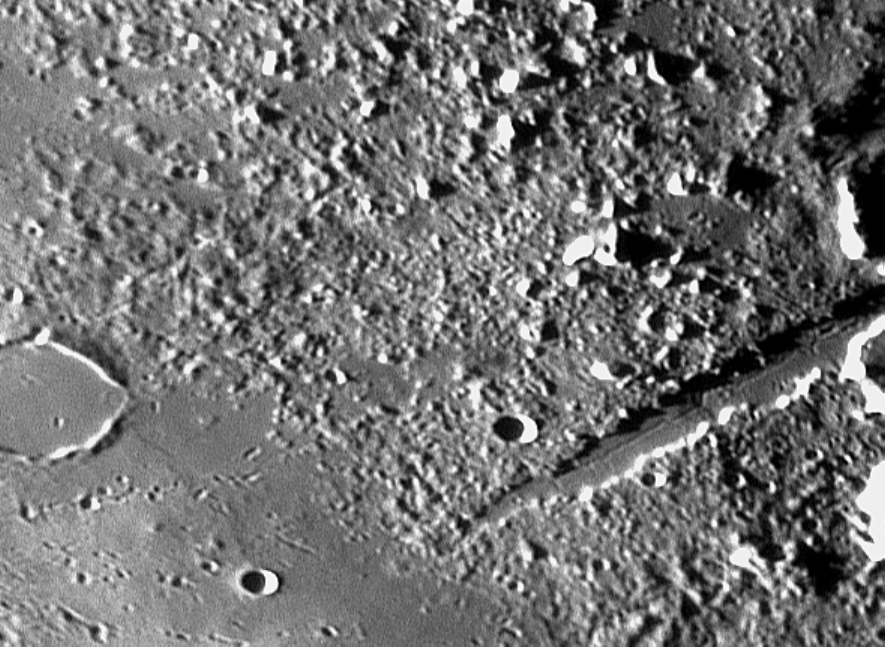
Secondly, the entire effort of high-resolution imaging is a statistical trial; sooner or later, all points on Earth will fall under laminar flow. The question is how often, and will one be able to catch it. The reason webcams have been so useful in planetary imaging, is because they allow more frequent, and swifter sampling of the atmosphere. Look at it this way; the probability of catching laminar flow is far greater if you are sampling 10x per second (i.e.; 10 frames per second), for only 1/30th second, than if you are sampling once every SIX seconds, for .4 seconds (my sampling rate and exposure time when shooting Jupiter at f/33.). The probability of a .033 second window of laminar flow occuring, is an order of magnitude greater than a window lasting .4 seconds. The burden then falls on the camera, and the optics to make the best use of this greater sampling power. A perfect example of this is Wes's recent shot of Plato. Using his excellent 18" with Zambuto optics, Wes was able to record exceptional detail on the crater floor, and to my recollection, he doesn't live in Florida, but right smack in the middle of the country, in Oklahoma. Note, however, that he does have excellent optics. The webcam allowed him to sufficiently sample the atmosphere to catch enough instances of laminar flow, to overcome its low s/n and make a hi-res image. The result is an image with well below arc-second resolution, which I doubt could have been done with a 60mm Tasco in Florida, as Roland and Damian seem to suggest. In fact, practically *ALL* of his images shot with Carl's mirrors carry the mark and air of exceptional quality, and I, for one, don't think it's an atmospheric fluke. You guys with Carl's mirrors have real potential in your hands, so don't let *ANYONE* tell you that the great level of quality you posess won't amount to anything in imaging.
As webcams become better, and better, they will require fewer, and fewer frames to realize the current level of resolution. Eventually, it will be possible to utilize a single frame to achieve maximum resolution, owing to improvements in s/n ratio, and full detector well depth. Combined with even faster downloads, more accurate selection software, and larger hard drives, imagers will be able to literally sample an entire night's seeing at their leisure, picking that one frame that happened to be shot just when the atmosphere went *PERFECT*. Under such circumstances, there will be practically no limit with regard to useful optical quality, and aperture. The bigger the better, and unlike my previous philosophy that a 10" - 12" is about the practical limit, I believe that guys running around with 30"s will have a truly realistic chance of seeing the full potential of their optics realized....and that will be a glorious day (or night) indeed.
Maurizio