Image of the day

Captured by
Philip Imbrogno

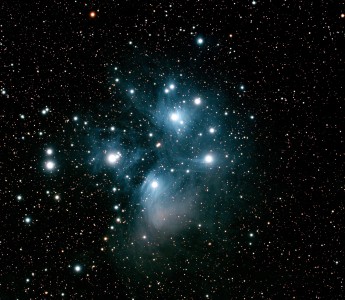
Pleiades M 45 with the Pleiades 68

My Account

New to Astromart?

Register an account...

Need Help?

I'm new and would like some opinions....

Started by belbakri, 02/14/2006 04:51PM
Posted 02/14/2006 04:51PM | Edited 02/14/2006 04:52PM Opening Post
My name is Brent and I've just bought my first scope (12" LX200 GPS) and I would like to do some CCD work. What would be a descent setup, fairly easy to use and not too expensive ( by this I mean under $2500). Thanks for your input.

Brent
Posted 02/14/2006 07:19PM #1
Well, I don't want to alarm you but your first mistake is the LX200. They are excellent visual scopes but few actually perform as promised. But, you may be a lucky one. You have a few options on that budget. Meade's DSI pro is something to look into. Or look in the classified section and see if you can find a used ST7 or better yet an ST2000. But I think if your new you really should start imaging the moon and planets. Sounds easy but it is a real challenge to get nice hi-resolution images of our solar system. So get a $150.00 Toucam and go nuts!!
Posted 02/15/2006 02:29AM | Edited 02/15/2006 02:30AM #2
Hello Brent,


I have a Meade 12 inch LX200. I know this may not meet your price goals but an SBIG camera might be the best way to go. I say this because you can use the ao-7 adaptive optics unit to get around all the issues you will find with the LX200 mount when doing long exposure imaging. I have an ao-7 and it was worth every cent. I can image at f/10 with no probems. It seems to counteract most all of the bad parts of the LX200 mount.

If this is too much money then a cheaper CCD camera or DSLR will work if you image at say f/5.0 or f/3.3 and work some to tune your mount.

One other area you may want to invest money in is a very good focuser. Getting proper focus with a ccd camera is critical to getting pleasing pictures. I have an Optec TCF-S and I love it.


Kirk
Posted 02/15/2006 03:43AM #3
opinions? well you came to the right place. If you really want to try imaging go with the shortest FL you can get and the biggest chip you can get for the money. It will make life much easier and less frustrating. Others that have started out imaging with an LX200 on fork mount can help you out with the myiad of issues.

On another note, folks, if you are just starting out in imaging, IMHO you will find it much easier to get started with something like at GM8 and an 80mm or 100m F6 scope. Just my opinion though, and it doesnt count for much, but I think you will find many folks agree.
Posted 02/16/2006 06:42AM #4
Brent,

I am new to this as well, and I also have a LX200. however, I do my imaging right now with a DSI-Pro or Orion Starshoot, and a small apo refractor on an LXD75 mount.

Yes, I know cheap, small chip cameras and a cheap Meade mount....

But, I am able to get up to 90 seconds not guided with the short focal ratio on my Zenithstar 66SD apo, depending on how good my LXD75 is acting.

I would recommend getting a focal reducer, a small apo refractor, and either a DSLR (they sound like a good idea) or a couple of the cheaper cameras, and then you can autoguide and image too, in order to help override the fact that the LX200 mount is not an AP900.

Total cost of my setup: focal reducer: 150, small apo refractor: 500, DSLR and adapter: 600, one-shot color CCD (DSI-Pro II, Starshoot): 500, software: 250. Total: 2100.


Keith

[COLOR="Navy"]“Heaven wheels above you, displaying to you her eternal glories, and still your eyes are on the ground” --Dante[/COLOR]
Posted 02/16/2006 06:20PM #5
Brent
The 12" LX200 has a long focal length OTA and limited accuracy in it's tracking (for photography). It works fine for short exposure work, such as planets and lunar. A Toucam works well for this.

For deep sky, you need larger pixels and shorter exposures to minimize the effects of tracking errors and the long focal length.I would recommend the SXV-H9 imager, using 2x2 or even 3x3 binning and an F6.3 focal reducer. This is assuming you have a good wedge for equitorial tracking.

An alternative for deep sky is to buy a small APO refractor (such a Tak FS60c) to mount piggyback and balance. Then buy the best imager available with the remaining budget. Some of the better images I have seen with an LX200 mount have been like this.

If you become serious, you may wish to consider a quality GEM for imaging.

That's my oppinion as a former owner of a 12" LX200.

Steven Jindra
