Image of the day

Captured by
Shane Yarnall

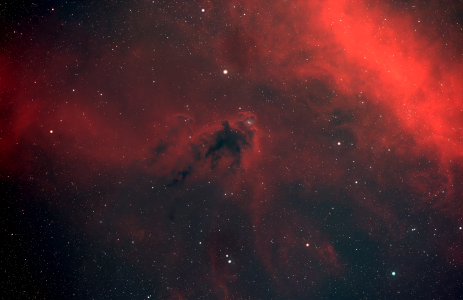
LDN 1622

My Account

New to Astromart?

Register an account...

Need Help?

LRGB question

Started by SunSpot51, 05/19/2007 11:41PM
Posted 05/19/2007 11:41PM Opening Post
Hi all,

Ok...I made the jump....I ordered an SBIG ST10 on sale with the 5 place colour wheel. I'm supposed to get it Wednesday. I image you shoot L one evening since you want a bunch of that and RGB the other evening(s). My question, is when you are gathering the RGB data do you get all your red, then green, then blue at once, or do you shoot one frame of each and repeat until you get all the total subs you want?

Thanks!!
Paul

Paul Maxson
Moderator - CCD Imaging and Processing/Solar System
Celestron C14, Mewlon 250, Orion EON120, ASI120MM, Flea3.
http://www.sunspot51.com
Posted 05/20/2007 12:24AM #1
Actually, I think you have made some assumptions here that are not valid.

You want the L shots taken when the object is at its sharpest--closest to zenith. This is because the job of the L shots is to be sharp and define the detail.

Your color shots, being binned, are not meant for sharpness, and so can be taken when the object is a little lower in the sky.

SO, you are actually most likely to take your color shots early and later in the evening, and your luminance when the object is straight overhead.

Alex
Posted 05/20/2007 01:07AM #2
Hi Paul,

Personally I choose to get all of each colour at the same time. ie I shoot all of the reds, then all of the greens then all of the blues.

The reason I do this is because the autoguider often gets confused when swapping filters, especially the blue because of the changing brightness of the guidestar in each filter.

Cheers,

Maurice

* Teach a man to fish and you feed him for a day.
* Teach a man to use the internet and he won't bother you for weeks.
Posted 05/20/2007 06:52PM #3
Hi Paul,

Congratulations on your new camera, you will love it!

There are several schools of thought on what color to take when. I am kind of an exposure "freak" and shoot as much as I can with all of the filters. My latest project is M106. As things stand right now I have 3 hours of useable Lumance (about the same amount is thrown away in my case) and 1 hour for each of the color channels (yea... another hour of each hit the trash can also, I'm picky). All of the shots are binned 1x1 in my case, this will allow for a straight RGB combine if I like.

The method that I am using is to shoot L one night then the color the next clear night. I use CCDCommander to automate my runs. When I am shooting color I shoot it in the following sequence: RRGGBB Focus GGBBRR Focus BBRRGG Focus... Continuing all night.

To take care of the guide exposure issue, pick up a external guide head. You WILL love it especially if you want to start shooting narrow band.

Brian

Posted 05/21/2007 03:09AM #4
Hi Paul,

Congratulations on the new camera. That is a dream setup wink

My advise:

LRGB Color is also much more involved then the black and white or one shot color in processing. I pretty much agree with everything except maybe the shooting blue early but that's me, another post and not where you are right now anyways. I would recommend just taken some pictures even if it is only one or or two of each filter regardless of order so you can start processing the LRGB.

As for the auto guider do the calibration with the blue filter if a suitable guide star is questionable (adjust the exposure time so the guide star is 'OK' in blue and you will be fine across the board). I add a delay between images too so if there is a filter switch your auto guider can make the corrections before the imaging chip turns on.

Looking forward to seeing the color images smile

smile
Posted 05/21/2007 12:48PM #5
Hi Paul,

Congrats on the ST10 purchase!

There are several schools of thought on how to gather the RGB data, each with its trade-offs:

Doing all R's, then all G's, then all B's: less time lost overall due to filter swaps and reacquiring the guide star, though if you dither between exposures (which is highly recommended, BTW), there will still be a delay anyway.

Alternating filters (RGB/RGB/RGB... ad infinitum): delays between exposures as the filter wheel turns, with the advantage that even if clouds roll in during the evening you'll have at least SOME color data to start playing with.

Picks your poison, each has its advantages and disadvantages (more than I listed above - we're talking sky conditions, etc.). FWIW, if you set up a color sequence with MaximDL, it will default to RGBRGBRGB rather than RRRGGGBBB, so that kinda communicates what they favor.

Eric
