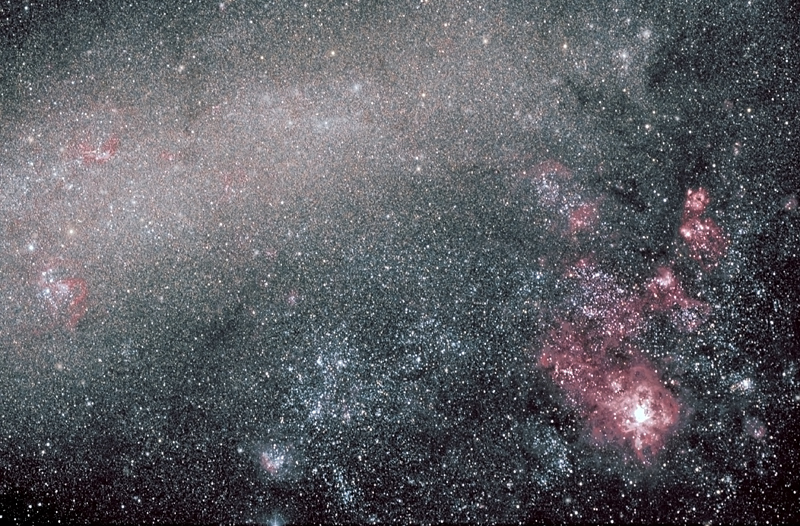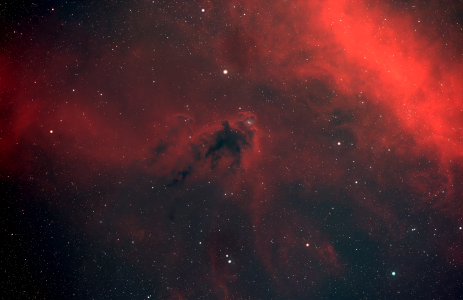
Dominating the skies near the South Celestial Pole are the Small and Large Magellanic Clouds. These are the 2 nearest glaxies to our Milky Way and are companion galaxies. The Large Magellanic Cloud is in the process of being absorbed into our Milky Way. To the naked eye at a dark site they look like 2 small clouds. They are full of globs and nebulas.
This shot here - to me, seems to show the area around the Tarantula Nebula and its surrounding blue stars to already be sticking into our Galaxy and the rest of the cloud still outside our galaxy. It looks that way anyway.
I took a series of images of these 2 clouds with various setups and I can post the better ones here as I process them. Its a fascinating object in the southern sky and if you have a large scope it has its own whole catalogue of objects to view. Have a look at N49 in the Hubble image gallery for a stunning nebula that looks like the Veil.
Takahashi FSQ106N, Sbig STL11000XCM, Takahashi NJP mount on a permanent pier, my dark site in remote NSW (where the steaks are great!!).
31 x 2 minutes unguided plus 6 x 3 minutes for a total of 78 minutes. Images Plus and CCDstack.
Greg.
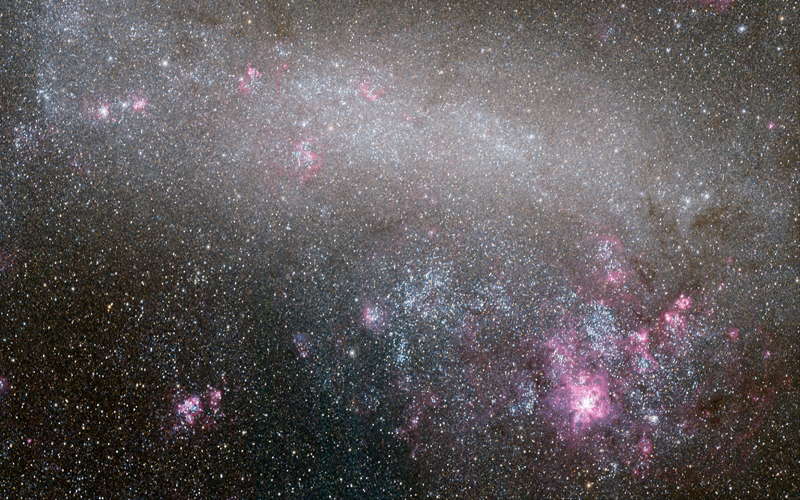
This shot here - to me, seems to show the area around the Tarantula Nebula and its surrounding blue stars to already be sticking into our Galaxy and the rest of the cloud still outside our galaxy. It looks that way anyway.
I took a series of images of these 2 clouds with various setups and I can post the better ones here as I process them. Its a fascinating object in the southern sky and if you have a large scope it has its own whole catalogue of objects to view. Have a look at N49 in the Hubble image gallery for a stunning nebula that looks like the Veil.
Takahashi FSQ106N, Sbig STL11000XCM, Takahashi NJP mount on a permanent pier, my dark site in remote NSW (where the steaks are great!!).
31 x 2 minutes unguided plus 6 x 3 minutes for a total of 78 minutes. Images Plus and CCDstack.
Greg.
Attached Image: