I was very curious how the sky conditions really are influencing our deep sky exposures (in my case a D60 digicam).
Yesterday evening I did a series of D60 imaging with the same setup and target as during the winter holiday (was mag 5.5 sky), only difference is the mag 4.5 sky here at my observatory place with half mon up.
The brighter sky made it necessary to image with ISO100 instead of 200. Again 10x300 sec added in IP, image processing was similar, but not so much efforts on final cleaning and balancing of the image.
The result is very interesting, approx one mag deeper for the stars and much more details on the nebula, especially on the fainter areas for the mag 5.5 sky image.
Can anybody estimate the absolute deepness of the image regarding stars?
Maybe there have been done similar comparisons from some of you too.
Johannes
http://panther-observatory.com
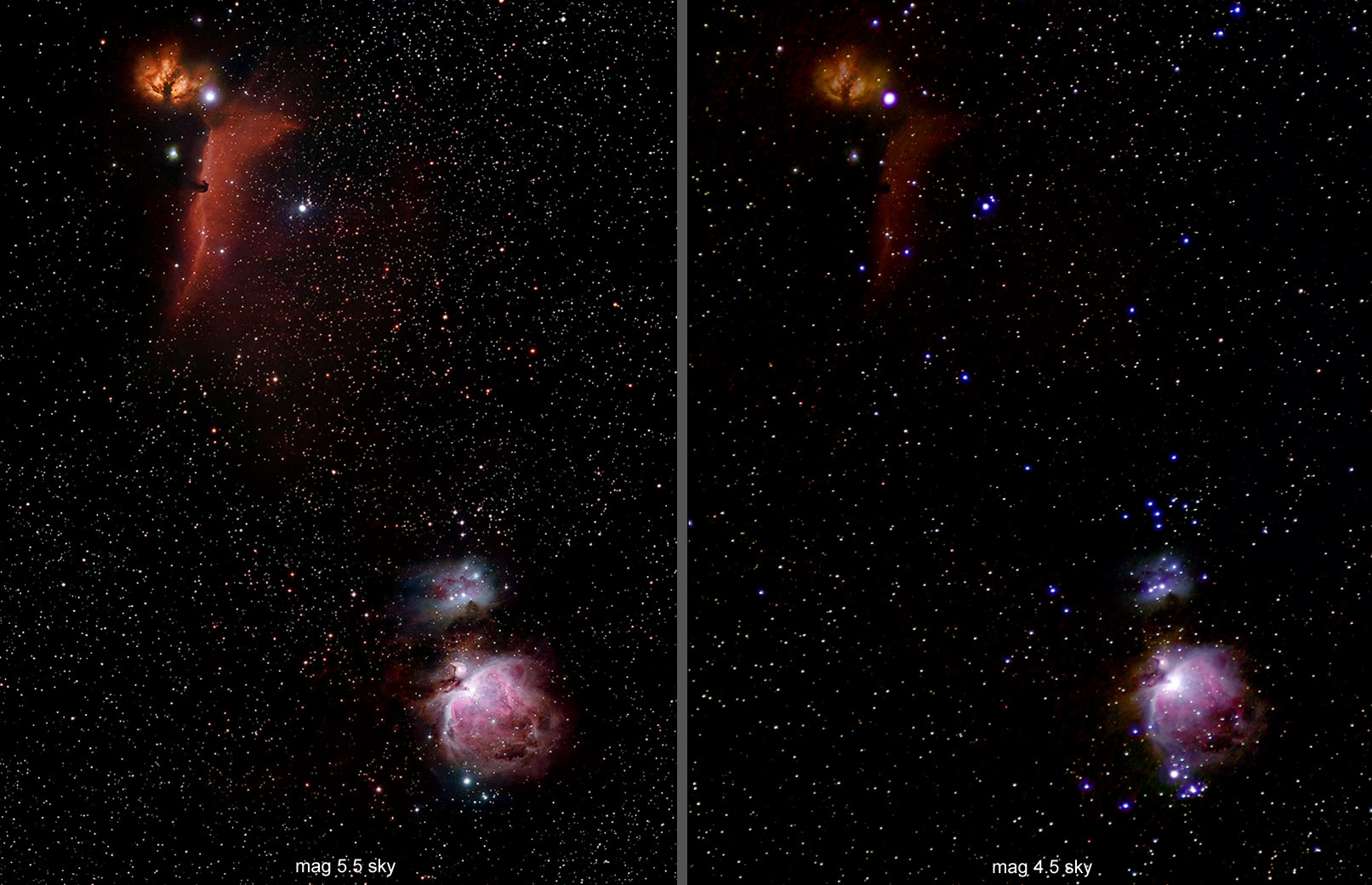
Yesterday evening I did a series of D60 imaging with the same setup and target as during the winter holiday (was mag 5.5 sky), only difference is the mag 4.5 sky here at my observatory place with half mon up.
The brighter sky made it necessary to image with ISO100 instead of 200. Again 10x300 sec added in IP, image processing was similar, but not so much efforts on final cleaning and balancing of the image.
The result is very interesting, approx one mag deeper for the stars and much more details on the nebula, especially on the fainter areas for the mag 5.5 sky image.
Can anybody estimate the absolute deepness of the image regarding stars?
Maybe there have been done similar comparisons from some of you too.
Johannes
http://panther-observatory.com
Attached Image:


