Image of the day

Captured by
Bruce Karbal

VDB 142 Elephant Trunk HOO

My Account

New to Astromart?

Register an account...

Need Help?

Question for Paolo and/or others HELP!

Started by geomorph, 02/23/2006 03:44PM
Posted 02/23/2006 03:44PM Opening Post
Hello.
I have used my Infinity 2-1M a couple of times and I seem to be having a problem with the images that I am getting. Here is an example that shows the trouble. It is a stack of 1300 frames, and it shows that I get some unusual diagonal lines that destroy the quality of the image whenever I try to sharpen the stacked image. I have no idea why these lines are present. Is it a result of some interlacing or an interference pattern of some sort? Something else? Any help that others can offer would be appreciated.
Thanks,
Tyler
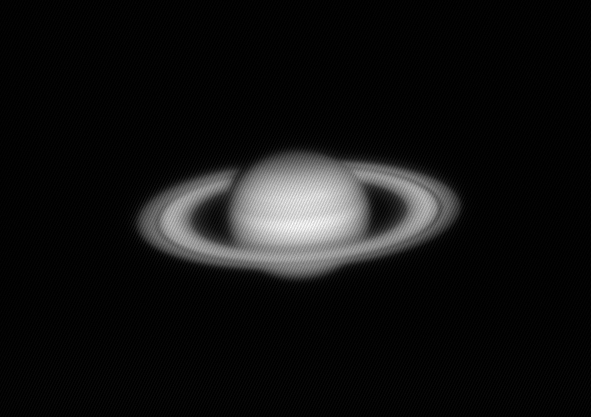
Attached Image:

geomorph's attachment for post 29935

"The expression of the beautiful is in direct ratio to the power of perception acquired by the artist." (Gustave Courbet)
Posted 02/23/2006 04:05PM #1
Tyler,

I was getting something similar to that with my Lum in 16bit mode. I don't know if this applies to the Infinity, but we found out that you can almost totally eliminate it by checking "none" in the Correction Matrices section of Streampix instead of daylight. May not apply, but thought I'd mention it.

Paul

Paul Maxson
Moderator - CCD Imaging and Processing/Solar System
Celestron C14, Mewlon 250, Orion EON120, ASI120MM, Flea3.
http://www.sunspot51.com
Posted 02/23/2006 05:02PM | Edited 02/23/2006 10:11PM #2
I would try what Paul suggests: check if the Hardware Settings in the Correction Matrices you have Daylight as active option and instead set it to NONE (also the demosaic option should be on NONE)

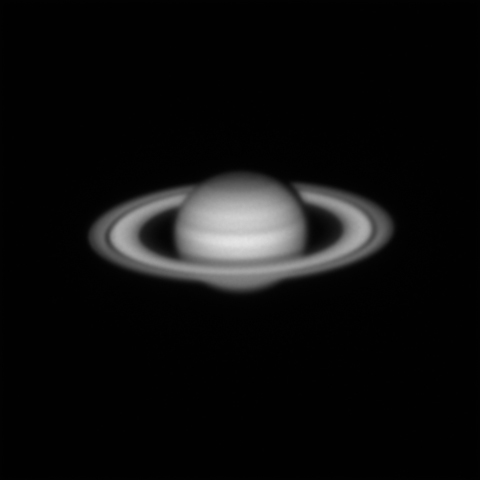
I have posted a similar image (same camera, same subject) a few days ago and I don't have that problem. Here it is again.

If you use Streampix, I suggest you also check Lucam Recorder by Heyko Wilkens (the software I used to capture the attached image): easy to use (much faster although not so complete) and now works great with Registax because it captures 12bit TIFF files and those can now be dragged directly into Registax and processed without 2 gigabyte limit . You can process uo to 10,000 12bit TIFF frames grin . Best part of all this is that it is FREE grin grin .
To know more, join the Lumenera group at Yahoo here http://groups.yahoo.com/group/lumenerausers.


Ciao Tyler

Luca

Attached Image:

Astrovale's attachment for post 101150

www.amun-ra.org
Solar Imaging Website
Posted 02/23/2006 07:47PM | Edited 02/23/2006 07:48PM #3
I have seen the same pattern from time to time on images captured with my DMK camera. I do not see it in the raw frames but it is very evident after many frames are stacked. It is not improved at all by using the de-interlace filter in Photoshop.

I find it occurs mostly in saturn images where the frames are on the dim (and noisy) side. Perhaps there is a grid pattern inherent in the chip that is being picked up in the stacking routine due to a low signal level in the image and accetuated by the stacking? It seems not to be a problem when the S/N values are better.

Alan


Alan Friedman

http://www.avertedimagination.com
Posted 02/24/2006 04:40PM | Edited 02/25/2006 01:42AM #4
Hello Tyler,

I believe that you have a tentative technical explanation in my post: you should try changing the correction matrix setting and see if that is the problem (as I think it is).
On the other hand, if you check my image, it may not be great, but it is not affected by the same pattern that yours displays and that logically rules out a systematic problem with the camera model. It may still be due to the camera, but then it would be your specimen that might needs repairing.

To rule out software issues, the image I attach here was captured using Streampix. Again it isn't a good image, but it doesn't have any strange pattern. If you contact me privately, I can send you a settings file and you can try to use that with your camera to see if the problem persists, in which case you should, as Paolo suggested, contact your vendor or Lumenera directly.

I hope this is helpful Tyler.

Ciao
Luca


Attached Image:

Astrovale's attachment for post 101176

www.amun-ra.org
Solar Imaging Website