Artemis II -- The First Crewed Mission to the Moon is Scheduled for Launch Next Month
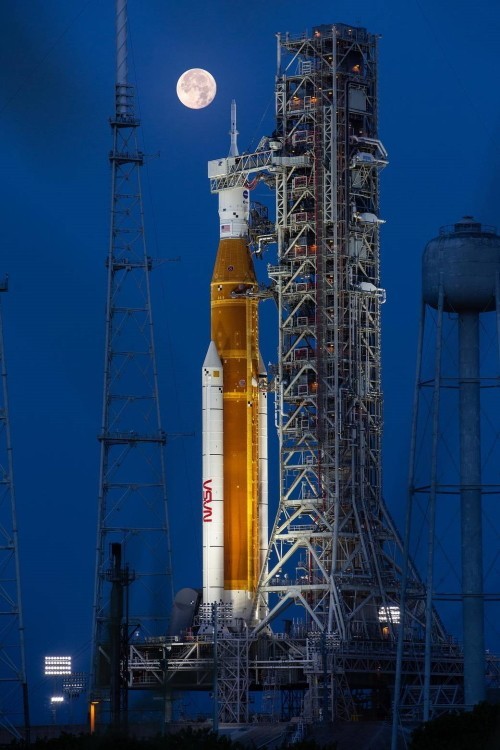
NASA’s Artemis Program is the first step in the next era of human exploration. Together with commercial and international partners, NASA will establish a sustainable presence on the Moon to prepare for missions to Mars. In this image, the full Moon is in view together with the Artemis I Space Launch System (SLS) and Orion spacecraft sitting atop the mobile launcher at Launch Complex 39B at NASA’s Kennedy Space Center in Florida on June 14, 2022. Artemis I successfully tested SLS and Orion as an integrated system prior to crewed flights. The upcoming Artemis II mission will be a crewed flight to the Moon which will take humans the farthest they’ve ever been in space. Artemis III, currently scheduled for 2028, will be the first crewed Moon landing mission since Apollo 17 in 1972. Through the Artemis Program, NASA will pave the way for a long-term lunar presence and use of the Moon as a stepping-stone on the way to Mars. (Image Credit: NASA, Cory Huston)
Artemis II -- The First Crewed Mission to the Moon is Scheduled for Launch Next Month
NASA is currently in the final countdown stages for Artemis II, the first crewed mission to the Moon in over 50 years. The next opportunity to launch is only a month away -- March 6, 2026. While the un-manned Artemis I flight to the Moon was successfully completed in 2022, this upcoming mission will carry four astronauts on a 10 day journey to fly around the Moon and return to Earth. The mission will test NASA’s systems and hardware, specifically the SLS (Space Launch System) rocket and Orion spacecraft. Artemis II will lay the groundwork for Artemis III in 2028, which is set to be the first human Moon landing since Apollo 17 in 1972.
The Artemis II test flight will be NASA’s first mission with crew under Artemis. Astronauts on their first flight aboard NASA’s Orion spacecraft will confirm all of the spacecraft’s systems operate as designed with crew aboard in the actual environment of deep space. Through the Artemis campaign, NASA will send astronauts to explore the Moon for scientific discovery, economic benefits, and to build the foundation for the first crewed missions to Mars – for the benefit of all.
The unique Artemis II mission profile will build upon the uncrewed Artemis I flight test by demonstrating a broad range of SLS (Space Launch System) and Orion capabilities needed on deep space missions. This mission will prove Orion’s critical life support systems are ready to sustain our astronauts on longer duration missions ahead and allow the crew to practice operations essential to the success of Artemis III and beyond.
Leaving Earth
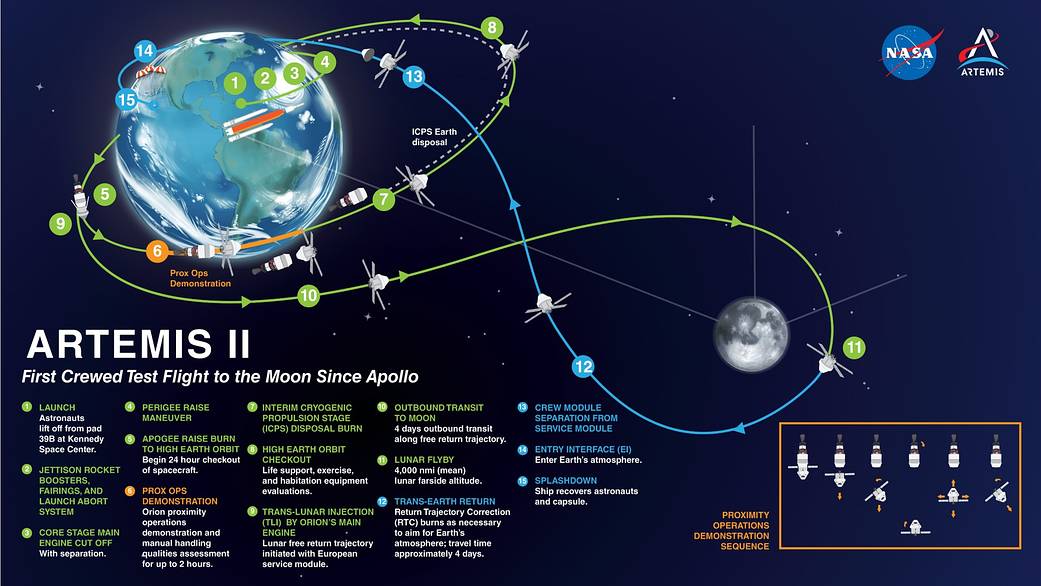
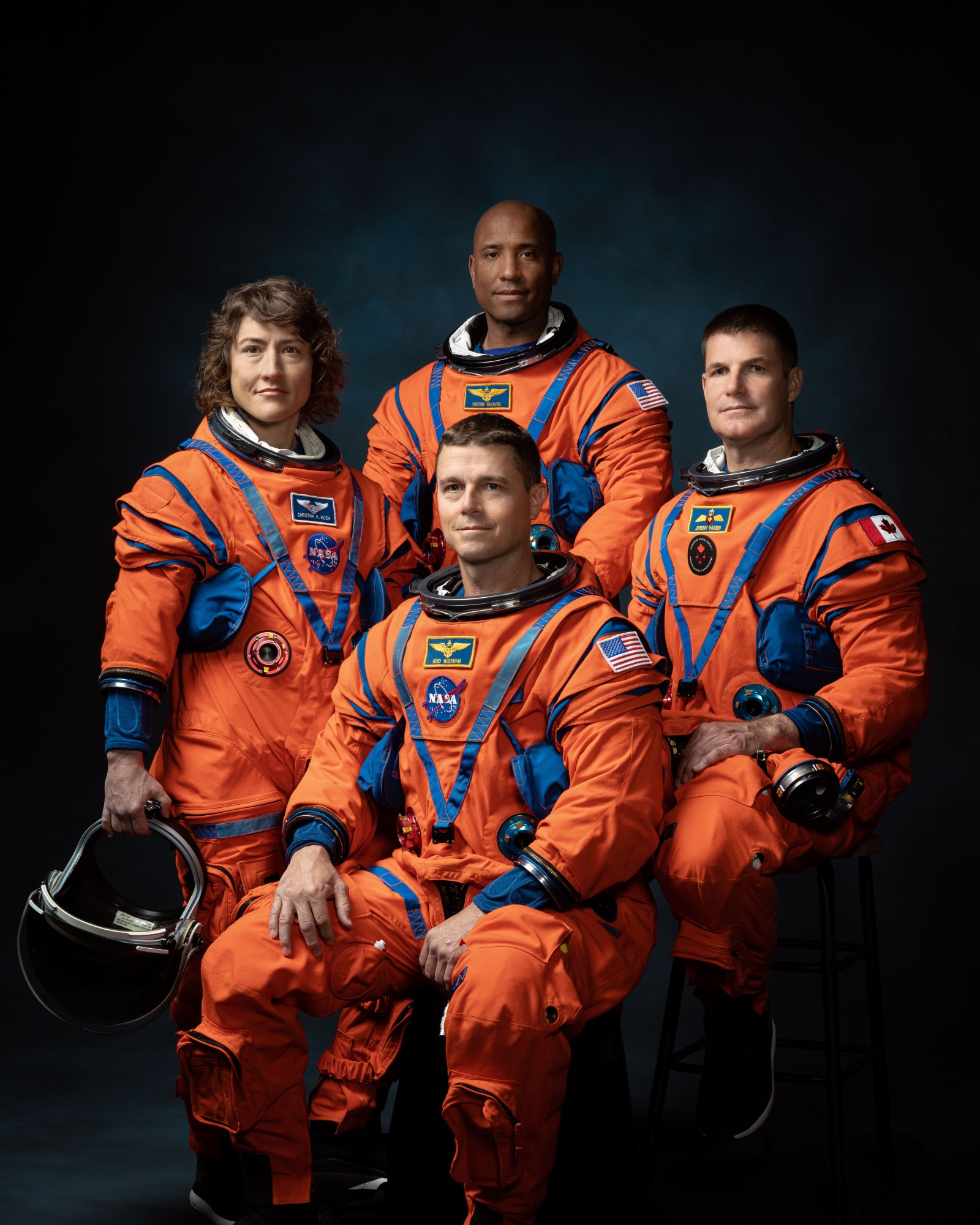
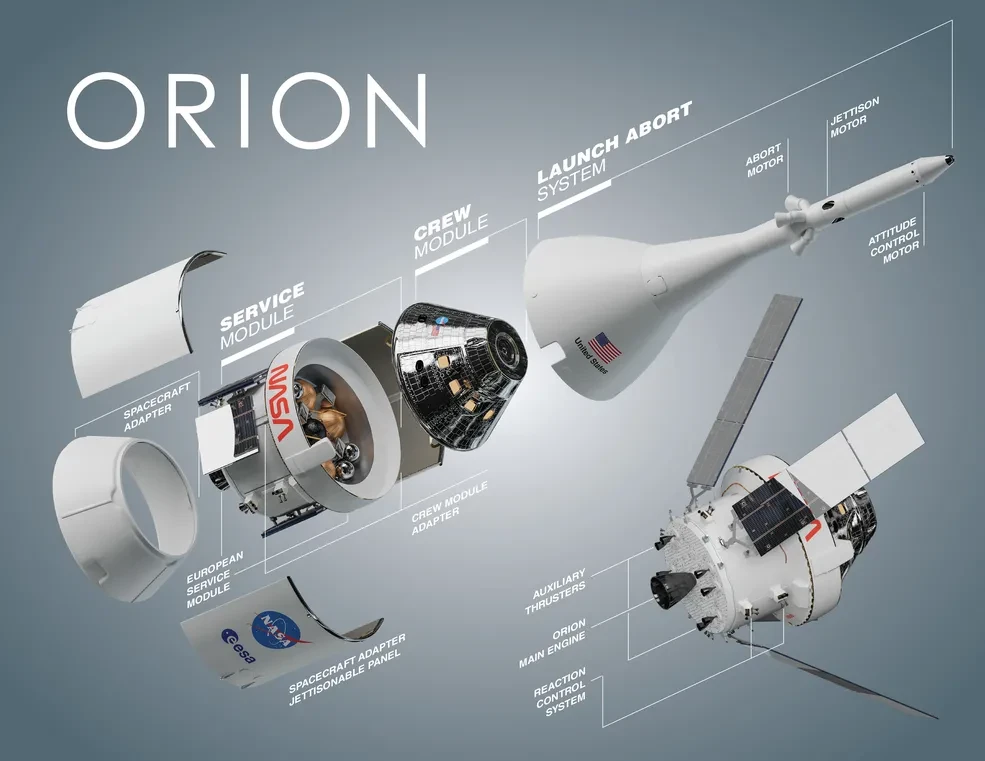
The mission will launch a crew of four astronauts from NASA’s Kennedy Space Center in Florida on a Block 1 configuration of the SLS rocket. Orion will perform multiple maneuvers to raise its orbit around Earth and eventually place the crew on a lunar free return trajectory in which Earth’s gravity will naturally pull Orion back home after flying by the Moon. The Artemis II astronauts are NASA’s Reid Wiseman, Victor Glover, and Christina Koch, and CSA (Canadian Space Agency) astronaut Jeremy Hansen.
The initial launch will be similar to Artemis I as SLS lofts Orion into space, and then jettisons the boosters, service module panels, and launch abort system, before the core stage engines shut down and the core stage separates from the upper stage and the spacecraft. With crew aboard this mission, Orion and the upper stage, called the interim cryogenic propulsion stage (ICPS), will then orbit Earth twice to ensure Orion’s systems are working as expected while still close to home. The spacecraft will first reach an initial orbit, flying in the shape of an ellipse, at an altitude of about 115 by 1,400 miles. The orbit will last a little over 90 minutes and will include the first firing of the ICPS to maintain Orion’s path. After the first orbit, the ICPS will raise Orion to a high-Earth orbit. This maneuver will enable the spacecraft to build up enough speed for the eventual push toward the Moon. The second, larger orbit will take approximately 23.5 hours with Orion flying in an ellipse between about 115 and 46,000 miles above Earth. For perspective, the International Space Station flies a nearly circular Earth orbit about 250 miles above our planet.
After the burn to enter high-Earth orbit, Orion will separate from the upper stage. The expended stage will have one final use before it is disposed through Earth’s atmosphere—the crew will use it as a target for a proximity operations demonstration. During the demonstration, mission controllers at NASA’s Johnson Space Center in Houston will monitor Orion as the astronauts transition the spacecraft to manual mode and pilot Orion’s flight path and orientation. The crew will use Orion’s onboard cameras and the view from the spacecraft’s windows to line up with the ICPS as they approach and back away from the stage to assess Orion’s handling qualities and related hardware and software. This demonstration will provide performance data and operational experience that cannot be readily gained on the ground in preparation for critical rendezvous, proximity operations and docking, as well as undocking operations in lunar orbit beginning on Artemis III.
Checking Critical Systems
Following the proximity operations demonstration, the crew will turn control of Orion back to mission controllers at Johnson and spend the remainder of the orbit verifying spacecraft system performance in the space environment. They will remove the Orion Crew Survival System suit they wear for launch and spend the remainder of the in-space mission in plain clothes, until they don their suits again to prepare for reentry into Earth’s atmosphere and recovery from the ocean.
While still close to Earth, the crew will assess the performance of the life support systems necessary to generate breathable air and remove the carbon dioxide and water vapor produced when the astronauts breathe, talk, or exercise. The long orbital period around Earth provides an opportunity to test the systems during exercise periods, where the crew’s metabolic rate is the highest, and a sleep period, where the crew’s metabolic rate is the lowest. A change between the suit mode and cabin mode in the life support system, as well as performance of the system during exercise and sleep periods, will confirm the full range of life support system capabilities and ensure readiness for the lunar flyby portion of the mission.
Orion will also checkout the communication and navigation systems to confirm they are ready for the trip to the Moon. While still in the elliptical orbit around Earth, Orion will briefly fly beyond the range of GPS satellites and the Tracking and Data Relay Satellites of NASA’s Space Network to allow an early checkout of agency’s Deep Space Network communication and navigation capabilities. When Orion travels out to and around the Moon, mission control will depend on the Deep Space Network to communicate with the astronauts, send imagery to Earth, and command the spacecraft.
After completing checkout procedures, Orion will perform the next propulsion move, called the translunar injection (TLI) burn. With the ICPS having done most of the work to put Orion into a high-Earth orbit, the service module will provide the last push needed to put Orion on a path toward the Moon. The TLI burn will send crew on an outbound trip of about four days and around the backside of the Moon where they will ultimately create a figure eight extending over 230,000 miles from Earth before Orion returns home.
To the Moon and “Free” Ride Home
On the remainder of the trip, astronauts will continue to evaluate the spacecraft’s systems, including demonstrating Earth departure and return operations, practicing emergency procedures, and testing the radiation shelter, among other activities.
The Artemis II crew will travel approximately 4,700 miles beyond the far side of the Moon. From this vantage point, they will be able to see the Earth and the Moon from Orion’s windows, with the Moon close in the foreground and the Earth nearly a quarter-million miles in the background.
With a return trip of about four days, the mission is expected to last about 10 days. Instead of requiring propulsion on the return, this fuel-efficient trajectory harnesses the Earth-Moon gravity field, ensuring that—after its trip around the far side of the Moon—Orion will be pulled back naturally by Earth’s gravity for the free return portion of the mission.
Two Missions, Two Different Trajectories
Following Artemis II, Orion and its crew will once again travel to the Moon, this time to make history when the next astronauts walk on the lunar surface during Artemis III.
Through Artemis, NASA will explore more of the Moon than ever before and create an enduring presence in deep space.
For more information:
https://www.rmg.co.uk/stories/space-astronomy/nasa-moon-mission-artemis-program-launch-date
https://www.adlerplanetarium.org/blog/artemis-ii-nasa-crewed-moon-mission/
https://www.astromart.com/news/show/nasas-artemis-program-gateway-to-the-moon-steppingstone-to-mars
https://www.astromart.com/news/show/55-years-ago-the-saturn-v-mega-rocket-flies-for-the-first-time
https://www.astromart.com/news/show/space-launch-system-saturn-v-on-steroids-to-fly-december-2019
https://www.astromart.com/news/show/it-was-45-years-ago-today-next-stop-mars
https://www.astromart.com/news/show/nasa-moves-forward-with-a-saturn-v-on-steroids
Astromart News Archives:
https://www.astromart.com/news/search?category_id=3&q=.
This is my personal deep sky observing list. I use it to line up my DSO targets on any particular night:
Check out some of my favorite Words of Wisdom:
https://www.astromart.com/news/show/words-of-wisdom-some-are-deep-others-not-so-much
https://www.astromart.com/news/show/words-of-wisdom-my-favorite-proverbs-from-around-the-world
Do you enjoy reading these postings?
Then click here and buy the Astromart crew a cup of coffee (and maybe even some donuts):
https://www.astromart.com/support-options
Funding Member