Reviews & Articles
Image of the day
About Astromart
My Account
New to Astromart?
Register an account...Need Help?
News
NASA’s SPHEREx Space Telescope to Launch Soon
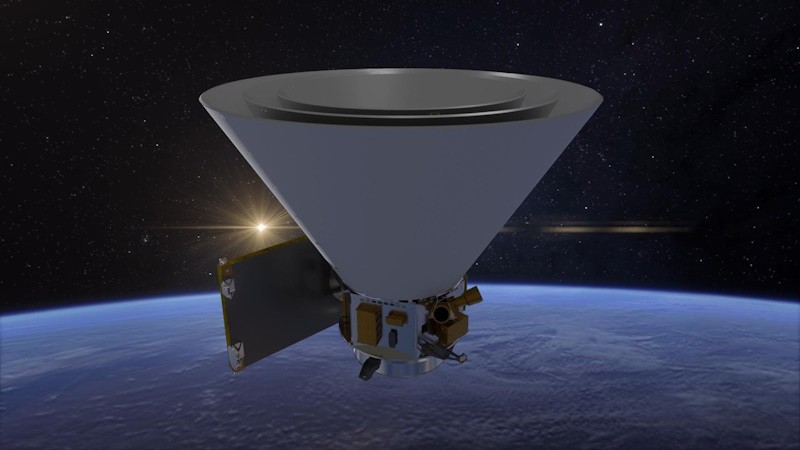
Shaped like a megaphone, the upcoming SPHEREx mission will map the entire sky in infrared light to answer big questions about the universe. Expected to launch during the first half of this year from Vandenberg Space Force Base in California, NASA’s SPHEREx space telescope will provide astronomers with a big-picture view of the cosmos like none before by creating an all-sky spectral survey. Over its two-year planned mission, SPHEREx will collect data on more than 450 million galaxies and more than 100 million stars in the Milky Way. SPHEREx will map the entire celestial sky in 102 infrared colors to learn more about the origins of our universe, the galaxies within it, and life’s key ingredients in our own galaxy.
ESA’s Planetary Defense Office Closely Monitoring Newly Discovered Asteroid 2024 YR4 -- Has a 2.2% Chance of Impacting Earth in 2032
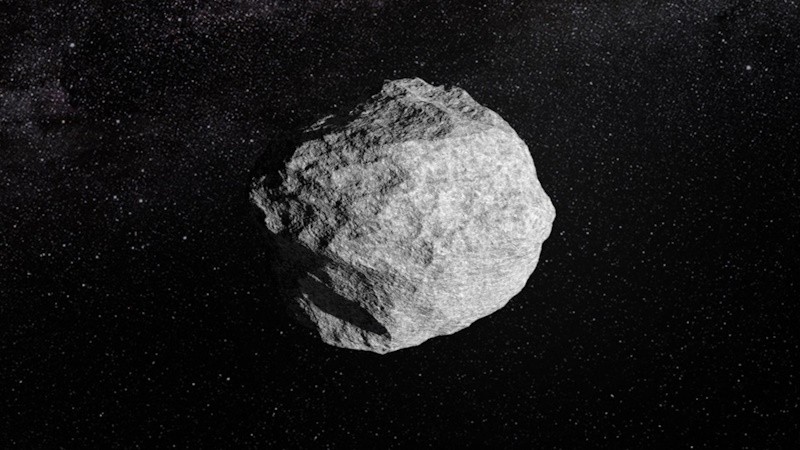
The European Space Agency is closely monitoring asteroid 2024 YR4, which has a very small chance of impacting Earth in 2032. It should safely pass Earth on December 22, 2032, but a possible impact cannot yet be ruled out. The asteroid is estimated to be between 40 and 100 meters wide.
Excuse Me While I Kiss the Sky -- Month of February 2025

Welcome to the night sky report for February 2025 -- Your guide to the constellations, deep sky objects, planets, and celestial events that are observable during the month. Venus blazes at its brightest for the year just after sunset, then Mars and Jupiter rule the night amid the menagerie of bright winter stars. Little Mercury pops up just above the horizon in late February, looking relatively bright as the sunset fades. In February, the Winter Triangle is your guide to the night sky. The northern hemisphere is treated to views of the stars Procyon, Sirius, and Betelgeuse, as well as awe-inspiring views of the Great Orion Nebula (M42, NGC 1976), sculpted by the stellar winds of central bright stars. The night sky is truly a celestial showcase. Get outside and explore its wonders from your own backyard.
Words of Wisdom -– Some are Deep… Others Not So Much
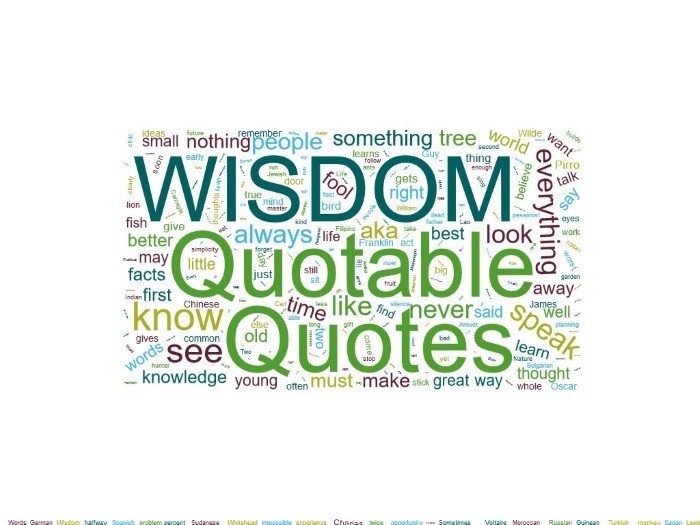
Let's start off the New Year with some words of wisdom. Here is an update to my collection of quotable quotes. Some are deep. Others not so much... "Nothing can stop the man with the right mental attitude from achieving his goal... Nothing on earth can help the man with the wrong mental attitude." - Thomas Jefferson “Why shouldn't truth be stranger than fiction? Fiction, after all, has to make sense.” - Samuel Clemens (aka Mark Twain) “The pure and simple truth is rarely pure… And never simple.” - Oscar Wilde "Talent hits a target no one else can hit... Genius hits a target no one else can see." - Arthur Schopenhauer “Good judgment comes from experience… And a lot of that comes from bad judgment.” - Will Rogers “Sometimes the questions are complicated and the answers are simple.” - Theodor Seuss Geisel (aka Dr. Seuss) "Artificial intelligence is no match for natural stupidity." - Anonymous
Excuse Me While I Kiss the Sky -- Month of January 2025

Happy New Year and welcome to the night sky report for January 2025 -- Your guide to the constellations, deep sky objects, planets, and celestial events that are observable during the month. Each evening this month, enjoy a sweeping view of six planets at once (Venus, Mars, Jupiter, and Saturn with the naked eye and Uranus and Neptune with a telescope). Also look for a close approach of Venus and Saturn, Mars occulted by the Moon, and the Quadrantid meteors. The January sky is also filled with bright stars in the constellations Orion, Taurus, Gemini, Canis Major, and Canis Minor. Find these cosmic gems by looking toward the southeast in the first few hours after it gets dark. The northern hemisphere also features beautiful views of Capella - a pair of giant yellow stars, Aldebaran - a red giant star, two star clusters [the Hyades (Caldwell 41) and the Pleiades (M45)], and the Crab Nebula (M1, NGC 1952). The night sky is truly a celestial showcase. Get outside and explore its wonders from your own backyard.


Latest James Webb Telescope Measurements Show That Our Understanding of Universe Expansion is Incomplete
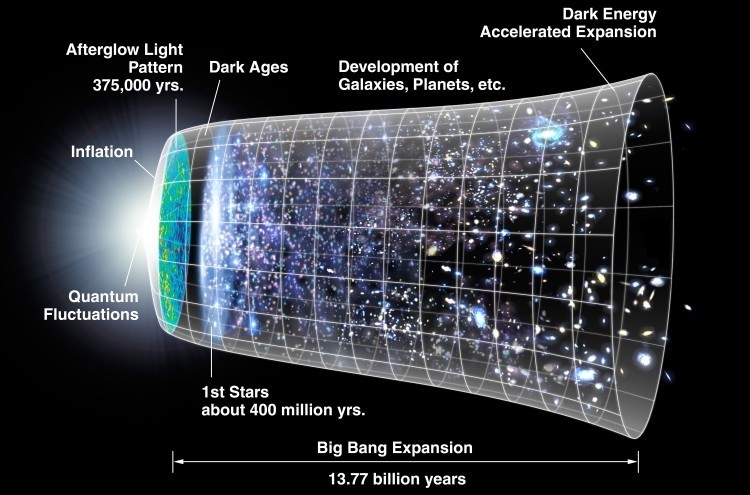
New observations from the James Webb Space Telescope suggest that a new feature in the universe—not a flaw in telescope measurements—may be behind the decade-long mystery of why the universe is expanding faster today than it did in its infancy billions of years ago. The new data confirms the Hubble Space Telescope measurements of distances between nearby stars and galaxies, offering a crucial cross-check to address the mismatch in measurements of the universe's mysterious expansion. Known as the Hubble tension, the discrepancy remains unexplained even by the best cosmology models. The research builds on the work of Adam Riess of Johns Hopkins University and his Nobel Prize–winning discovery that the universe's expansion is accelerating owing to a mysterious "dark energy" permeating vast stretches of space between stars and galaxies.
Google Unveils Willow – A State-of-the-Art Quantum Computing Chip That Achieves Mindboggling Results
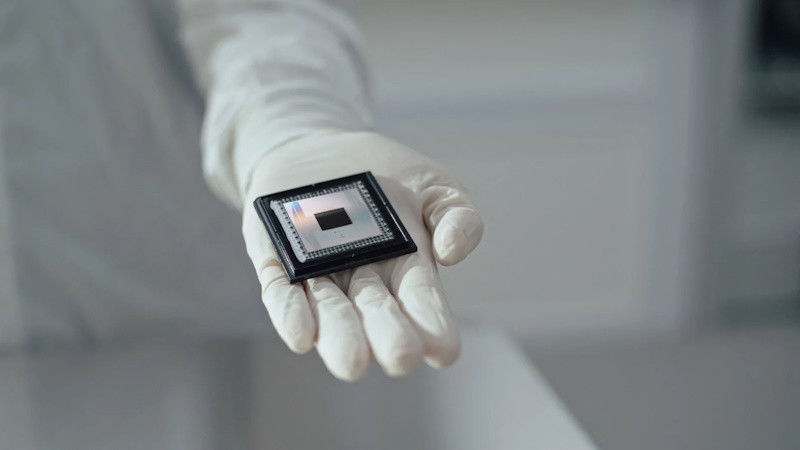
On December 9, 2024, Google’s Quantum AI team, under the leadership of Hartmut Neven, unveiled Willow, a state-of-the-art quantum computing chip that has the ability to not only exponentially correct errors, but also process certain computations orders of magnitude faster than today’s fastest supercomputers. For example, Willow performed a standard benchmark computation in less than five minutes that would take one of today’s fastest supercomputers 10 septillion (that is, 1025) years — a number that vastly exceeds the age of the Universe. Most folks are familiar with classical computing based on binary digits (or “bits”) that can be either 1’s or 0’s. They power everything from video games, to smart phones, to graphics computers, to the most massive data centers. Classical computers underlie all of the digital innovations of the past half-century. Quantum computing, on the other hand, is an entirely new style of computing. Rather than using classical bits, quantum computers use quantum bits, or “qubits.” Qubits behave according to the laws of quantum physics. Instead of being confined to the “either/or” of binary 1’s and 0’s, they can exist as a blend of both. Qubits can store information in states of superposition (multiple states at the same time) of 0 and 1. They can also be entangled with each other to make even more complex combinations — e.g., two qubits can be in a blend of 00, 01, 10 and 11. When you entangle lots of qubits together, you open up a vast number of states they can be in, which provides massive amounts of computational power. Those two special properties enable quantum computers to solve some of the most difficult problems much, much faster than regular, classical computers can. Unlike classical computing chips — which are produced by a huge and well-established industry — quantum computing is a new style of computing that requires Google to make its own qubit chips in-house with superconducting materials in the integrated circuits. By patterning superconducting metals in a unique way, Google forms circuits with capacitance (the ability to store energy in electrical fields) and inductance (the ability to store energy in magnetic fields), along with special nonlinear elements called Josephson junctions. By carefully choosing materials and dialing in the fabrication processes, Google can build chips with high-quality qubits that can be controlled and integrated into large, complex devices.
Excuse Me While I Kiss the Sky -- Month of December 2024

Welcome to the night sky report for December 2024 -- Your guide to the constellations, deep sky objects, planets, and celestial events that are observable during the month. Venus, Mars, Jupiter, and Saturn are all visible during the month. Also, the Geminid meteor shower peaks at mid-month. Step outside on a cold December night when the stars shine bright to find the Big Dipper, Cassiopeia, and Cepheus. They will help you locate a binary star system (Eta Cassiopeiae), a fan-shaped open star cluster M103 (NGC 581), and a variable star (Mu Cephei). Also, throughout the month, you can find Pegasus, the winged stallion, high overhead in the south. The night sky is truly a celestial showcase. Get outside and explore its wonders from your own backyard.

USC Students Shatter the Altitude Record for a Civilian-built Rocket

Aftershock II, the latest rocket designed and built by the student-run USC Rocket Propulsion Lab (USCRPL) at the University of Southern California (USC), has broken the international civilian-built rocket altitude record – reaching further into space than any non-governmental and non-commercial group has ever flown before. Aftershock II officially became the highest and fastest civilian-built rocket of all time following its successful launch to space on October 20, 2024. A post-flight internal data review concluded that the rocket achieved a world-record altitude of 470,400 feet and a top speed of 5283 feet per second (Mach 5.5).
Chuck Yeager Broke the Sound Barrier… We Just Fixed It

Test pilot Roy Martin: “Chuck Yeager broke the sound barrier. We just fixed it.” NASA’s X-59 quiet supersonic research aircraft, developed at Lockheed Martin’s Skunk Works in Palmdale, California, has fired up its engine for the first time. These engine-run tests start at low power and allow the X-59 team to verify that the aircraft’s systems are working together properly while powered by its own engine. The X-59 is the centerpiece of NASA’s Quesst mission, which seeks to demonstrate how the X-59 can fly supersonic without generating loud sonic booms and then survey what people hear when it flies overhead. Public reaction to the quieter sonic "thumps," which should be no louder than a car door shutting, will be shared with regulators who will then consider writing new sound-based rules to lift the ban on faster-than-sound flight over land. First flight of the X-59 is scheduled for 2025.
NASA’s Juno Mission Captures the Colorful and Chaotic Clouds of Jupiter

Since it arrived at Jupiter in 2016, NASA’s Juno spacecraft has been probing beneath the dense, forbidding clouds encircling the giant planet – the first orbiter to peer so closely. It seeks answers to questions about the origin and evolution of Jupiter, our Solar System, and giant planets across the cosmos. During a recent close encounter with Jupiter, NASA’s Juno spacecraft captured this color-enhanced view of the giant planet’s northern hemisphere. It provides a detailed view of chaotic clouds and cyclonic storms in an area known to scientists as a folded filamentary region. In these regions, the zonal jets that create the familiar banded patterns in Jupiter’s clouds break down, leading to turbulent patterns and cloud structures that rapidly evolve over the course of only a few days.