Reviews & Articles
Image of the day
About Astromart
My Account
New to Astromart?
Register an account...Need Help?
News
NASA Observes One of Brightest Cosmic Explosions
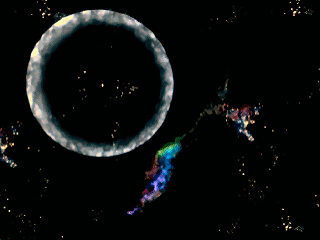
Scientists detected a flash of light from across the Galaxy so powerful; it bounced off the moon and lit up the Earth's upper atmosphere. The flash was brighter than anything ever detected from beyond our Solar System, and it lasted over a tenth of a second. <b>NOTE: French, German, and Italian translations follow...</b>
NASA's Cassini Spacecraft Continues Making New Discoveries
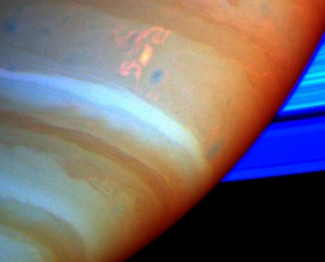
New findings include wandering and rubble-pile moons; new and clumpy Saturn rings; splintering storms and a dynamic magnetosphere. <b>NOTE: French, German, and Italian translations follow...</b>
Swift Sees Pinwheel Galaxy, Satellite Fully Operational

The Swift satellite's Ultraviolet/Optical Telescope (UVOT) has seen first light, capturing an image of the Pinwheel Galaxy, long loved by amateur astronomers as the "perfect" face-on spiral galaxy. The UVOT now remains poised to observe its first gamma-ray burst and the Swift observatory, launched into Earth orbit in November 2004, is now fully operational.<b> NOTE: French, German, and Italian translations follow...</b>
CCD Imager's Tool Review Nabs Prize

The Optec Pyxis Rotator gets graded, rated, and rotated by Bob Benamati...
Titan's Atmosphere Comes from Ammonia, Huygens Data Says...
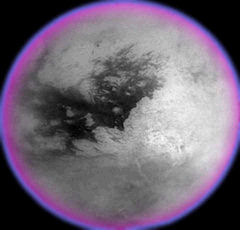
Cassini-Huygens supplied new evidence about why Titan has an atmosphere, making it unique among all solar system moons, a University of Arizona planetary scientist says. (Article by Lori Stiles. University of Arizona)
Mysterious Magnetar Yielding Secrets to VLA
A giant flash of energy from a supermagnetic neutron star thousands of light-years from Earth may shed a whole new light on scientists' understanding of such mysterious "magnetars" and of gamma-ray bursts.
Matter Surfs on Ripples of Space Time Around Black Hole

Scientists at Harvard and MIT say they have seen evidence of hot iron gas riding a ripple in spacetime around a black hole, much like a surfer catching a gnarly wave. <b> NOTE: French, German, and Italian translations follow...</b>
Saturn's Auroras Defy Scientists' Expectations
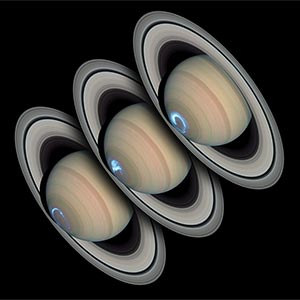
The dancing light of the auroras on Saturn behaves in ways different from how scientists have thought possible for the last 25 years.
From the Battle emerges a Victor!

This week's review winner concerns a Battle Royale of diminutive proportions....
The Ring, like you've never seen it before...

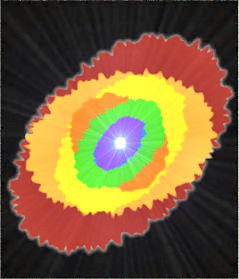
NASA's Spitzer Space Telescope finds a delicate flower in the Ring Nebula. The outer shell of this planetary nebula looks surprisingly similar to the delicate petals of a camellia blossom.
Hysteresis* in spectral state transitions of accreting black holes

Scientists at the Max-Planck-Institute for Astrophysics describe a further step in understanding the flow of matter towards objects of very high concentration of mass. These compact objects are known as "black holes", with gravitation so dominant that all matter and radiation fall into them if close enough.
Pulsar pair gives scientists magneto-pause for thought
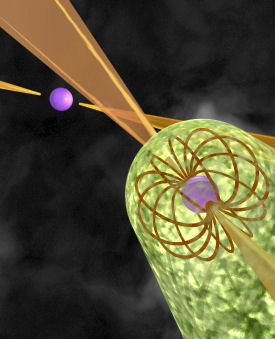
A study of the first double-pulsar binary system to be discovered shows that magnetic interactions between the pulsars are strikingly similar to those between the Sun and the Earth.
Colliding galaxies light up dormant black holes

In the early universe, many galaxies exhibit extremely bright sources at their nuclei, so-called quasars. It is thought that the luminosity of the quasars is produced by super massive black holes in the centers of galaxies. The masses of these black holes are tightly correlated with the velocity dispersion of the stars in the central bulge of their host galaxies, which suggests a common formation mechanism...
Galaxy patterns reveal missing link to Big Bang
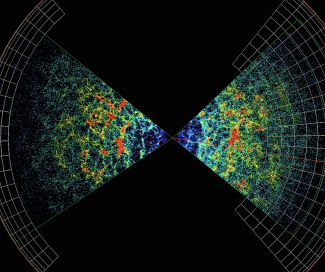
Australian astronomers from the Anglo-Australian Observatory, The Australian National University, CSIRO and the University of New South Wales, together with their UK colleagues, today announced that they have found the 'missing link' that directly relates modern galaxies like our own Milky Way to the Hot Big Bang that created our Universe 14 thousand million years ago.
Spitzer Finds Stellar "Incubators" With Massive Star Embryos
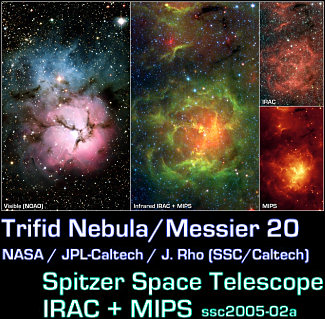
NASA's Spitzer Space Telescope has uncovered a hatchery for massive stars in a Messier favorite.