Search Stories
Era of Galaxy and Black Hole Growth Spurt Discovered

Distant galaxies undergoing intense bursts of star formation have been shown by NASA's Chandra X-ray Observatory to be fertile growing grounds for the largest black holes in the Universe. Collisions between galaxies in the early Universe may be the ultimate cause for both the accelerated star formation and black hole growth. <b>NOTE: French, German, Italian, and Spanish translations follow...</b>
A C-Mak gets the once over in this week's winner...

The Celestron C130 5.1 inch Maksutov OTA makes a debut here in the AstroMart reviews and the author takes this week's prize.
This is a follow-up to the Deep Impact Status report posted here last week on March 26.
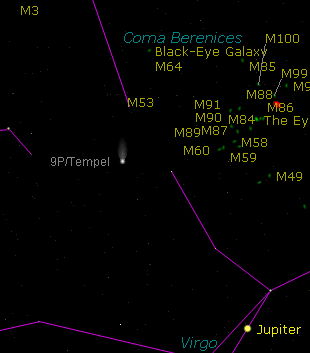
The University of Maryland has posted a web page asking for amateur support on this mission. If you are an imager, you might want to give this a look. <b>NOTE: French, German, Italian, and Spanish translations follow...</b>
NASA Announces First Centennial Challenges' Prizes.
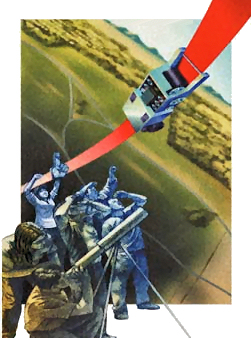
NASA and its partner, the Spaceward Foundation, today announced prizes totaling $400,000 for four prize competitions, the first under the agency's Centennial Challenges program. <b>NOTE: French, German, Italian, and Spanish translations follow...</b>
An exciting new development in astro gear...

From time to time, we like to alert AstroMart members to interesting product releases and we are thrilled to announce an exciting newcomer to the ranks of telescope manufacturers...
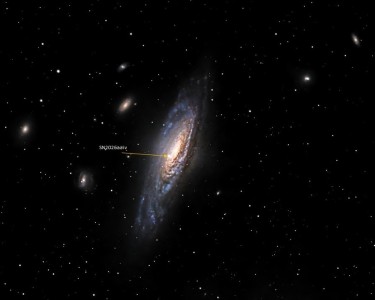
Another Hubble revelation
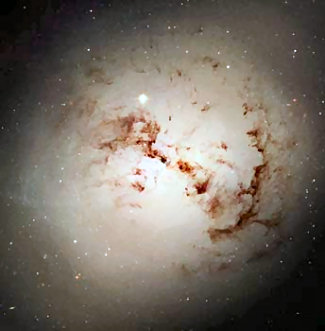
This image made from data obtained with the NASA Hubble Space Telescope reveals the dust lanes and star clusters of this giant galaxy that give evidence that it was formed from a past merger of two gas-rich galaxies. <b>NOTE: French, German, Italian, and Spanish translations follow...</b>
Good review of a scope that needs some help...

Not all scopes are perfect and not all copies of the same scope share the same quality and this week's review winner covers one that could use some quality control...
New Frontier Opens In The Search For Life On Other Planets.
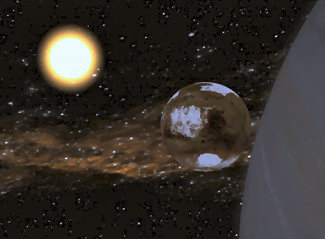
Scientists recently discovered a new frontier in the race to find life outside our solar system. Dying red giant stars may bring icy planets back from the dead. Once-frozen planets and moons may provide a new breeding ground for life as their stars enter the last, and brightest, phase of their lives. Previous ideas about the search for extra-solar life had excluded these regions. <b>NOTE: French, German, Italian, and Spanish translations follow...</b>
NASA Releases Deep Impact Mission Status Report
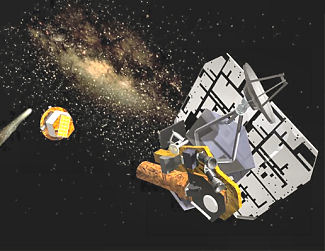
NASA's Deep Impact spacecraft completed the commissioning phase of the mission and has moved into the cruise phase. <b>NOTE: French, German, Italian, and Spanish translations follow...</b>
X-rays Signal Presence of Elusive Intermediate-Mass Black Hole
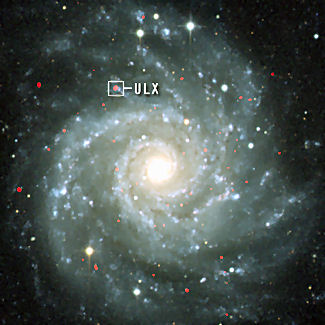
Peculiar outbursts of X-rays coming from a black hole have provided evidence that it has a mass of about 10,000 Suns, which would place it in a possible new class of black holes.
Answer from 'dusty shelf' aids quest to see matter as it was just after big bang.

Scientists, trying to recreate conditions that existed just a few millionths of a second after the big bang that started the universe, have run into a mysterious problem -- some of the reactions they are getting don't mesh with what they thought they were supposed to see. <b>NOTE: French, German, Italian, and Spanish translations follow...</b>
With help from America's National Science Foundation, real scientific projects go beyond "cookbook curriculum" and engage students in the unknown.
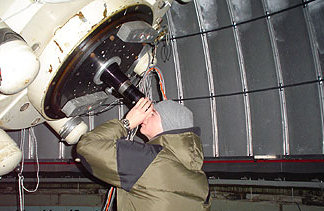
In the last several years, researchers on NSF-supported projects have found new asteroids, documented diving patterns of sea mammals and located the feeding area of an endangered bird. This is standard science; it is what researchers do. But these researchers were still in school. Some were in the third grade. <b>NOTE: French, German, Italian, and Spanish translations follow...</b>
NASA Study Suggests Giant Space Clouds Iced Earth

Eons ago, giant clouds in space may have led to global extinctions, according to two recent technical papers supported by NASA's Astrobiology Institute. <b>NOTE: French, German, and Italian translations follow...</b>
Alt Az and all that Razzamatazz takes this week's prize

If you like a load of strong and simple in your mounts, this winning review is for you...
Todd "The Weatherman" - Update

Astromart sponsor, Larry Patriarca of Universal Astronomics, phoned Todd recently to ask about his plans for the site. Larry's report is reprinted here...