News
Dreaming about sugar plum fairies and digital cameras?

This week's review contest winner takes us through the barrel of a Canon...
Cosmic Pinball Game
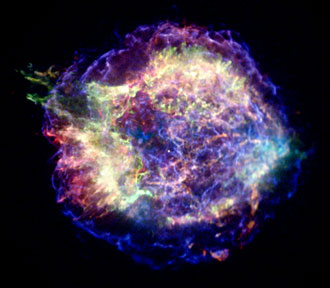
For the first time, astronomers have mapped the rate of acceleration of cosmic ray electrons in a supernova remnant. The new map shows that the electrons are being accelerated at close to the theoretically maximum rate. This discovery provides compelling evidence that supernova remnants are key sites for energizing charged particles.
2000 Year Old Astronomical Computer has Scientists Perplexed

Cardiff University scientists in the UK are unravelling the secrets of a 2,000-year-old astronomical computer known as the Antikythera Mechanism. Their findings are transforming the way we think about the technical sophistication of the ancient world. The Antikythera Mechanism dates back to 80 BC and no civilization is known to have created anything as technologically complex as this device until at least a millennium later.
Review Contest Delayed by Weather... (Ed.)

This week's review contest winner alerts us all to some nifty, and free, auto-guiding software... Did I mention free? It's also apparently very easy to use. By the way, there are lots of excellent reviews in the pipeline and they'll be popping up as winners in the coming weeks.
World's Largest Millimeter Radio Telescope Gets Ready for Action
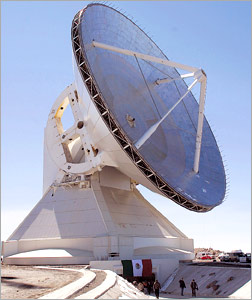
Soon to reach completion in 2007, Mexico's $100-million Large Millimeter Telescope (LMT) is a cooperative effort between University of Massachusetts and Mexico's National Institute of Astronomy, Optics, and Electronics. LMT is the world's largest, most sensitive radio telescope. With an antenna diameter of 164 feet the LMT will dwarf existing millimeter-wave telescopes and should be able to pick up signals from the faintest objects in the universe.
Aging Craft Orbiting Mars Appears to Have Succumbed
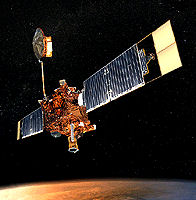
In words and somber tones usually associated with a death in the family, engineers and scientists said yesterday that the Mars Global Surveyor, the most durable spacecraft ever to orbit that planet, had fallen silent and was given little chance of revival.
Does this bird fly?

Does this week's review contest winner fill the bill? Jim Carpenter takes his 80mm Bino Viewer Nighthawk to the skies...
Hubble Shows that Anti-Gravity has been a Constant for Over 9 Billion Years
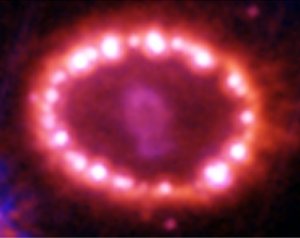
Astrophysicists using data collected from Hubble have concluded that Dark Energy, the mysterious repulsive force that causes the universe to expand at an increasing rate, has been a constant factor going back at least nine billion years ago. This latest picture of Dark Energy is consistent with Albert Einstein's prediction of nearly a century ago that a constant force of anti-gravity emanates from empty space, pushing everything apart.
A Lake of Glass from Lake Charles

This week's review contest winner takes a dip in a deep sky scope from custom dob builder Astro Sky in the great state of Lousiana.
Chaos at the Heart of Orion
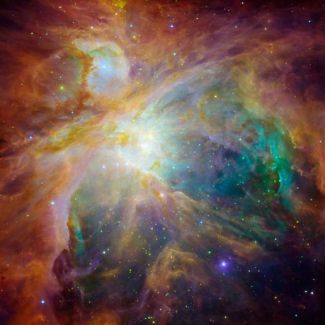
NASA's Spitzer and Hubble Space Telescopes have teamed up to expose the chaos that baby stars are creating 1,500 light years away in a cosmic cloud called the Orion nebula.
Cassini Looks into the Eye of a Monster Storm on Saturn
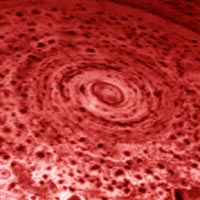
NASA's Cassini spacecraft has seen something never before seen on another planet -- a hurricane-like storm at Saturn's south pole with a well-developed eye, ringed by towering clouds. The "hurricane" spans a dark area inside a thick, brighter ring of clouds. It is approximately 8,000 kilometers (5,000 miles) across, or two thirds the diameter of Earth and it is anchored to the south pole and does not drift around.
Uncle Rod's New Book Gets The Once Over

This week's review contest winner covers The Urban Astronomer's Guide by Rod Mollise - cover to cover.
Russian Manned Mission to Orbit the Moon by 2012
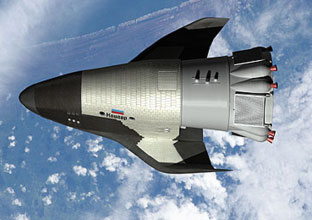
Russia's Rocket and Space Corporation, RKK Energia, will create a new spaceship capable of flying to the Moon. Russia plans to conduct its first manned flight around the Moon in 2011-2012.
Is Big aperture GoTo for you?

This week's review contest winner showcases a big Meade SCT that fills the bill for the author's hunger for big aperture and IC control.
NASA Approves Mission and Names Crew for Return to Hubble
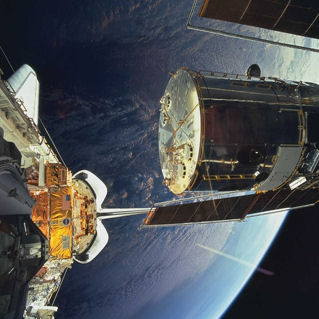
Shuttle astronauts will make one final house call to NASA's Hubble Space Telescope as part of a mission to extend and improve the observatory's capabilities through 2013.
Funding Member
