News
Snake on a Galactic Plane!
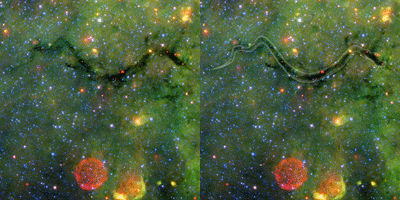
Something scary appears to be slithering across the plane of our Milky Way galaxy in this new Halloween image from NASA's Spitzer Space Telescope. The snake-like object is actually the core of a thick, sooty cloud large enough to swallow dozens of solar systems.
An exotic bird takes a test flight..

Never heard of the Vixen VMC200LDG? After reading this week's review contest winner, you will be an expert on the subject of this slightly offbeat scope.
Spitzer Reveals that M32 had Head-On Collision with Andromeda Galaxy
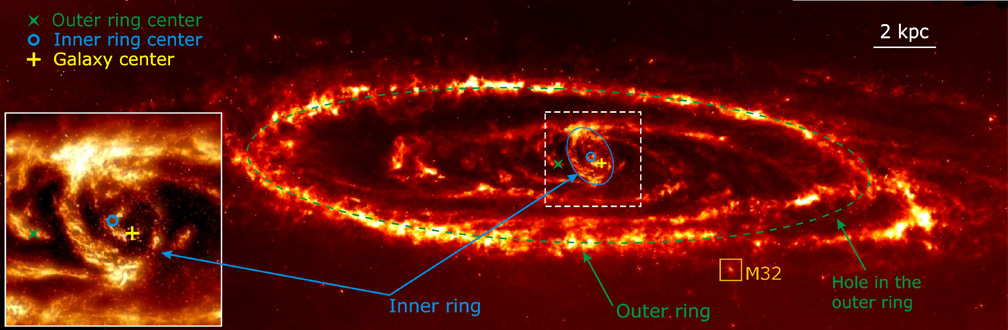
Astronomers have new evidence that the Andromeda Spiral Galaxy (M31) was involved in a violent head-on collision with the neighboring dwarf galaxy Messier 32 (M32) more than 200 million years ago. The presence of both inner and outer dust rings suggests that M32 plunged through the disk of Andromeda along Andromeda's polar axis approximately 210 million years ago.
The Universe Rocks!
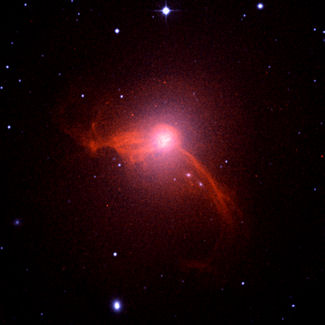
Chandra Reviews Black Hole Musical: Epic But Off-Key. A gigantic sonic boom generated by a supermassive black hole has been found with NASA's Chandra X-ray Observatory, along with evidence for a cacophony of deep sound.
Cassini's Backlit Photo of Saturn Uncovers Never-Before-Seen Rings

With Saturn hanging in the blackness and sheltering the spacecraft from the sun's blinding glare, Cassini viewed the rings as never before. During this period of observation Cassini detected two new faint rings -- one coincident with the shared orbit of the moons Janus and Epimetheus and another coincident with Pallene's orbit.
The Proto Morphs into Small Scope Perfection?

Many remember the venerable Pronto, Tele Vue's little gem of a scope that travelled far and wide with many an amateur. This week's review contest winner covers the 76mm offspring of the Pronto...
Pan-STARRS 1 Sees First Light - Will Study Exploding Stars and 'Killer' Asteroids

The Pan-STARRS telescope on the Hawaiian island of Maui, which just went into service in June, will be equipped with the world's largest digital camera. The primary goal of Pan-STARRS is to discover and characterize Earth-approaching objects (both asteroids and comets) that might pose a danger to our planet. Pan-Starrs will be able to observe the entire available sky several times each month. The volume of images it produces will provide valuable data for many other scientific programs -- It will help astronomers produce three dimensional maps of galaxies and dark matter, measure their energy, and help determine how galaxies have evolved. In time, Pan-STARRS is expected to become the world's leading search observatory for supernovae.
A Megadose of Vitamin C

In this week's review contest winner one of our resident pharmacists draws up a prescription for a big Celestron: The C14XLT.
2006 Nobel Prize Awarded for Precise Measurements of Microwave Background by NASA's COBE
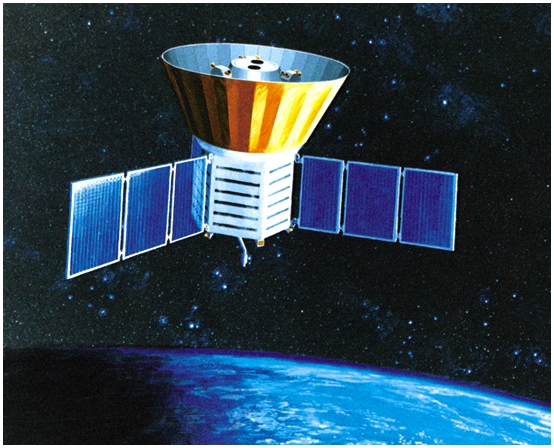
George Smoot of the University of California Berkeley and John Mather of the NASA Goddard Space Flight Center won the 2006 Nobel Prize in Physics for discovery of variations in the residual heat from the Big Bang that indicate structure in the early universe that evolved into clusters of galaxies. Their work was based on the very precise measurements of the microwave background made by NASA's COsmic Background Explorer (COBE).
Hubble Finds Extrasolar Planets Far Across Galaxy
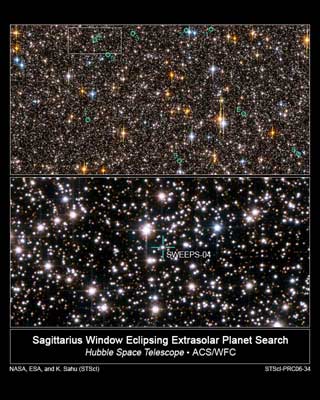
These are considered "candidate" exoplanets because most of them are too faint to allow for spectroscopic observations that would allow for a precise measure of the planet's mass.
Shootout! Boy, do we love shootouts!

This week's review contest winner is an enterprising effort to standardize criteria for an eyepiece shootout... This round pits 3 highpower photon slingers for your edification.
Subaru Discovers the Most Distant Galaxy to Date
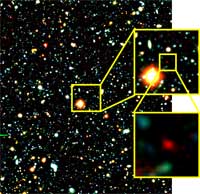
Astronomers using the Subaru telescope in Hawaii have looked further back in time than any other astronomers, to find the most distant known galaxy in the universe. Their most recent discovery is of a galaxy called I0K-1 that lies so far away that astronomers are seeing it as it appeared 12.88 billion years ago.
What happens when aperture fever bites a refractor guy? He goes shopping :-)

This week's review contest winner takes a peek at an 8" bargain bucket the author bought to catch a few more photons than his prized refractors do. How did he fare?
New Evidence Links Stellar Remains to Oldest Recorded Supernova
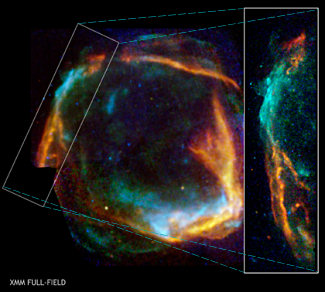
Recent observations have uncovered evidence that helps to confirm the identification of the remains of one of the earliest stellar explosions recorded by humans.
Einstein's Theory of General Relativity Proven to be 99.95% Right
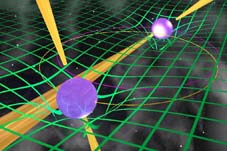
A research team at the University of Manchester's Jodrell Bank Observatory in the UK has used three years of observations of a "double pulsar", a unique pair of natural stellar clocks that they discovered in 2003, to prove that Einstein's theory of general relativity is correct to within a staggering 0.05%.
Funding Member
