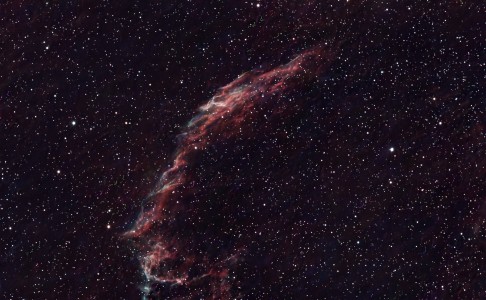
News
A Thermonuclear Supernova Ejected Our Galaxy's Fastest Star

Scientists using the W. M. Keck Observatory and Pan-STARRS1 telescopes on Hawaii have discovered a star that breaks the galactic speed record -- traveling with a velocity of about 1200 kilometers per second or 2.7 million miles per hour. This velocity is so high that the star will escape the gravity of our galaxy. The team showed that this compact star was ejected from an extremely tight binary by a thermonuclear supernova explosion.
"Life Not as We Know It" Possible on Saturn's Moon Titan
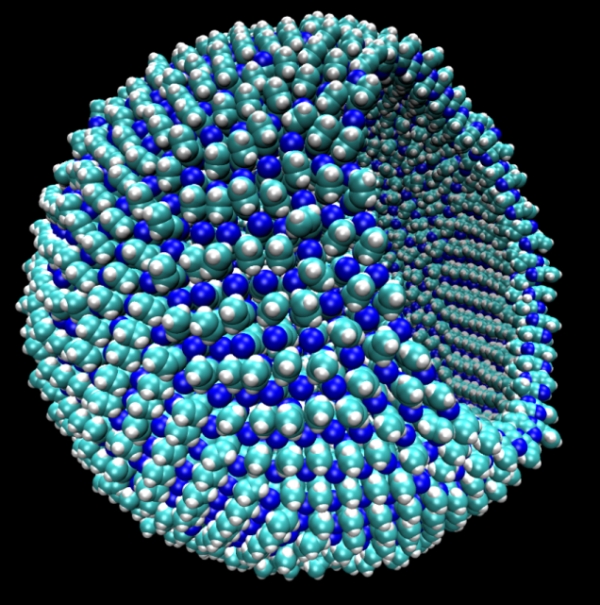
Liquid water is a requirement for life on Earth. But in other, much colder worlds where water is a solid, life might exist beyond the bounds of water-based chemistry. Cornell University chemical engineers and astronomers have offered a template for life that could thrive in a harsh, cold world like Titan - the giant moon of Saturn. A planetary body awash with seas not of water, but of liquid methane at temperatures of 292 degrees below zero, could harbor methane-based, oxygen-free cells that metabolize, reproduce, and do everything life on Earth does -- except it would be "Life Not as We Know It."
Trans-Neptunian Objects -- More Planets in Our Solar System?

There could be at least two unknown planets hidden well beyond Pluto, whose gravitational influence determines the orbits and strange distribution of objects observed beyond Neptune. This has been revealed by numerical calculations made by researchers at the Complutense University of Madrid and the University of Cambridge. If confirmed, this hypothesis would revolutionize solar system models.
A close call of 0.8 light years
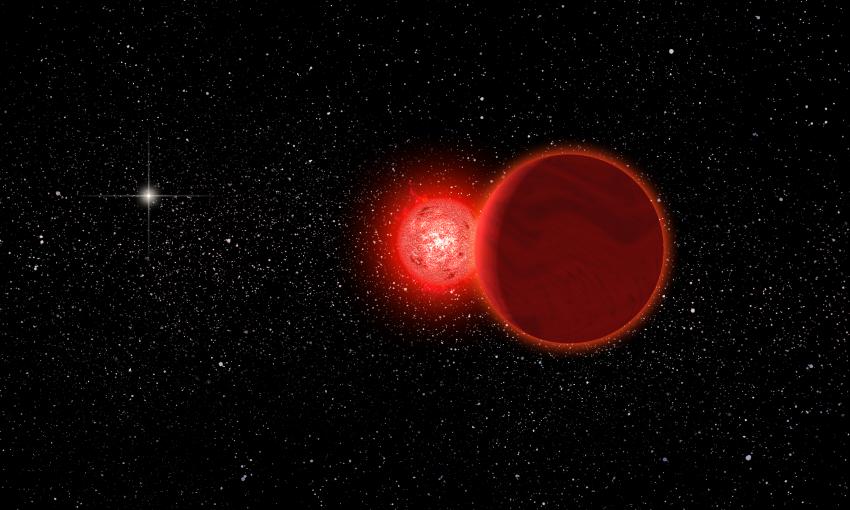
A group of astronomers from the US, Europe, Chile and South Africa have determined that 70,000 years ago a recently discovered dim star is likely to have passed through the solar system's distant cloud of comets, the Oort Cloud
Charles Townes, Inventor of the Laser and Maser, Passes Away at 99

Charles H. Townes, professor emeritus of physics at the University of California, Berkeley, who shared the 1964 Nobel Prize in Physics for invention of the laser and maser, and subsequently pioneered the use of lasers in astronomy, died on January 27, 2015 in Oakland, California. He was 99. Until last year, Townes visited the campus daily, working either in his office in the physics department or at the Space Sciences Laboratory.
NASA's Dawn Spacecraft Captures Best Ever View of Dwarf Planet Ceres
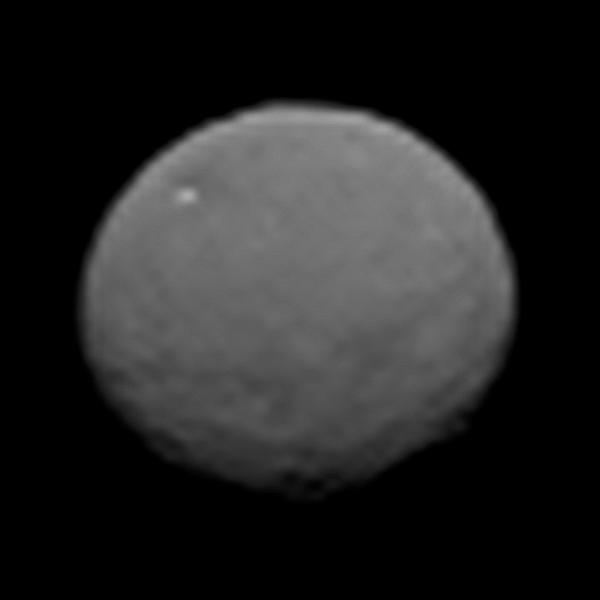
NASA's Dawn spacecraft has returned the sharpest images ever seen of the dwarf planet Ceres. The images were taken 147,000 miles (237,000 kilometers) from Ceres on January 25, 2015. Ceres, the largest body between Mars and Jupiter in the main asteroid belt, has a diameter of about 590 miles (950 kilometers). The mysterious world was discovered in 1801 by astronomer Giuseppe Piazzi. Originally described as a planet, Ceres was later categorized as an asteroid and then reclassified as a dwarf planet in 2006. Some scientists believe the dwarf planet harbored a subsurface ocean in the past and liquid water may still be lurking under its icy mantle.
Unique Quasar Has a Built-in Dimmer Switch

Quasars are enormously bright objects at the edge of our universe that emit massive amounts of energy. In an optical telescope, quasars appear point-like, similar to stars from which they derive their name (Quasar = Quasi-Stellar). Quasars draw their energy from super-massive black holes at their center that power the explosive energy output. Until now, scientists have been able to study both bright phase quasars and dim phases quasars, but they have never seen a quasar change from a bright to dim state. Now, Yale-led researchers have spotted a quasar that has dimmed by a factor of six or seven, compared with observations from only a few years ago. Catching one as it changes within a human lifetime is unprecedented and will hopefully help fill in many gaps in our understanding of the life cycle of a quasar.
Large Observable Asteroid to Scoot By Earth on January 26th
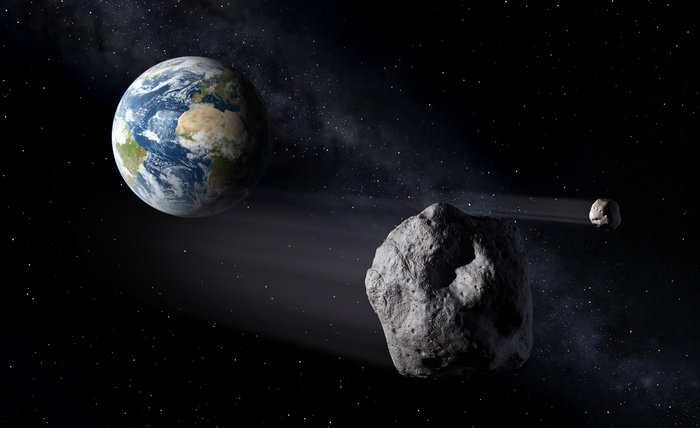
An asteroid designated 2004 BL86 will safely pass about three times the distance of Earth to the Moon on January 26, 2015. From its reflected brightness, astronomers estimate that the asteroid is about a third of a mile (0.5 kilometers) in size. The flyby of the asteroid will be the closest by any known space rock this large until asteroid 1999 AN10 flies past Earth in 2027. At the time of its closest approach on January 26th, the asteroid will be approximately 745,000 miles (1.2 million kilometers) from Earth. It is expected to be observable to amateur astronomers with small telescopes and strong binoculars.
NASA's Kepler Marks 1000th Verified Exoplanet Discovery

How many stars like our Sun host planets like Earth? NASA's Kepler Space Telescope continuously monitored more than 150,000 stars beyond our solar system, and to date has offered scientists an assortment of more than 4000 candidate planets for further study -- the 1000th of which was recently verified.
So long, 2014

Have a Great 2015!
Nice Surprise -- Quantum Physics Just Got Less Complicated
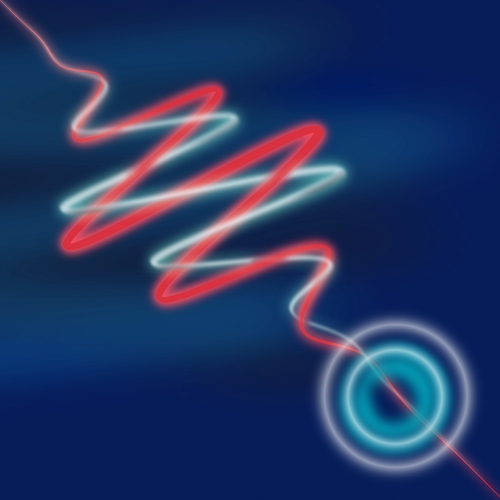
Here's a nice surprise: quantum physics is less complicated than we thought. An international team of researchers at the National University of Singapore has proved that two peculiar features of the quantum world previously considered distinct are actually different manifestations of the same thing. The researchers found that Wave-Particle Duality is simply the Quantum Uncertainty Principle in disguise, reducing two mysteries to one. Wave-Particle Duality is the idea that a quantum object can behave like a wave and a particle at the same time. The Quantum Uncertainty Principle is the idea that it's impossible to know the exact speed and exact position of a particle at the same time. These concepts have been known to physicists since the early 1900s. This discovery deepens our understanding of quantum physics and could prompt ideas for new applications of wave-particle duality.
Strange Galaxy Perplexes Astronomers
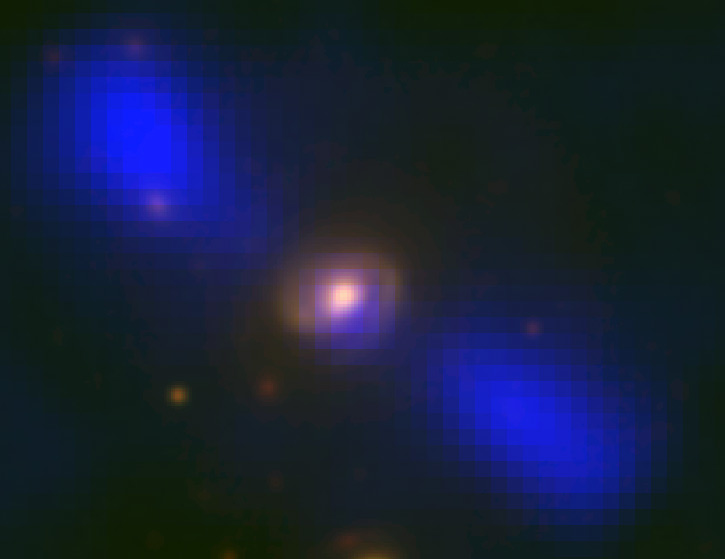
With the help of citizen scientists participating in the Galaxy Zoo Project, a team of astronomers has found an important new example of a very rare type of galaxy. The galaxy, nearly 800 million light-years from Earth, is a spiral galaxy like our own Milky Way. What is unique about this galaxy is that it has prominent jets of subatomic particles propelling outward from its core at nearly the speed of light... But the problem is that spiral galaxies like this are not supposed to have such large jets. So what is this?
Astronomers Identify Gas Spirals as a Nursery of Twin Stars through ALMA Observation
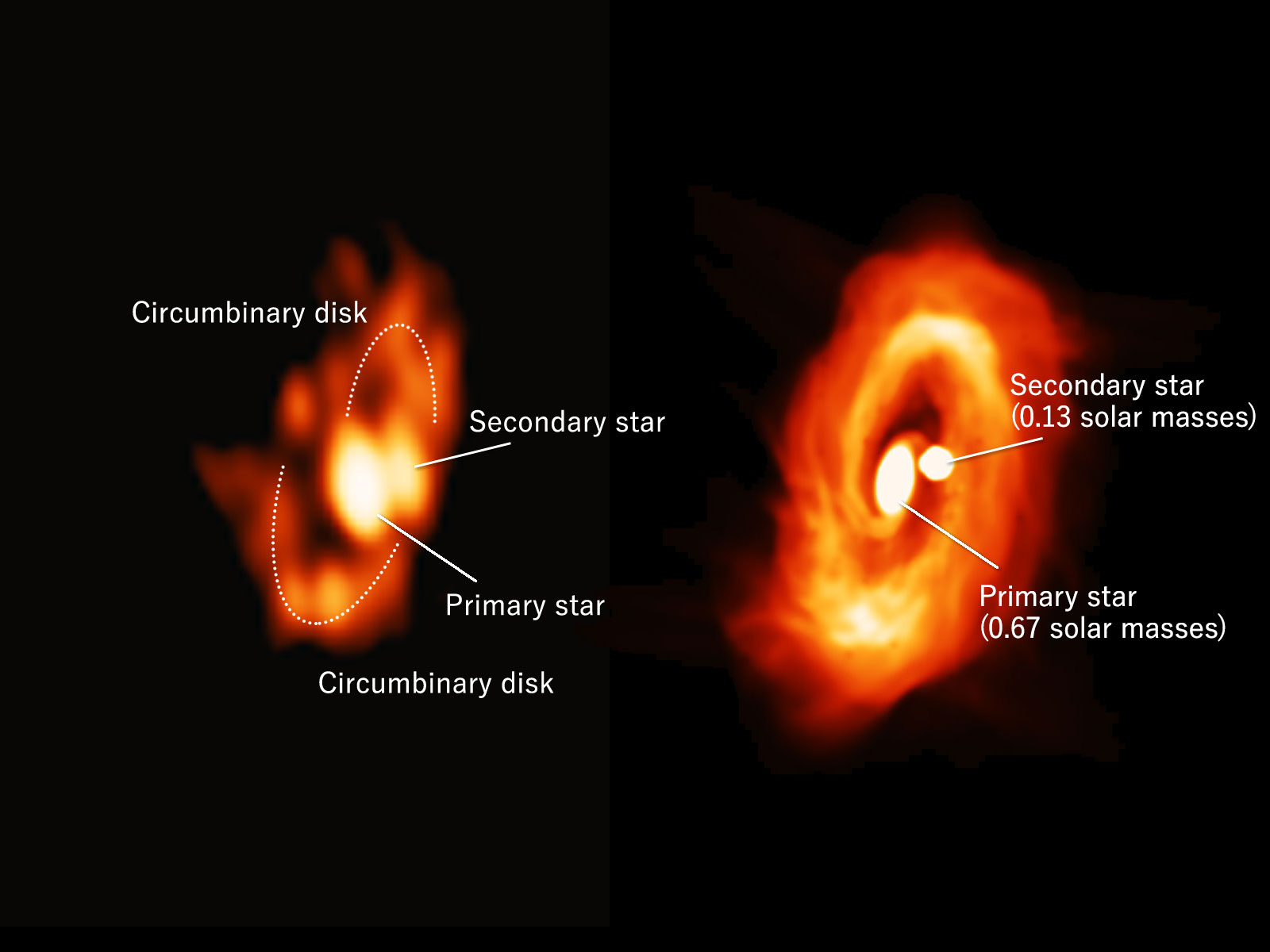
With the Atacama Large Millimeter/submillimeter Array (ALMA) observation, astronomers led by Shigehisa Takakuwa, Associate Research Fellow at the Institute of Astronomy and Astrophysics, Academia Sinica (ASIAA), Taiwan, found spiral arms of molecular gas and dust around the "baby twin" stars, binary protostars. Gas motions to supply materials to the twin were also identified. These observational results unveil, for the first time, the mechanism of the birth and growth of binary stars, which are ubiquitous throughout the universe.
New Exotic State of Matter May Be the Silicon of the Quantum Era

An odd, iridescent material that has puzzled physicists for decades turns out to be an exotic state of matter that could open a new path to quantum transistors, computers, and other next-generation electronics. Physicists at the University of Michigan have discovered several properties of the compound Samarium Hexaboride that close the case of how to classify the material -- a mystery that has been investigated since the late 1960s. Samarium Hexaboride, abbreviated SmB6, is a topological insulator. Topological insulators are an exciting class of solids that conduct electricity like a metal across their surface, but block the flow of current (like rubber) through their interior. They behave in this two-faced way despite that their chemical composition is the same throughout. The unique properties of this material raise hopes for finding the new "Silicon of the Quantum Era."
New Technique For Measuring Distances to Galaxies Achieves an Accuracy of 90 Percent
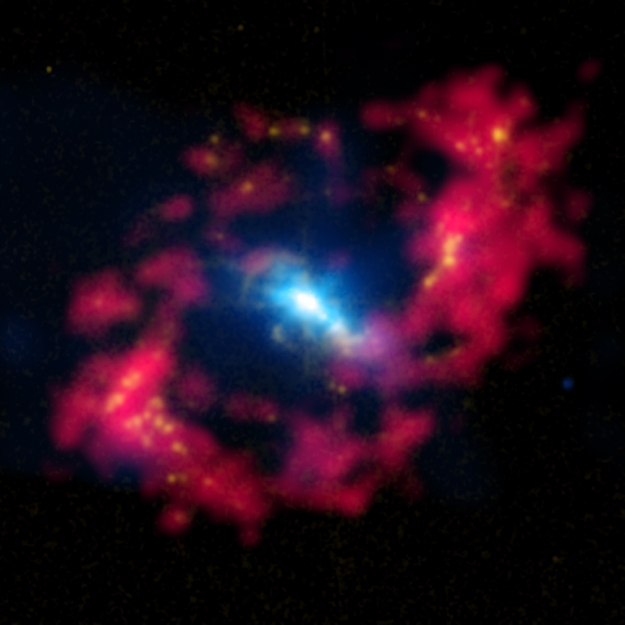
A team of scientists has accurately measured the distance to galaxy NGC4151 using the W. M. Keck Observatory Interferometer. The team employed a new technique they developed, which allows them to measure precise distances to galaxies tens of millions of light years away. The new technique is similar to that used by land surveyors on earth, who measure both the physical and angular, or apparent, size of a distant object, to calculate its distance. The method, based on simple geometrical principles, is quite precise, achieving an accuracy of 90 percent.
Funding Member
