News
Charting the Slow Death of Our Universe
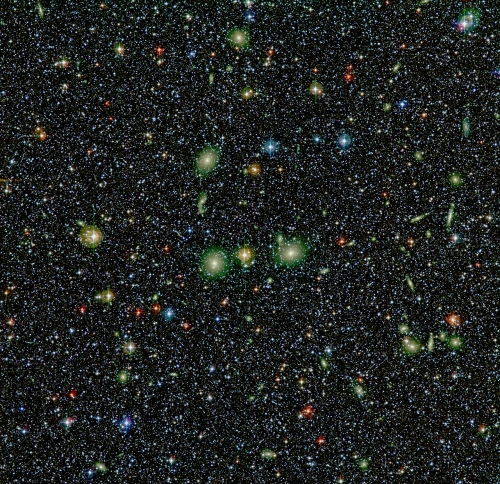
The fact that our Universe is slowly fading has been known since the late 1990s. Now, an international team of astronomers studying more than 200,000 galaxies has measured the energy generated within a large portion of space more precisely than ever before, representing the most comprehensive assessment of the energy output of the nearby Universe. They confirm that the energy produced in the Universe today is only about half of what it was two billion years ago. They also find that this fading is occurring across all wavelengths from ultraviolet to the far infrared. Their conclusion -- The Universe is slowly dying.
NASA's Dawn Mission Produces First High Resolution Map of Ceres
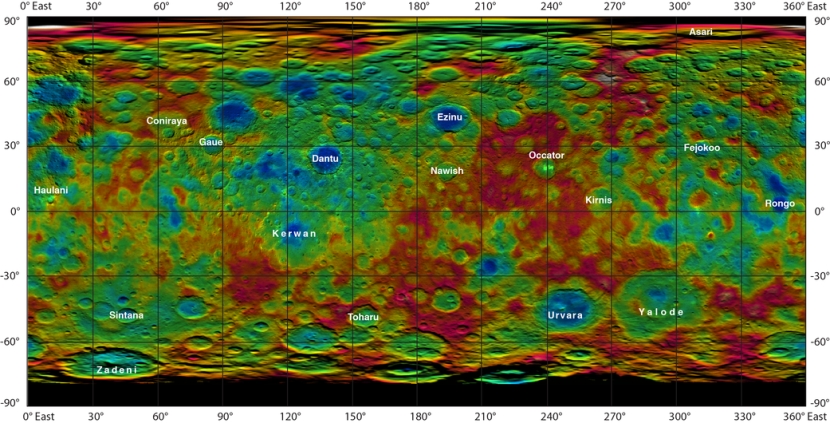
2015 has certainly turned out to be the year of the Dwarf Planet. On March 6, 2015, Dawn made history as the first mission to reach Ceres. Then in mid-July 2015, New Horizons visited Pluto, truly the "Capo di tutti capi" of the Dwarf Planets. Although Ceres is about 40 percent the size of Pluto, it is beginning to show a diverse topography, with height differences from crater bottoms to mountain peaks as great as 9 miles (15 kilometers). Scientists continue to analyze the latest data from Dawn as the spacecraft makes its third mapping orbit. And now some of these craters and other surface features are being assigned official names by the International Astronomical Union (IAU), the inventors of the "Dwarf Planet."
Move Over Arecibo -- China Assembling World's Largest Radio Telescope

China is assembling the world's largest radio telescope deep in the mountains of southwest China's Guizhou Province. When it is completed in 2016, the new 500 meter radio telescope will be the world's largest, overtaking Puerto Rico's Arecibo Observatory, which is 300 meters in diameter.
The Elusive Massless Weyl Fermion Discovered After 85 Years
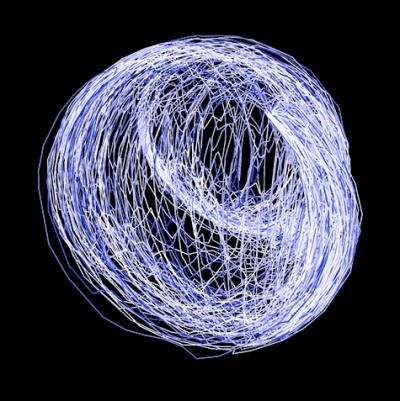
Princeton University scientists have discovered the elusive Weyl fermion, a massless particle that was theorized 85 years ago. Proposed by the mathematician and physicist Hermann Weyl in 1929, Weyl fermions have been long sought by scientists because they are regarded as possible building blocks of other subatomic particles and are even more basic than the ubiquitous electron. Since Weyl fermions are massless and possess a high degree of mobility, they could give rise to faster and more efficient electronics, especially in quantum computing applications.
Irregular Heartbeat of the Sun is Driven by a Double Dynamo
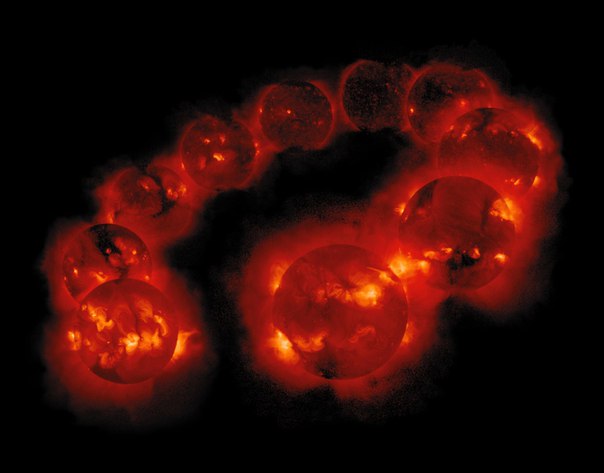
It has been 172 years since a scientist first spotted that the Sun's activity varies over a cycle lasting around 10 to 12 years. But every cycle is a little different and none of the models to date have fully explained the fluctuations. A new model of the Sun's solar cycle, developed by Dr. Valentina Zharkova of Northumbria University in the UK, is producing unprecedentedly accurate predictions of irregularities within the Sun's 11 year heartbeat. The model draws on dynamo effects in two layers of the Sun -- one close to the surface and one deep within its convection zone. Predictions from the model suggest that solar activity will fall by 60 per cent during the 2030s to conditions last seen during the "mini ice age" that began in 1645.
Pluto Flyby Update - Houston We Now Have Mountains

Icy mountains on Pluto and a new, crisp view of its largest moon, Charon, are among the several discoveries announced today by NASA's New Horizons team, just one day after the spacecraft's historic Pluto flyby. The mountains on Pluto likely formed no more than 100 million years ago -- mere youngsters in a 4.56 billion year old solar system. This suggests that Pluto may still be geologically active today.
Pluto Flyby Update - Houston We Have Impact Craters

It began as a point of light. Then, it evolved into a fuzzy orb. Now, in the latest portrait from NASA's New Horizons spacecraft, Pluto is being revealed as an intriguing new world with distinct surface features. Three billion miles from Earth and just two and a half million miles from Pluto, New Horizons has taken its best images and is beginning to reveal the first signs of discrete geologic features. At 7:49 AM EDT on Tuesday morning, July 14th, New Horizons will zip past Pluto at 30,800 miles per hour (49,600 kilometers per hour), with a suite of seven science instruments busily gathering data. The mission will complete the initial reconnaissance of the solar system's original nine planets with the first-ever look at this icy world.
APOD Founders Win Klumpke-Roberts Award

The Klumpke-Roberts Award for outstanding contributions to public understanding and appreciation of astronomy is awarded to Dr. Robert Nemiroff and Dr. Jerry Bonnell for their work on the Astronomy Picture of the Day.
NASA's New Horizons is on Track for Pluto Flyby on July 14th
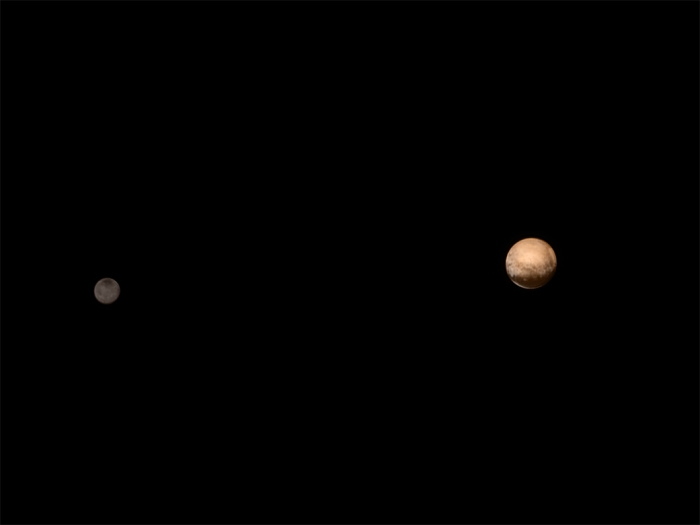
NASA's New Horizons is speeding towards the edge of our solar system for a July 14, 2015 flyby of Pluto. At its closest approach the spacecraft will be zipping by at about 7800 miles (12,500 kilometers) above the surface. It's the first mission to Pluto and the Kuiper Belt and it won't be making observations alone. NASA's fleet of observatories will also be busy gathering data before and after to help piece together what we know about Pluto. Sending this spacecraft on an almost 3 billion mile journey will help answer basic questions about the surface properties, atmospheres, and moons of the Pluto system.
Mars Curiosity Rover Suffers Flat Tire -- But Keeps on Rolling

Curiosity's international team has resumed full operations after a period of limited activity during most of June 2015. The operations moratorium happens about every 26 months, when Mars passes nearly behind the sun from Earth's perspective and the sun interferes with radio communication between the two planets. Curiosity's path has crossed areas that have numerous sharp rocks embedded in the ground. The wheels can sustain significant damage without impairing the rover's ability to drive, and dents and holes were anticipated, however the amount of wear on Curiosity's wheels appears to have accelerated. Routes to future destinations for the mission will likely be charted to lessen the amount of travel over such rough terrain. Flat tire and all, NASA's Curiosity Mars rover is now examining a valley, where at least two types of bedrock meet, for clues about changes in ancient environmental conditions recorded by the rock.
Universe Appears to be Oscillating at Roughly One Cycle per Two Billion Years

According to scientists, the universe began with a "big bang" and expanded to its current size. Physicists at the University of Southern Mississippi have now discovered that the universe may not only be expanding, but also oscillating or "ringing" at the same time. And they found that the universe appears to have slowed down and sped up not just once, but 7 times in the last 13.8 billion years. This oscillation is not a wave moving through the universe, but rather seems to be a "wave of the universe" -- The whole universe seems to be pulsating.
Are Black Holes Simply Giant Super-Dense Fuzzballs?

A black hole is a place in space where gravity pulls so strongly that even light can not get out. And because no light can get out, we can't see black holes -- To us, they are invisible. Space telescopes with special tools can help find black holes by observing how stars that are very close to the black holes move. So, are black holes the ruthless killers we've made them out to be? Samir Mathur, a professor of physics at The Ohio State University says no. He takes issue with recently proposed ideas that black holes have "firewalls" that destroy everything they touch. Mathur used principles of string theory to show that black holes are actually tangled-up balls of cosmic strings and his "Fuzzball Theory" has helped resolve certain contradictions in how physicists think of black holes.
Construction to Begin on the World's Largest Optical Telescope
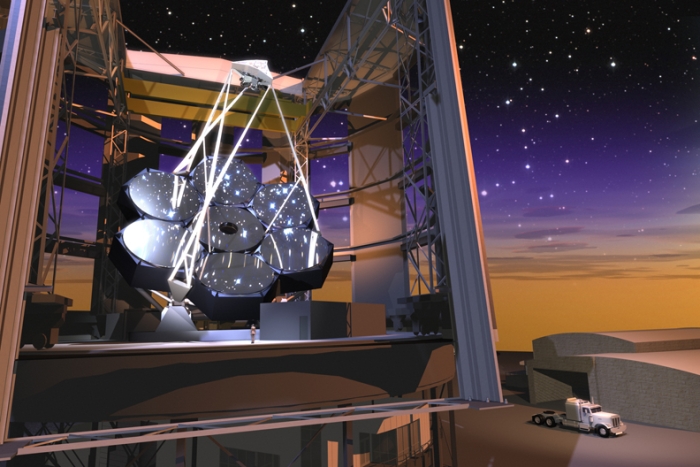
The Giant Magellan Telescope (GMT) is slated to be the first in a new class of extremely large telescopes, capable of producing images with 10 times the clarity of those captured by the Hubble Space Telescope. The GMT will reveal the faintest objects ever seen in space, including extremely distant and ancient galaxies. The telescope will be built in the dry, clear air of Chile's Atacama Desert in a dome 22 stories high. GMT is expected to see first light in 2021 and be fully operational by 2024.
Large Hadron Collider Starts Season 2 -- The Path of the Protons

We left the end of Season 1 with the ATLAS and CMS experiments announcing the discovery of the Higgs boson, which was the last piece of the puzzle known as the Standard Model. Now, CERN's Large Hadron Collider (LHC) has started delivering physics data for the first time in 27 months. After an almost two year shutdown and several months of re-commissioning, the LHC is now providing collisions to all of its experiments at the unprecedented energy of 13 TeV, almost double the collision energy of its first run. This marks the start of Season 2 at the LHC, opening the way to new discoveries. The LHC will now run round the clock for the next three years.
World Celebrates 50 Years of Spacewalks

This year, the world celebrates 50 years of spacewalks or Extra-Vehicular Activities (EVA) that began with the first EVA conducted by Russian cosmonaut Alexei Leonov on March 18, 1965 and three months later by American astronaut Edward White on June 3, 1965. After a distinguished career, Major General Leonov became the commander of the cosmonaut team and deputy director of the Yuri Gagarin Cosmonaut Training Center, where he oversaw crew training. Tragically, Lieutenant Colonel White and his crewmates Gus Grissom and Roger Chaffee died on January 27, 1967, in the Apollo 1 flash fire during a launch pad test at Kennedy Space Center.
Funding Member
