News
Is Our Universe Just a Bubble in a Sea of Bubbles?
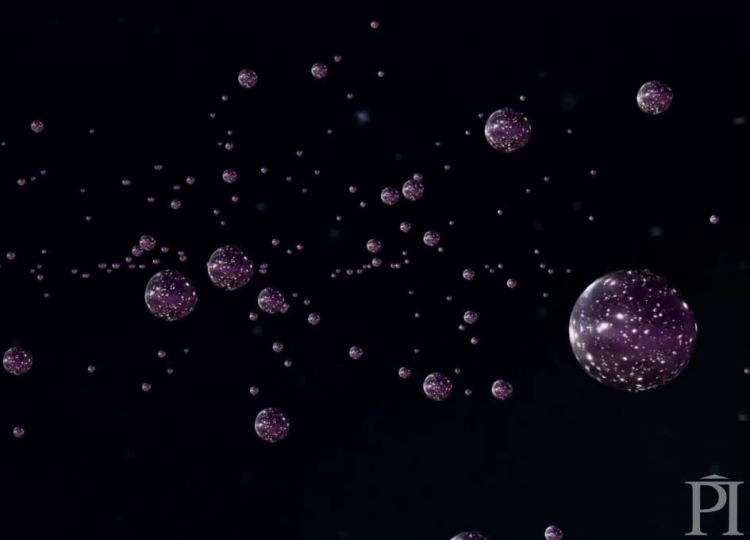
In the beginning there was a vacuum. The vacuum simmered with energy. Like water in a boiling pot, this energy began to evaporate and bubbles formed and expanded. Inevitably, some bubbles bumped into each other. Maybe the bubbles were rare and far apart. Maybe they were packed close together and resembled the foam that forms when an ocean wave breaks on the beach. But here's the thing -- each of these bubbles was a universe. In this story, our universe was just one bubble in a frothy sea of bubble universes. This is the model of the universe that researchers at the Perimeter Institute for Theoretical Physics in Ontario, Canada are piecing together.
It Was 45 Years Ago Today -- Next Stop Mars

It was 45 years ago that Neil Armstrong took the first small step onto the surface of the moon that changed the course of history. The years that followed saw an unprecedented age of scientific, technological, and human research. We stand now on a new horizon, poised to take the next giant leap deeper into the solar system. The Apollo missions blazed a path for human exploration to the moon and today we are extending that path to near-Earth asteroids, Mars, and beyond. In our lifetimes, NASA and the world will take the next giant leap to explore the Red Planet. It gives us pause to consider that according to NASA, the first human to set foot on Mars is walking the Earth today.
Most Distant Milky Way Star Detected... And It's One Third the Distance to the Andromeda Galaxy

The distant outskirts of the Milky Way harbor valuable clues for understanding the formation and evolution of our galaxy. Yet, due to overwhelming distances and an extremely sparse population of stars, many objects have not been identified beyond 400,000 light years. A team of astronomers has now discovered two stars in the Milky Way's halo that are the most distant ever detected at distances of 775,000 and 900,000 light years, respectively -- five times more distant than the Large Magellanic Cloud and about one third of the distance to the Andromeda Galaxy.
Ultrahigh Energy Cosmic Rays Found Emanating From Hotspot Near Ursa Major
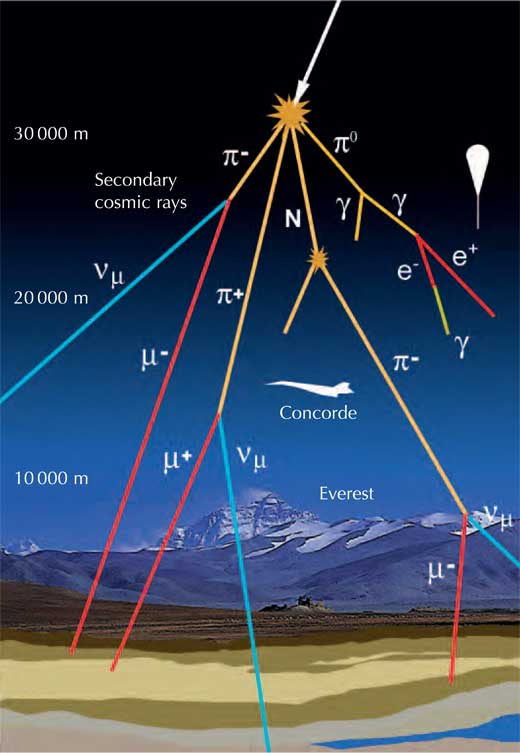
Many astrophysicists believe that ultrahigh energy cosmic rays are generated by Active Galactic Nuclei (AGNs) in which material is sucked into a Supermassive Black Hole at the center of galaxy, while other material is spewed away in a beam-like, highly collimated jet known as a Blazar. Another popular belief is that the highest energy cosmic rays come from supernovas that emit Gamma Rays Bursts (GRBs). An observatory operated by the University of Utah has found a hotspot near Ursa Major that is emitting a disproportionate number of the highest energy cosmic rays. This discovery moves us another step closer to identifying the mysterious sources of these most energetic particles in the universe.
Mysterious X-ray Signal in Perseus May be the First Observed Sign of Dark Matter
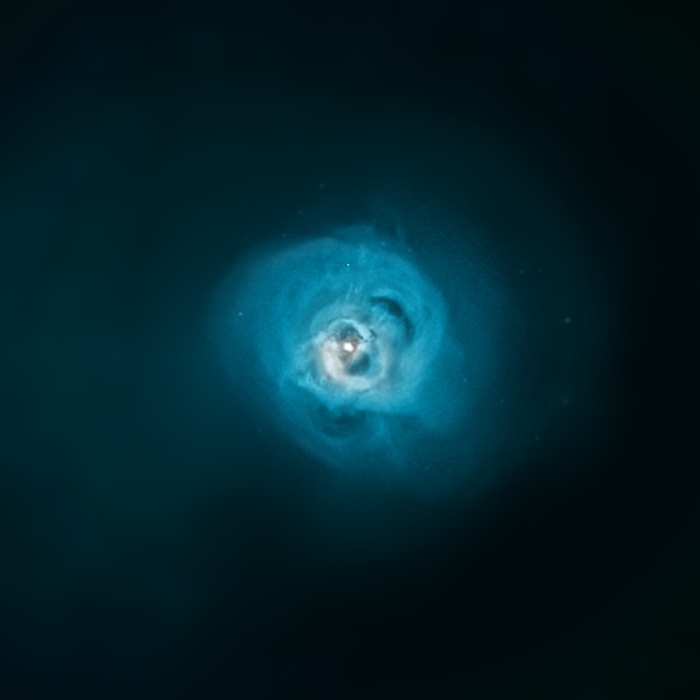
Astronomers think dark matter constitutes 85 percent of the matter in the Universe, but does not emit or absorb light like "normal" matter such as protons, neutrons, and electrons that make up the familiar elements observed in planets, stars, and galaxies. Because of this, scientists must use indirect methods to search for clues about dark matter. A mysterious X-ray signal has been found using NASA's Chandra X-ray Observatory and ESA's XMM-Newton and one intriguing possibility is that the X-rays are produced by the decay of sterile neutrinos, a type of particle that has been proposed as a candidate for dark matter.
A New Bizarre Class of Hybrid Star is Discovered -- The Thorne-Zytkow Object
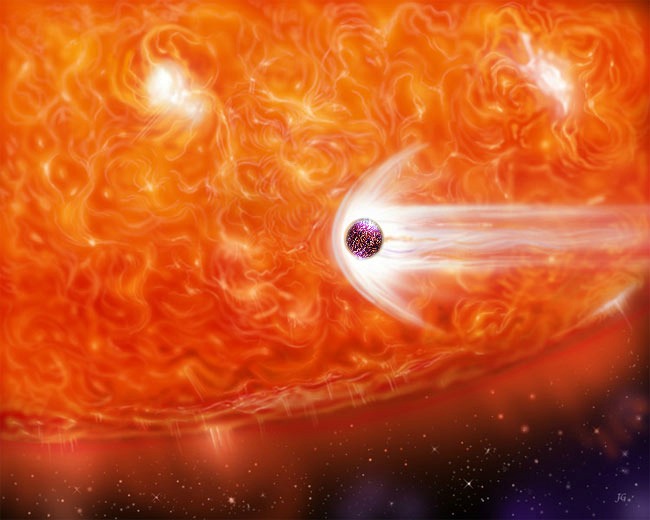
In a discovery decades in the making, scientists have detected a new theoretical class of stars first proposed in 1975 by physicist Kip Thorne and astronomer Anna Zytkow. Thorne-Zytkow Objects (TZOs) are hybrids of red supergiant and neutron stars that in many ways resemble normal red supergiants, such as Betelgeuse. They differ, however, in the distinct chemical signatures that result from unique activity in their stellar interiors. A TZO forms when a massive red supergiant essentially swallows a neutron star, which spirals into the core of the red supergiant. While normal red supergiants derive their energy from nuclear fusion, TZOs are powered by the unusual activity of the absorbed neutron star at the core.
Dark Side of the Moon Mystery Solved After 55 Years
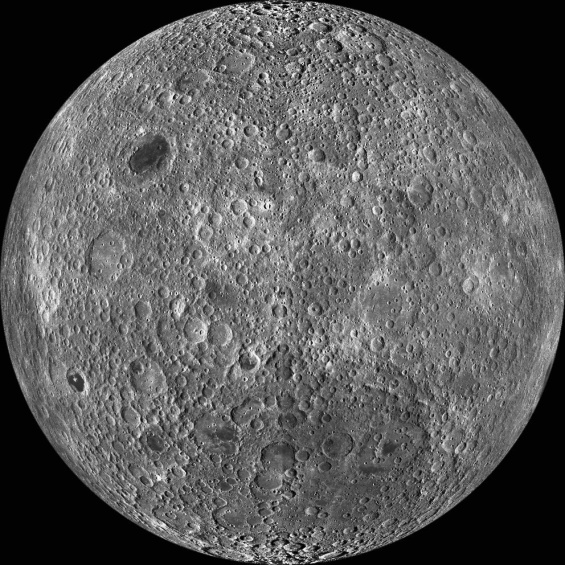
When looking up at the full moon at night, many of us see a "man in the moon" - a face smiling down at us from the lunar surface. The "face," of course, is just an illusion shaped by the dark splotches of lunar maria, which are the smooth plains formed from the lava of ancient volcanic eruptions. But very few dark splotches exist on far side of the moon. It is basically all mountains and craters. This mystery is called the "Lunar Far Side Highlands Problem" and dates back to 1959, when the Soviet spacecraft Luna 3 transmitted the first images of the dark side of the moon back to Earth. Researchers immediately noticed that fewer "seas" or maria existed on the portion of the moon that always faces away from Earth. Now, after 55 years of head-scratching, scientists have finally figured out why.
NASA Moves Forward with a Saturn V on Steroids

NASA is nearing completion of two major structural restoration projects for the B-2 Engine Test Stand at the Stennis Space Center in Mississippi, marking critical milestones for testing the core stage of the new heavy-lift launch vehicle, the Space Launch System (SLS). Reminiscent of the Saturn V launch vehicle used in the Apollo missions of the late 1960s and early 70s, NASA's new SLS is an advanced, heavy-lift launch vehicle that will provide an entirely new capability for science and human exploration beyond Earth's orbit. SLS will carry the Orion Multi-Purpose Crew Vehicle, as well as important cargo, equipment, and science experiments, to deep space. The massive 130 metric ton configuration will be the most capable, powerful launch vehicle in history. Towering a staggering 384 feet tall, it will provide 9.2 million pounds of thrust at liftoff and weigh 6.5 million pounds.
ESA's Venus Express Gets Ready to Take the Plunge

After eight years in orbit, ESA's Venus Express has completed routine science observations and is preparing for a daring plunge into the planet's hostile atmosphere. Venus Express was launched on a Soyuz-Fregat from the Russian Baikonur Cosmodrome in Kazakhstan on November 9, 2005, and arrived at Venus on April 11, 2006. Now, the fuel supplies necessary to maintain the elliptical orbit are running low and will soon be exhausted. Thus, routine science operations have concluded, and the spacecraft is being prepared for one final mission: to make a controlled plunge deeper into the atmosphere than ever before attempted.
Jupiter's Great Red Spot is Shrinking
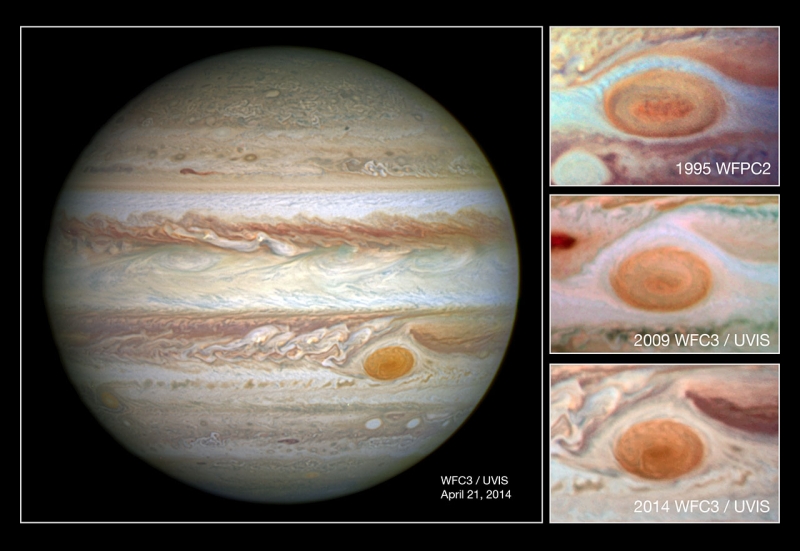
Jupiter's trademark Great Red Spot - a swirling storm that is larger than Earth - is shrinking. This downsizing, which is changing the shape of the spot from an oval into a circle, has been known from about the 1930s, but now these striking new NASA/ESA Hubble Space Telescope images capture the spot at a smaller size than ever before.
Are We Ready for Contact with Extraterrestrial Intelligence?
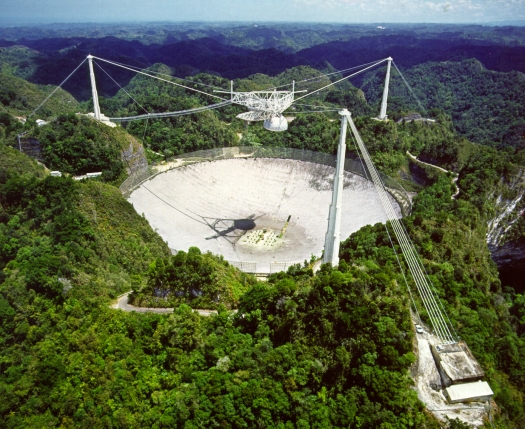
The Search for Extra-Terrestrial Intelligence (SETI) project is an initiative that began in the 1970s with funding from NASA. It has evolved over the years with a mission to explore, understand, and explain the origin, nature, and prevalence of life in the universe. Up to now, this work has been performed in a passive, listen-only mode. Now the members of SETI want to go further and not only listen for extraterrestrial signs, but also actively send messages from Earth that could alert possible extraterrestrial civilizations of our existence and location. Astrophysicists, such as Stephen Hawking, have warned of the risk that this may imply for humanity, as it could trigger the arrival of beings with more advanced technology... and unknown intentions.
Is Spacetime Like a Very Slippery Superfluid?

Quantum mechanics is able to effectively explain three of the four fundamental forces of the Universe 1) Electromagnetism - which acts between pieces of matter carrying electrical charge, 2) Weak Interactions - responsible for radioactive decay, and 3) Strong Interactions - responsible for holding the nuclei of atoms together. But it does not explain gravity. Identifying a plausible model of gravity within a quantum physics framework is one of the major challenges physics is facing today. However, despite the many models proposed to date, none has proved satisfactory or amenable to empirical investigation. Now, theoretical physicists in Italy and Germany have devised innovative ways to describe the effects that should be observed if spacetime was a very low viscosity superfluid and they are arriving at some very profound conclusions. They are also proposing the first observational tests of these phenomena.
Didn't See This One Coming -- New Exotic Particle Found That Does Not Fit the Traditional Model
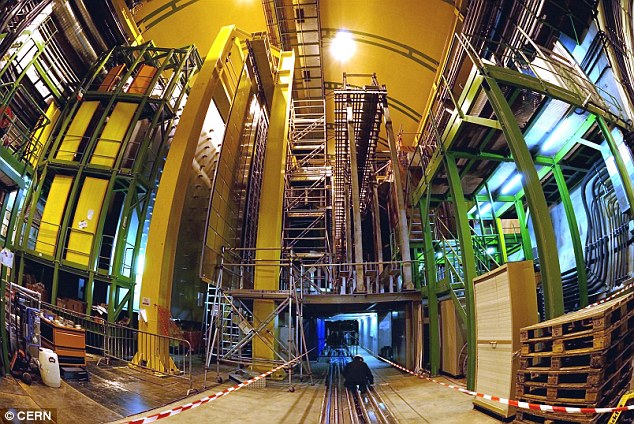
Quarks are hard, point-like objects found within the nucleus of an atom. When Quarks combine in threes, they form compound particles known as Baryons. Protons are probably the best-known of the Baryons. Sometimes, however, Quarks interact with corresponding anti-Quarks, which have the same mass but opposite charges. When this happens, they form Mesons. Mesons often turn up in cosmic rays. Mesons, Baryons, and other kinds of particles that take part in strong interactions are called Hadrons. This classification of particle physics has remained virtually unchallenged... Until now.
Mercury 7 Astronauts Introduced to the World 55 Years Ago

On April 9, 1959, NASA introduced its first astronaut class, the Mercury 7: Walter M. Schirra, Jr., Donald K. "Deke" Slayton, John H. Glenn, Jr., M. Scott Carpenter; Alan B. Shepard, Jr., Virgil I. "Gus" Grissom, and L. Gordon Cooper, Jr. The press and public soon adopted them as heroes, embodying the new spirit of space exploration. Project Mercury helped prove that human spaceflight was possible and paved the way for the Gemini and Apollo programs.
The "El Gordo" Galaxy Cluster Truly is "The Fat One"
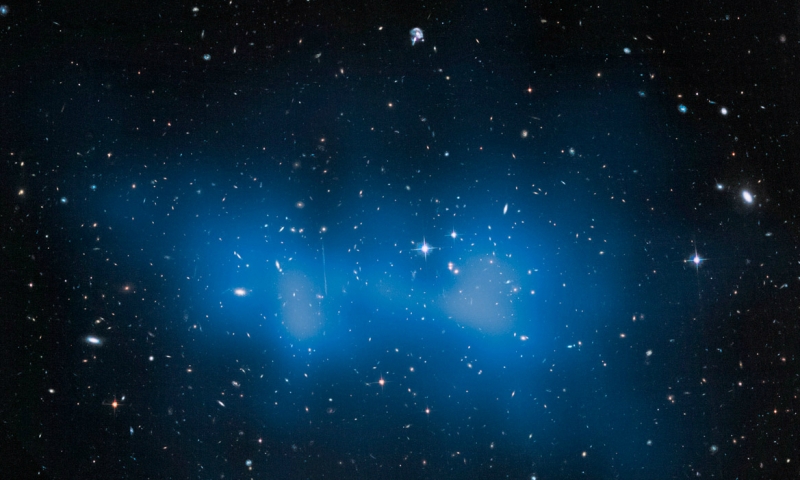
NASA's Hubble Space Telescope has weighed the largest known galaxy cluster in the distant universe and found that it definitely lives up to its nickname -- El Gordo (Spanish for "The Fat One"). By measuring how much the cluster's gravity warps images of galaxies in the distant background, a team of astronomers has calculated the cluster's mass to be as much as 3 Million Billion times the mass of our sun.
Funding Member
