News
NRAO's Ground-based Radio Telescopes to be Used With NASA's GLAST Gamma-Ray Satellite
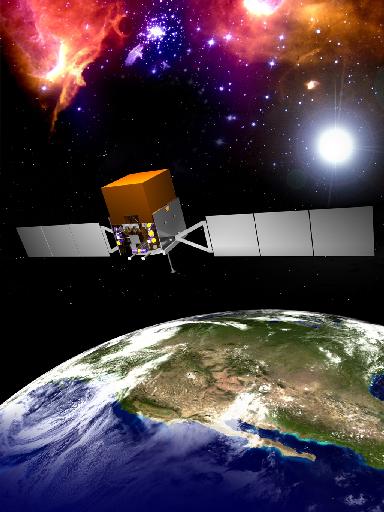
NASA's Gamma-ray Large Area Space Telescope (GLAST) is scheduled for launch early next year. The National Radio Astronomy Observatory (NRAO) is teaming with NASA so that astronomers can conduct coordinated observations using the orbiting satellite and the ground-based radio telescopes simultaneously to maximize their scientific value.
Yellow Jacket

This week's review contest winner takes a wide field view of the Takahashi Epsilon 180ED imaging scope...
Spitzer Gives Scientists Depth Perception
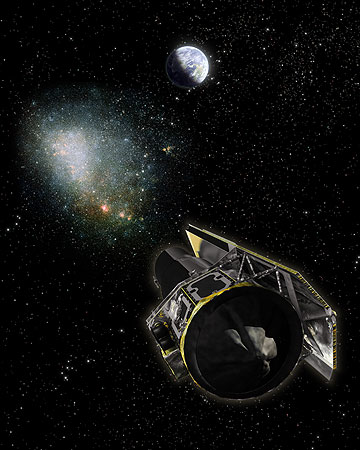
Astronomers now have a new method for determining the distance to certain mysterious bodies in and around our Milky Way galaxy. By taking advantage of the unique position of the NASA Spitzer Space Telescope about 40 millions miles from Earth, and a depth-perceiving technique called parallax, they are now able to pin down the location of dark matter object in and aroung our galaxy. Once this technique is perfected, astronomers will be able to more accurately measure the distances to these dark matter objects.
2 Winners!

Your editor has returned from a mini vacation to post 2 winners judged over the holiday weekend... The first winner asks if a 2% increase is worth popping a little extra for on diagonals. The second winner builds his own scopes to have a shootout with!
NASA Dedicates Flying Observatory on Lindbergh 80th Anniversary
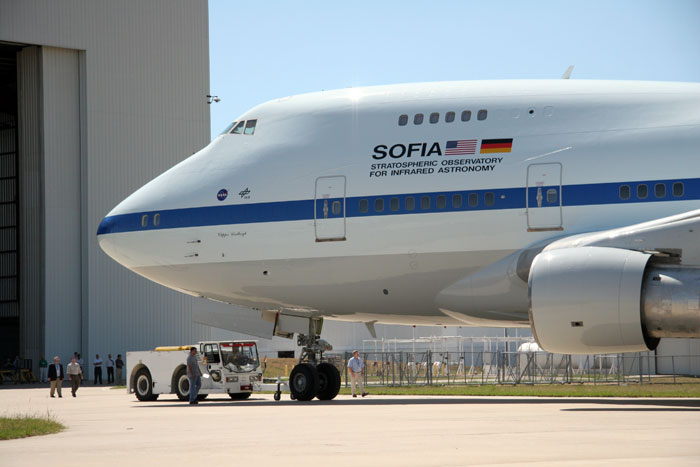
SOFIA is a Boeing 747SP extensively modified to carry a 45,000-pound (20 metric ton), 98.4-inch (2.5-meter) diameter infrared telescope assembly. SOFIA will fly at altitudes up to 45,000 feet (13.7 km) - above more than 99 percent of the Earth's water vapor - to capture infrared images and spectra not possible by even the largest ground-based telescopes. On Monday, May 21, 2007, NASA dedicated a unique astronomy aircraft to pioneering aviator Charles Lindbergh on the 80th anniversary of his historic transatlantic flight.
Month of May Departs "With a Blue Moon in Your Eyes"

When you hear someone say "Once in a Blue Moon…" you know what they mean: Rare. Seldom. Maybe even absurd. The month of May 2007 has two full moons, which means one of them is a "Blue Moon." But will it really be blue in color? Don't count on it.
Up on Highway 66

This week's review contest winner takes a little Stellar Vue out for a spin with the top down.
Nasa unveils Hubble's successor

The US space agency Nasa has unveiled a model of a space telescope that scientists say will be able to see to the farthest reaches of the Universe.
Hubble Turns Seventeen - Now Old Enough to Drive

In its 17 years of exploring the heavens, NASA's Hubble Space Telescope has made nearly 800,000 observations and snapped nearly 500,000 images of more than 25,000 celestial objects. In its 17-year lifetime, the telescope has made nearly 100,000 trips around our planet, racking up about 2.4 billion miles. The 17 years' worth of observations has produced more than 30 terabytes of data, equal to about 25 percent of the information stored in the Library of Congress. Astronomers using Hubble data have published nearly 7,000 scientific papers, making it one of the most productive scientific instruments ever built.
A Black Beauty takes a bow

This week's review contest winner puts William Optics 110mm Zenithstar on stage...
NASA's Chandra Verifies Discovery of Brightest SuperNova Ever

According to observations by NASA's Chandra X-ray Observatory and ground-based optical telescopes, SuperNova SN 2006gy is the brightest and most energetic stellar explosion ever recorded and may be a long-sought new type of explosion. The Chandra observation allowed astronomers to determine that SN 2006gy was indeed caused by the collapse of an extremely massive star, and not the most likely alternative explanation for the explosion, the destruction of a low-mass star.
GALEX Completes Four Star-Studded Years in Space

NASA's Galaxy Evolution Explorer (GALEX) has just celebrated its fourth year in space with some of M81's "hottest" stars.
Walter Schirra, Apollo 7 Astronaut, Dies at 84
SAN DIEGO (AP) -- Astronaut Walter M. "Wally" Schirra Jr., one of the original Mercury Seven astronauts and the only man to fly on all three of NASA's early space missions, has died, a NASA official confirmed Thursday. He was 84.
A potable portable?

This week's review contest winner gets a feel for a small mount from the folks at Vixen.
Black Holes May Fill the Universe with Seeds of Life

New research shows that black holes are not the ultimate destroyers that they are often portrayed to be. Instead, hot gas escaping from the clutches of enormous black holes could be one source of the chemical elements (like carbon and oxygen) that make life possible.
