News
University of Delaware Astronomers Find Planet that Survived a Deadly Red Giant Stellar Expansion

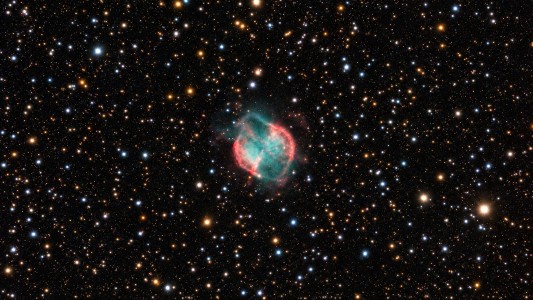
Astronomers from the University of Delaware, Mt. Cuba Observatory, and a number of other universities have announced that at least one planet in the universe has survived the violent events that accompany the late stages of a star's life cycle. According to conventional wisdom, a Red Giant that expands at the end of its life is a "planet-eater" when a planet is this close to the star.
Eye Robot

This week's review contest winner puts your hands on the controls of a Vixen Skypod...
It's Time for the IAU to Define a Moon
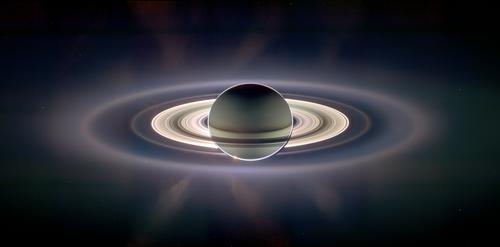
OK IAU -- You took it upon youself to give us a definition for "planet" and for that we thank you. In the last month, the 60th "moon" has been discovered orbiting Saturn. Question: When does a moon stop being a moon and start being just another space rock orbiting a planet? I think it's time to get your creative juices flowing and come up with a new definition for "moon."
University of Michigan Astronomers Observe How Neutron Stars Warp Space-Time
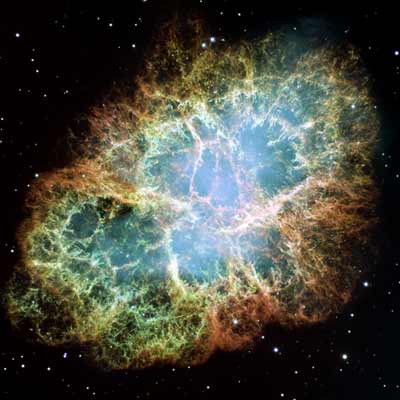
Einstein predicted that space-time distortion occurs around neutron stars. University of Michigan astronomers, using European and Japanese/NASA X-ray observatory satellites, have pioneered a groundbreaking technique for observing this distortion and determining the properties of these ultradense objects.
Got Pixels?

Read about the largest digital camera ever built...
Astronomers Find Water on Extra-Solar Planet
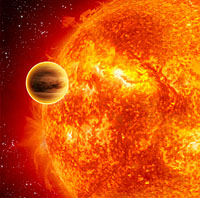
Over 200 extra-solar planets are known to exist, orbiting stars close to our own Sun. Now astronomers report the first conclusive evidence of the presence of water vapour in the atmosphere of a planet beyond our Solar System. An international team of scientists, using NASA's Spitzer Space Telescope, discovered water on an extra-solar planet named HD 189733b, which lies 63 light-years away in the constellation Vulpecula.
Mix'n and Match'n Bits and Pieces

As our collection of parts grows, combining accessories from different makers becomes a game we all play. This week's winning review covers a disparate finderscope/bracket combo in detail...
New Astronomical Sky Feature Added to Google Earth
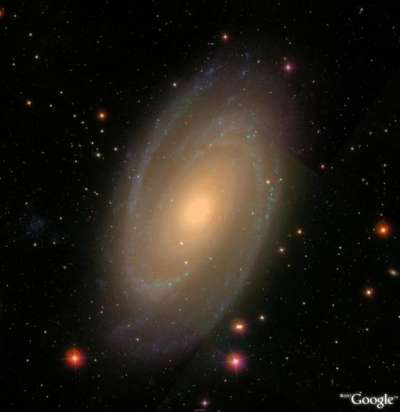
Google has announced the launch of Sky, a new feature of the popular Google Earth, that allows users to view the night sky as seen from any location on Earth. Sky enables users to explore space from their computers, with access to 100 million individual stars and 200 million galaxies. High resolution imagery and informative overlays create a unique playground for visualizing and learning about space.
Total Lunar Eclipse

Anyone staying up late tonight?
U of Minnesota Astronomers Find a Big Gaping Hole... Of Nothing
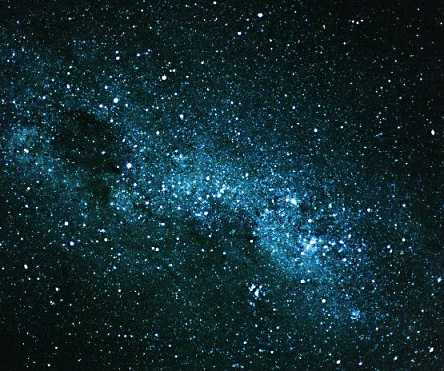
University of Minnesota astronomers have found an enormous hole in the Universe, nearly a billion light-years across, empty of both normal matter such as stars, galaxies and gas, as well as the mysterious, unseen "dark matter." While earlier studies have shown holes, or voids, in the large-scale structure of the Universe, this new discovery dwarfs them all.
Planets May Thrive Around Binary Stars
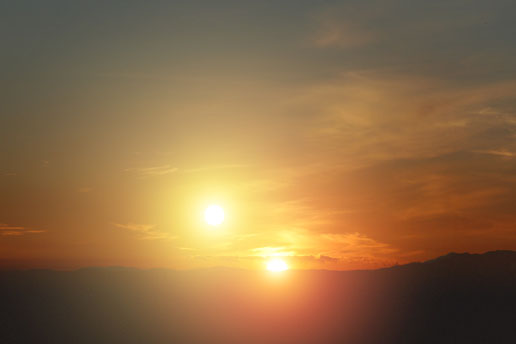
Astronomers using NASA's Spitzer Space Telescope have observed that planetary systems are at least as abundant in twin-star systems as they are in those with only one star, like our Solar System. Since more than half of all stars are twins, or binaries, the finding suggests the universe is packed with planets that have two suns.
Colossal tail trails dying star
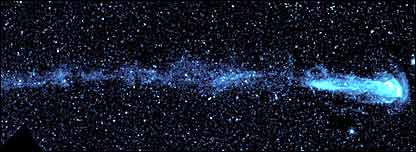
A distant star that hurtles through space at extraordinary speeds has a huge, comet-like tail trailing in its wake, astronomers say.
Monster Galaxy Pileup Spotted by Spitzer and WIYN
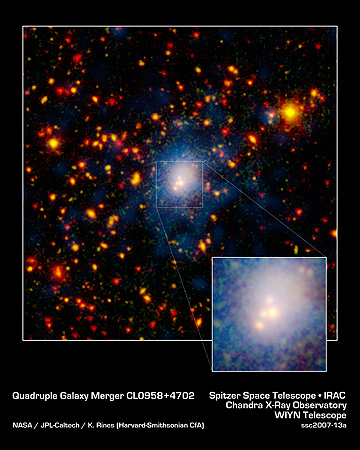
Four galaxies are slamming into each other and kicking up billions of stars in one of the largest cosmic smash-ups ever observed. The clashing galaxies, spotted by NASA's Spitzer Space Telescope and WIYN Telescope (owned by the University of Wisconsin, Indiana, Yale, and the NOAO), will eventually merge into a single, behemoth galaxy up to 10 times as massive as our own Milky Way. This rare sighting provides an unprecedented look at how the most massive galaxies in the universe form.
CalTech Astronomers Find the Most Distant Known Galaxies

Using natural gravitational lenses, CalTech astronomers claim to have found the most distant galaxies yet seen. The light we see from them today left more than 13 billion years ago, when the universe was just 500 million years old.
Help Wanted: Galaxy Classifiers - No Experience Needed
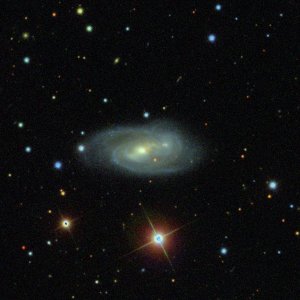
The pay is not that great (non-existent in fact) and there are no job-related benefits (other than knowing that you are making a contribution to science), but a public call for help from a team of scientists from the US and the UK in classifying nearly a million galaxies has been nothing short of a cosmic phenomenon. By taking part, you'll not only be contributing to scientific research, but you'll view parts of the Universe that literally no-one has ever seen before.
