News
Two Records in Two Weeks -- Heaviest Stellar Black Holes on Record Discovered
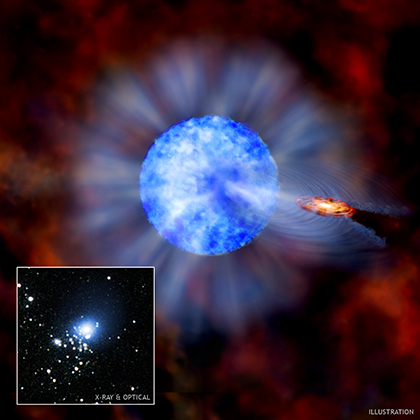
Astronomers have discovered a stellar black hole that is is almost 16 times the Sun's mass revolving around a star that is about 70 times more massive than the Sun. Sixteen times the Sun's mass is a record for black holes created from the collapse of a giant star. "Super Massive" Black Holes at the centers of galaxies are much more massive, but this object, X-7 in M33, is the record-setter for so-called "Stellar Mass" black holes. (SEE NEWS FLASH BELOW -- DISCOVERY OF A NEW RECORD STELLAR MASS BLACK HOLE WAS JUST ANNOUNCED YESTERDAY)
Comet 17P/Holmes Photographic Finder Chart
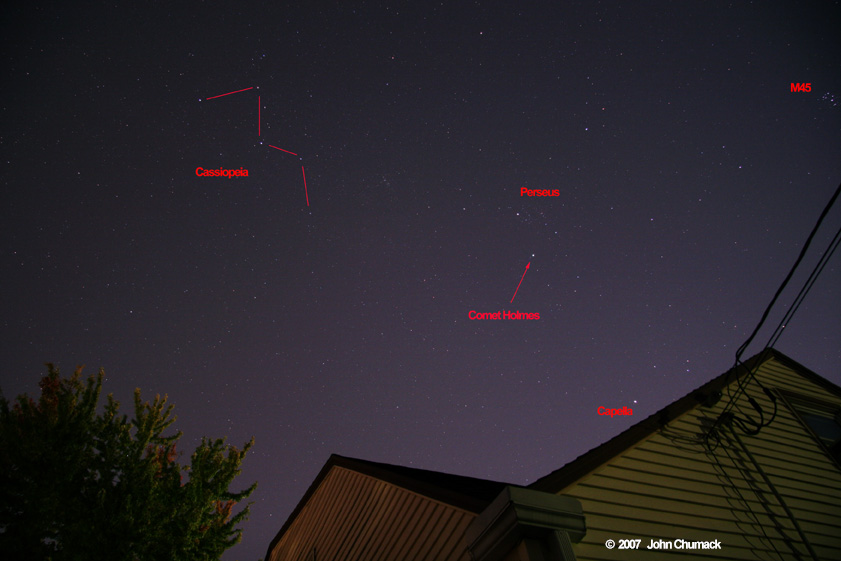
Want to see the Comet from your backyard tonight? Here is how to find this Easy Comet!
Sunrise Ushers in New Era of Balloon-based Solar Telescopes
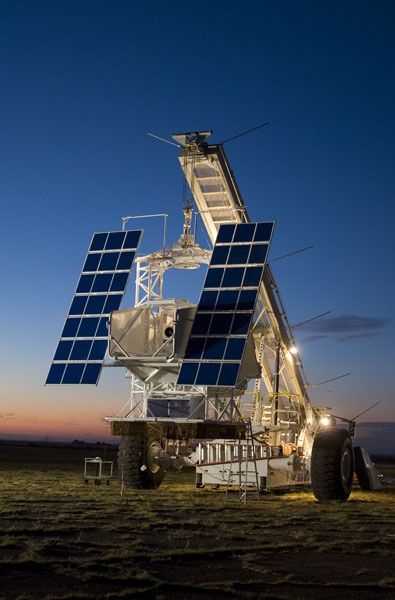
The National Center for Atmospheric Research (NCAR) launched a solar telescope to an altitude of 120,000 feet, lifted by a balloon larger than a Boeing 747 jumbo jet. The test clears the way for low cost, long-duration polar balloon flights beginning in 2009 that will capture unprecedented details of the Sun's surface. By taking advantage of the midnight Sun, the telescope will be able to capture continuous images for a period of several days to as long as two weeks above the Arctic. The observatoty can then be brought down and launched later on another long-distance flight over the Arctic or the Antarctic.
Comet Eruption!
Incredible comet eruption: from under 17th to 3rd magnitude in hours!
A great report card for a good example of a classic performer...

This latest review contest winner takes a look though a gracefully aging favorite. The C5.
Hubble and Spitzer Find 'Lego-Block' Galaxies in Early Universe
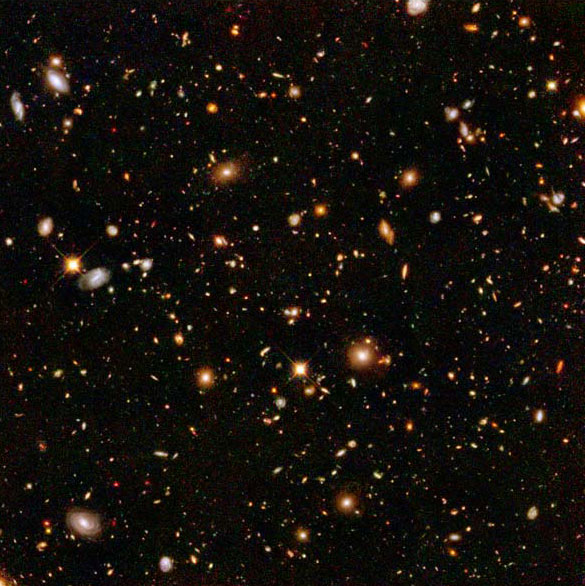
NASA's Hubble and Spitzer space telescopes have joined forces to discover nine of the smallest, faintest, most compact galaxies ever observed in the distant universe. The conventional model for galaxy evolution predicts that small galaxies in the early universe evolved into the massive galaxies of today by coalescing. These small Lego-like "building block" galaxies likely contributed to the construction of the universe as we know it.
McDonald Observatory Telescopes Find Most Powerful Supernova Ever
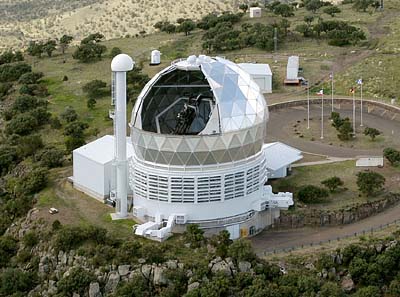
Last year, astronomer Robert Quimby discovered supernova 2006gy -- the most luminous supernova and current recordholder. Now he has announced that a supernova he recorded earlier in the project is actually twice as luminous. Newly discovered Type II supernova 2005ap, at a distance of 4.7 billion light-years, peaked at more than 100 billion times the brightness of the Sun, making it the most powerful supernova ever recorded.
FUSE Mission Reaches the End -- Johns Hopkins Astrophysicists Say Farewell

The never-say-die NASA space telescope known as FUSE (Far Ultraviolet Spectroscopic Explorer) has finally reached its mission's end and will be turned off on October 18, 2007 after more than eight years of discoveries on everything from planets and nearby stars to galaxies and quasars billions of light-years away.
RTMC Announces Pacific Astronomy and Telescope Show
A grand Meeting Place for Amateur Astronomers
Undergraduate Student Discovers Mysterious Energy Burst that Stuns Astronomers
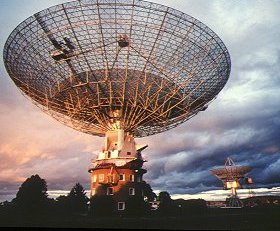
An undergraduate student at West Virginia University, David Narkevik, has discovered a new astronomical phenomenon by re-analysing archived data that was collected with the Parkes telescope in Australia over six years ago. The short-lived energy burst may have been produced by an exotic event such as the collision of two Neutron Stars or the death throes of an evaporating Black Hole.
Sputnik at 50: The truth about Sputnik comes out.
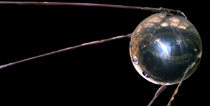
How the space race nearly wasn't won.
Sun's 'twin' an ideal hunting ground for alien life
Its size, mass, temperature, and chemical makeup are all so similar to the Sun's that no measurable differences could be found
Powerful Space Blasts Traced to Exotic Objects

University of Arizona physicists have traced the source of extremely high-energy bursts of radiation from deep space back to objects called magnetars, and they've pinned down the exact location of a magnetar from which the bursts emerge, solving a decades-old puzzle.
A Featherweight Heavyweight

The UTI 8 inch ultraportable micronewt takes a ride around the yard in this week's review winner...
Ground-Based Telescope Captures Images that are Twice as Sharp as Hubble - Impossible You Say?
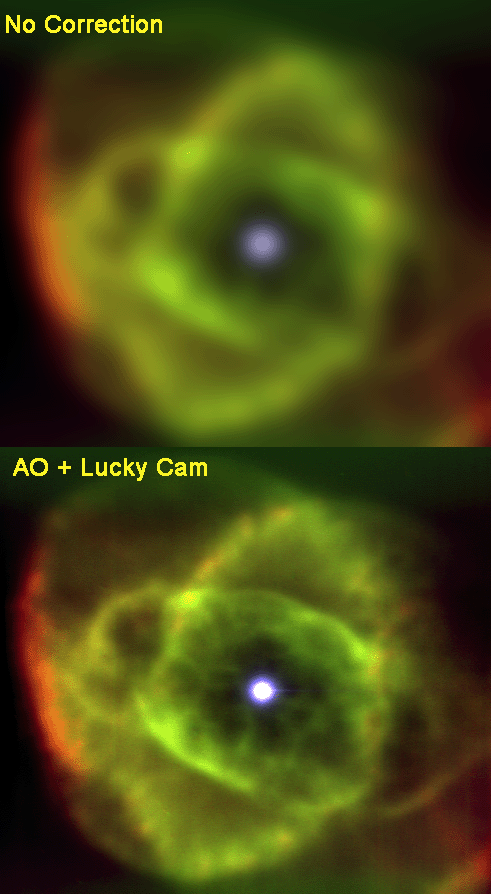
Until now, images from ground-based telescopes have been invariably blurred by Earth's atmosphere. Astronomers at CalTech and the University of Cambridge have developed a new noise-free, high-speed camera that, when used with the infrared Palomar Adaptive Optics System, makes very high resolution imaging possible in ordinary visible light. With the new camera, astronomers are able to obtain images that are twice as sharp as those produced by the Hubble Space Telescope - quite a remarkable achievement.
Funding Member
