News
Three Willam Optics eyepieces undergo some scrutiny..

Are they Swans or merely Ugly Ducklings. This week's review contest winner purported to find out.
When the Galaxies Collide, Our Solar System Will Go for a Ride

For decades, astronomers have known that the Milky Way galaxy is on a collision course with the neighboring Andromeda spiral galaxy. What was unknown until now: the fate of the Sun and our solar system in that melee. New calculations by theorists at the Harvard-Smithsonian Center for Astrophysics show that the Sun and its planets will be exiled to the outer reaches of the merged galaxy. Moreover, the collision will take place within the Sun's lifetime, before it becomes a burned-out white dwarf star, but after the Earth's oceans have boiled over and evaporated.
Shopping for an affordable wide-field eyepiece?

This week's review contest winner takes a peep through Orion's Q70 wide angle oglers...
World’s Largest Telescope Sees First Light
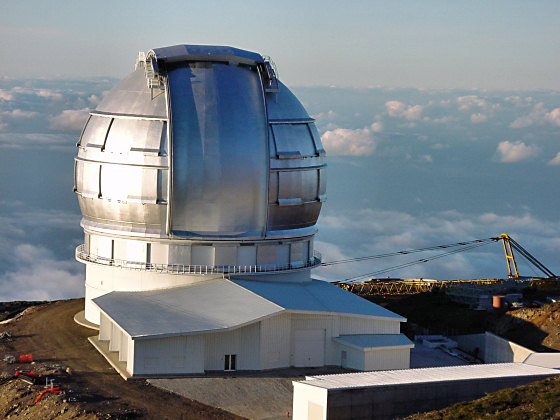
The world’s largest telescope, the Gran Telescopio Canarias (GTC), took its first peek into the heavens this week. GTC is a high performance, segmented, 10.4 meter optical-infrared telescope that has been built in one of the best astronomical sites in the Northern Hemisphere at La Palma in the Canary Islands. GTC is operated as part of the European Northern Observatory (ENO).
Earth and Mars are Different to the Core
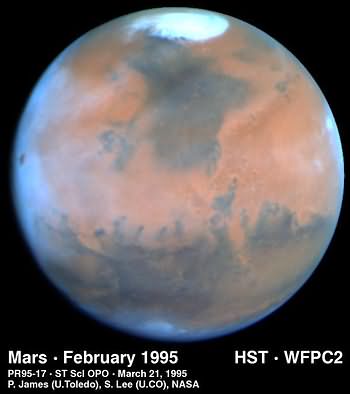
Research at Oxford University in the UK comparing silicon samples from Earth, meteorites, and planetary materials provides new evidence that the Earth`s core formed under very different conditions from those that existed on Mars. It also shows that the Earth and the Moon have the same silicon isotopic composition supporting the theory that atoms from the two mixed in the early stages of their development.
Columbia University Astronomer Offers New Theory Into 400-year-old Lunar Mystery
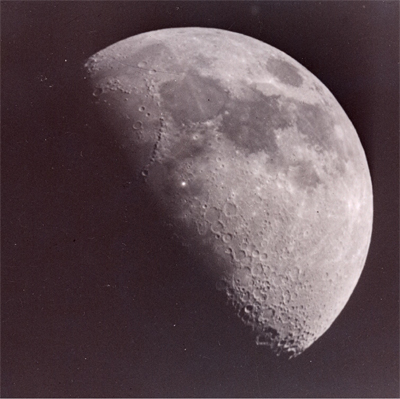
Transient Lunar Phenomena (TLPs), in which the lunar surface reportedly changes in brightness, blurriness or color, have been photographed and observed by thousands of astronomers over the centuries. Yet explanations of why they occur and even their reality as true lunar phenomena have been hotly debated. Now a Columbia University astronomer thinks he has solved a 400-year-old mystery.
Jupiter is Changing its Stripes Right in Front of Our Eyes

Jupiter is undergoing dramatic atmospheric changes that have never been seen before with the Hubble Space Telescope. Jupiter's turbulent clouds are always changing as they encounter atmospheric disturbances while sweeping around the planet at hundreds of miles per hour. But the latests Hubble images reveal an unusual rapid transformation in the shape and color of Jupiter's clouds near the equator.

Astronomers Capture First Images of the Surface Features of Altair

Astronomers combined light from four widely separated telescopes to produce the first images showing the surface details of Altair, the brightest star in the constellation Aquila. The images of the rapidly rotating Altair are the most detailed stellar picture ever made using an innovative light-combining technique called Optical Interferometry.
The 13mm Ethos: a first impression...

An insightful first impression of the Tele Vue 13mm Ethos is this week's review contest winner.
Counting Down to a Liquid Mirror Telescope on the Moon
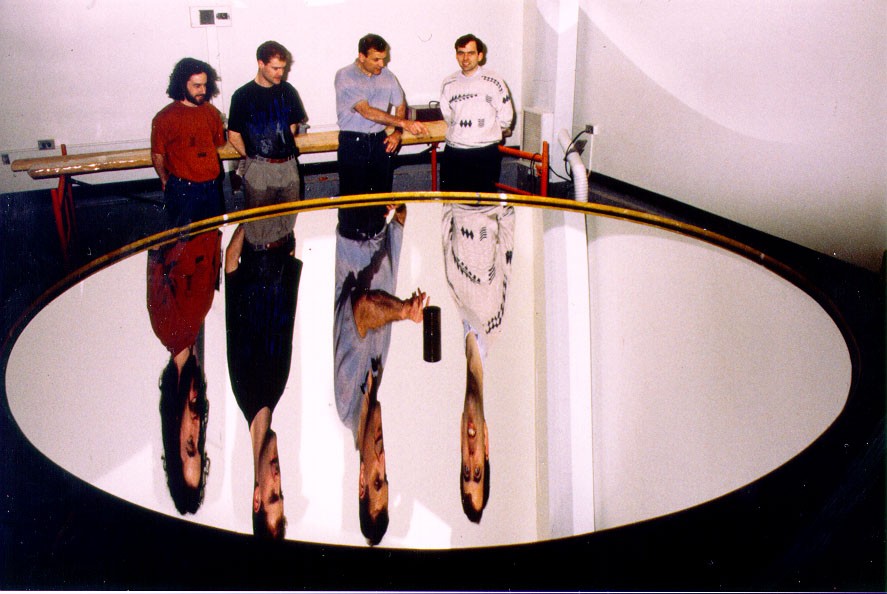
A team of Université Laval astrophysicists in Quebec, Canada have solved an important problem that has slowed a NASA-funded project to investigate the feasibility of deploying a liquid mirrored telescope on the Moon. Someday, astronauts on the moon may pour liquid onto a disc-shaped mesh to make a huge mirror for a powerful telescope. The liquid would include a silver-coated surface, and would be part of an optical-infrared telescope with a 66-foot (20-meter) to 328-foot (100 meter) aperture capable of observing objects 100 to 1,000 times fainter than the James Webb Space Telescope. The researchers managed to find a combination of materials which makes it possible to manufacture a liquid mirror with high reflective properties that is capable of functioning even in the difficult lunar environment.
Wanna update that crummy focuser on that big ole Dob of yours?

This week's review contest winner shares his focuser upgrade experience.
Adaptive Optics Pinpoints Two SuperMassive Black Holes in Colliding Galaxies
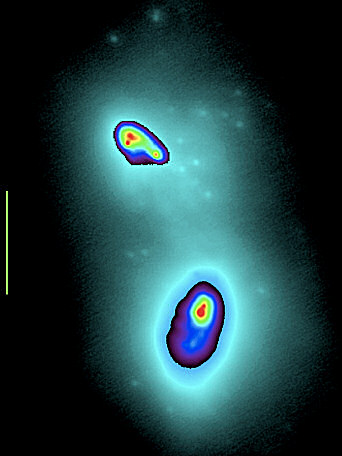
Astronomers have used powerful adaptive optics technology at the W. M. Keck Observatory in Hawaii to reveal the precise locations and environments of a pair of SuperMassive black holes at the center of NGC 6240, an ongoing collision between two galaxies 300 million light-years away.
Imaging Technology Breakthrough?
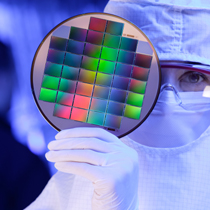
Eastman Kodak Company today introduced a groundbreaking advancement in image sensor technology that will help make dark, blurry digital photos a thing of the past.
A Second Look at a 12" Takahashi

This week's review contest winner takes a look back at his year with a Tak 300 FRC
Funding Member
