News
Neutron Star Discovered Where a Black Hole Was Expected
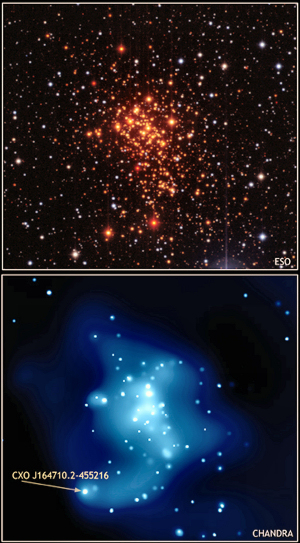
A very massive star collapsed to form a neutron star and not a black hole as anticipated, according to new results from NASA's Chandra X-ray Observatory. This discovery shows that nature has a harder time making black holes than previously thought. <b>NOTE: French, German, Italian, and Spanish translations follow...</b>
Astronomers Get Closest Look Yet At Milky Way's Mysterious Core.

Astronomers have gotten their deepest glimpse into the heart of our Milky Way Galaxy, peering closer to the supermassive black hole at the Galaxy's core then ever before. Using the National Science Foundation's continent-wide Very Long Baseline Array (VLBA), they found that a radio-wave-emitting object at the Galaxy's center would nearly fit between the Earth and the Sun. This is half the size measured in any previous observation. <b>NOTE: French, German, Italian, and Spanish translations follow...</b>
The Burgess 4mm Planetary EP

Does this eyepiece live up to it's rep? This week's review winner expresses one opinion very well.
NASA's Hubble reveals possible new moons around Pluto
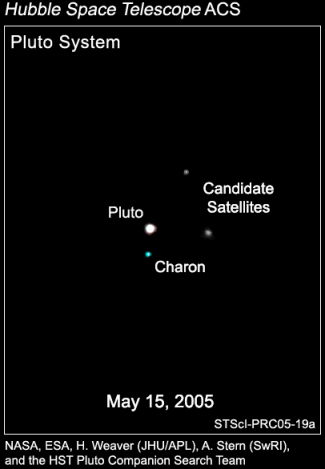
Using NASA's Hubble Space Telescope to view the ninth planet in our solar system, astronomers discovered Pluto may have not one, but three moons. <b>NOTE: French, German, Italian, and Spanish translations follow...</b>
Martian Storm Visible in Backyard Scopes
Mars has delivered an early Halloween treat for observers in the Western Hemisphere.
Deep Impact Dialogue...
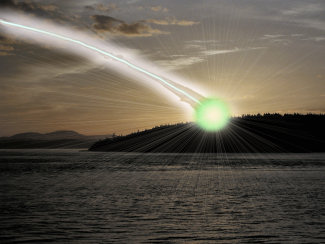
B612 Foundation Statement Regarding NASA’s Analysis of Asteroid 99942 Apophis Impact Potential
Cassini reveals more about Saturn's F ring
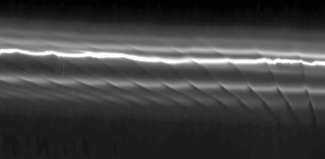
Images of Saturn's narrow and contorted F ring returned by cameras onboard NASA's Cassini spacecraft have revealed phenomena not previously detected in any planetary ring. The findings are reported in Nature (27th October 2005). <b>NOTE: French, German, Italian, and Spanish translations follow...</b>
A little history, a lot of improvement...

An astromart member remembers his first 6" dob and illustrates just how far things have come in terms of beginner's equipment in this week's review winner.
MIT space cameras take first pictures
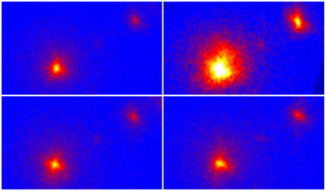
X-ray cameras designed by MIT astrophysicists are a key component of a new instrument aboard an orbiting Japanese observatory that will probe the secrets of such phenomena as exploding stars. <b>NOTE: French, German, Italian, and Spanish translations follow...</b>
NASA's Spitzer Finds Failed Stars May Succeed in Planet Business
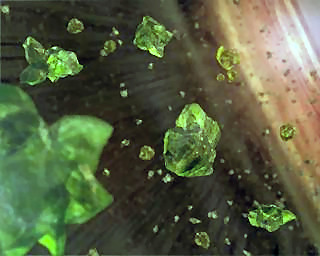
NASA's Spitzer Space Telescope has spotted the very beginnings of what might become planets around the puniest of celestial orbs - brown dwarfs, or "failed stars." <b>NOTE: French, German, Italian, and Spanish translations follow...</b>
Hubble looks for possible moon resources

NASA is using the unique capabilities of the Hubble Space Telescope for a new class of scientific observations of the Earth's moon. <b>NOTE: French, German, Italian, and Spanish translations follow...</b>
Is the The Speers-Waler 7.5mm a whale of a catch?

This wide-field, highpower eyepiece goes under the microscope in this week's review winner.
Cassini Views Dione, a Frigid Ice World

During the Cassini spacecraft's only close flyby of the grayish moon, on Oct. 11, 2005, the spacecraft came within 500 kilometers (310 miles) of the surface. <b>NOTE: French, German, Italian, and Spanish translations follow...</b>
Stars Form Surprisingly Close to Milky Way's Black Hole

NASA's Chandra X-ray Observatory revealed a new generation of stars spawned by a super-massive black hole at the center of the Milky Way galaxy. This novel mode of star formation may solve several mysteries about these super-massive black holes that reside at the centers of nearly all galaxies. <b>NOTE: French, German, Italian, and Spanish translations follow...</b>
A big Tak mount gets a little well deserved attention..

A stalwart of the imaging community, Takahashi's venerable NJP gets the once over in this week's review contest winner.
Funding Member
