News
NASA's Rover Technology Used to Look Inside Japan's Damaged Reactors

Design techniques honed at NASA's Jet Propulsion Laboratory in Pasadena, Califonia for the twin Mars rovers, Spirit and Opportunity, were used to create the rovers currently examining the inside of Japan's nuclear reactors, in areas not yet deemed safe for human crews. The rovers currently taking radioactivity readings in the damaged Fukushima Daiichi nuclear power plant buildings, are equipped with multiple cameras and hazard material sensors. The images and readings provided by the rovers indicate that radiation levels are still too high to allow human repair crews to safely enter the buildings.
Citizen Scientists Making Incredible Astronomical Discoveries

The Galaxy Zoo is taking volunteers deeper into the cosmos than ever before. And the Zooniverse team has proven that the Zooites' classifications are as good as those by professional astronomers.
WISE Mission Ends - Delivers Millions of Galaxies, Stars, and Asteroids
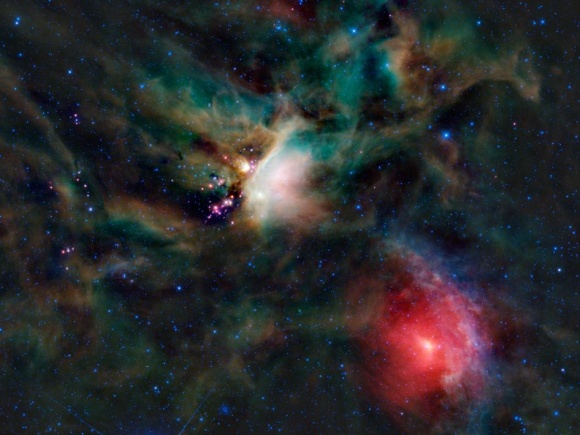
Astronomers across the globe can now sift through hundreds of millions of galaxies, stars, and asteroids collected in the first bundle of data from NASA's Wide-field Infrared Survey Explorer (WISE) mission. Like other infrared telescopes, WISE required coolant to chill its heat-sensitive detectors. This frozen hydrogen coolant recently ran out, as expected, bringing the mission to a successful end.
Cool Brown Dwarf or Warm Gaseous Planet? - The Dividing Line is Blurring

Observations with the European Southern Observatory's Very Large Telescope, along with two other telescopes, have shown that there is a new candidate for the coldest known star: a brown dwarf in a double system with about the same temperature as a freshly made cup of tea — hot in human terms, but extraordinarily cold for the surface of a star. This object is cool enough to begin crossing the blurred line dividing small cold stars from big hot planets.
Near Earth Asteroid Event:
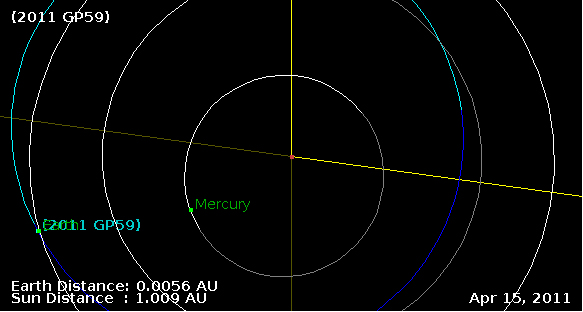
A 50-meter asteroid is flying past the Earth-Moon system on April 15th. There's no danger of a collision, but the 50-meter space rock is remarkable. It is elongated and spinning, which causes the asteroid to flash like a strobe light in amateur telescopes.
The World Celebrates 50 Years of Human Space Flight

Fifty Years ago, on April 12, 1961, the era of human spaceflight began when Cosmonaut Yuri Gagarin of the Soviet Union became the first man to orbit the Earth in his Vostock spacecraft. The flight lasted 108 minutes. On that day, the world learned about the first manned flight into space through a brief communique from the Soviet TASS News Agency. At the conclusion of the flight after reentry, Gagarin ejected from the Vostok at an altitude of 20,000 feet and parachuted to Earth. Gagarin was killed in a tragic accident when his MIG jet crashed during a training flight on March 27, 1968.
Dawn Approacheth
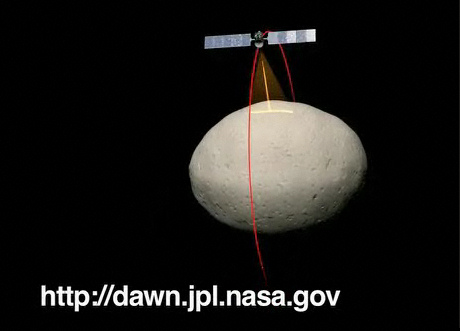
April 7, 2011: After 3-1/2 years of thrusting silently through the void, NASA's Dawn spacecraft is on the threshold of a new world. It's deep in the asteroid belt, less than 4 months from giant asteroid Vesta.
Scientists Find New Type of Mineral in Historic Meteorite
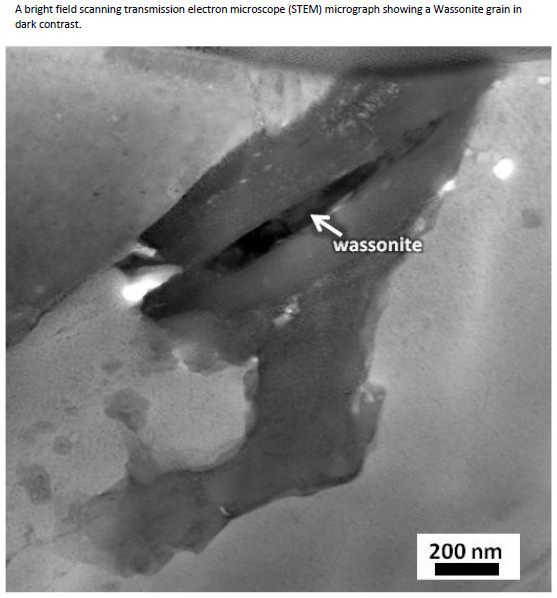
NASA and co-researchers from the United States, South Korea and Japan have found a new mineral named "Wassonite" in one of the most historically significant meteorites recovered in Antarctica in December 1969. Wassonite combines just sulfer and titanium in a crystal structure.
Astromart makes the news

Fox news carried a story last night about Astromart grabbing white house attention with its political forums.
The Moon has an Earth-like Core

By applying today's state-of-the-art seismological techniques to Apollo-era data, researchers at NASA are coming to the conclusion that our moon has a core similar to Earth's. Although sophisticated satellite imaging missions to the moon have made significant contributions to the study of its history and topography, the deep interior of the moon has remained a subject of much speculation and conjecture.
Continent-wide Very Long Baseline Array is Remeasuring the Universe
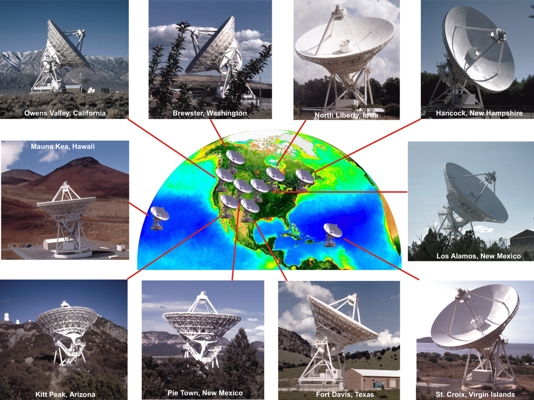
Using the super-sharp "radio vision" of astronomy's most precise telescope, scientists have extended a directly-measured "yardstick" three times farther into the cosmos than ever before. The continent-wide Very Long Baseline Array (VLBA) provides the greatest resolving power of any telescope in the world. The VLBA uses ten 25-meter-diameter dish antennas distributed from Hawaii to St. Croix in the Caribbean. Together they can produce images that are equivalent to sitting in New York and reading a newspaper in Los Angeles. This power allows astronomers to make precise cosmic measurements with far-ranging implications for research within our own Galaxy and far beyond. Recent direct measurements with the VLBA have placed a galaxy called NGC 6264 at a distance of 450 million light-years from Earth. This is the farthest distance ever directly measured from Earth.
NASA Reveals the Far Side of the Moon as Never Before Seen
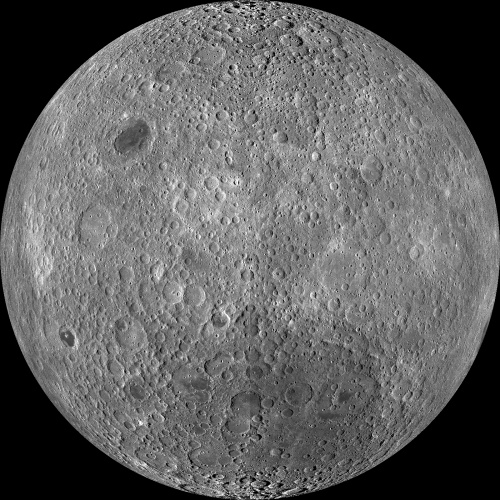
NASA has just released a high resolution global mosaic of the farside of the moon comprised of over 15,000 Lunar Reconnaissance Orbiter (LRO) images acquired between November 2009 and February 2011. Because the moon is tidally locked (meaning the same side always faces Earth), it was not until 1959 that the farside was first imaged by the Soviet Luna 3 spacecraft. And what a surprise - unlike the widespread maria on the nearside, basaltic volcanism was restricted to a relatively few, smaller regions on the farside, and the battered highlands crust dominated -- A different world from what we saw from Earth.
Historic First: A Spacecraft Orbits Mercury
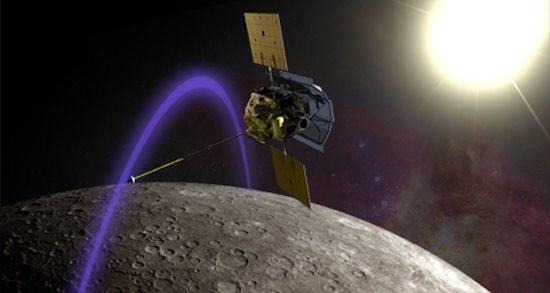
March 18, 2011: NASA's MESSENGER spacecraft successfully achieved orbit around Mercury at approximately 9 p.m. EDT on Thursday, March 17. This marks the first time a spacecraft has accomplished this engineering and scientific milestone at our solar system's innermost planet.
Super Moon!! Not an email hoax :-)

March 16, 2011: Mark your calendar. On March 19th, a full Moon of rare size and beauty will rise in the east at sunset. It's a super "perigee moon"--the biggest in almost 20 years.
MESSENGER Primed for Mercury Orbit
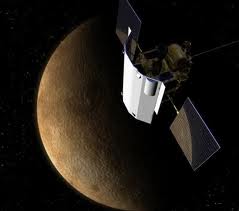
After more than a dozen laps through the inner solar system and six planetary flybys, NASA's MESSENGER spacecraft will move into orbit around Mercury on at around 9 p.m. EDT on March 17, 2011.
Funding Member
