News
Planets Discovered in a Double Star System
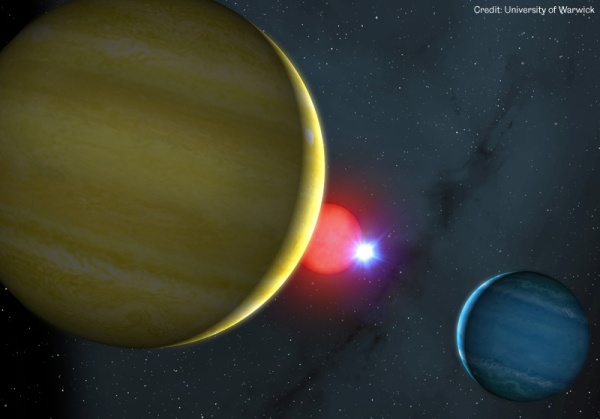
Two massive planets have been found orbiting a binary star system, thanks to research by an international consortium including astronomers at the Universities of Sheffield and Warwick in the UK. While the new research has detected the planets, scientists are unsure exactly how the planets have formed. There are currently at least 490 known exoplanets. Very few of these planets, however, are in binary systems.
Ten-year-old Amateur Astronomer Discovers a Supernova

The Royal Astronomical Society of Canada (RASC) has announced the discovery of a supernova by a ten-year-old amateur astronomer — the youngest person ever to have made such a discovery.
A New Branch of the Human Family Tree -- Neither Modern Human Nor Neanderthal

A 30,000-year-old finger bone found in a cave in southern Siberia came from an extinct hominin who was neither an early modern human nor a Neanderthal, but belonged to a previously unknown group of human relatives who may have lived throughout much of Asia during the late Pleistocene epoch. The DNA extracted from the bone has yielded a draft genome sequence, enabling scientists to reach some startling conclusions about this extinct branch of the human family tree called "Denisovans" after the cave in Siberia where the fossils were found.
Total Lunar Eclipse to be Visible on Monday Night
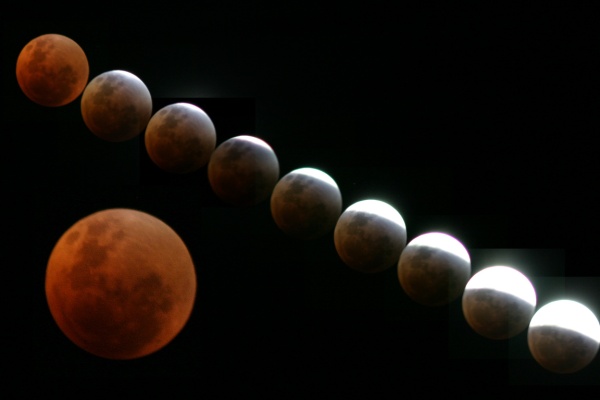
An extraordinary total lunar eclipse will be visible from the United States in the early morning hours of Tuesday, Dec. 21, 2010. Weather permitting, sky gazers in North and Central America and a tiny sliver of South America will have the best seats to 2010's only total eclipse of the moon. The eclipse will start Monday night on the West Coast of the US and during the early hours Tuesday on the East Coast. Western Europe will only see the start of the spectacle while western Asia will catch the tail end.
Clemson Astronomers Help Shed Light on Gamma-Ray Burst Mystery

For more than a decade, scientists have puzzled over a dark mystery in distant galaxies: Why are some Gamma-Ray Bursts (GRBs) — the brightest electromagnetic events known in the universe — accompanied by visible "afterglows" of radiation while others aren't? Thirty years after discovering the first gamma-ray bursts, scientists in 1997 detected visible afterglows, emissions of radiation at longer wavelengths, from X-rays and ultraviolet to optical, infrared and radio wavelengths. However, the afterglows didn't appear to accompany about half of the detected gamma-ray bursts, and astronomers were at a loss to determine why. Astronomers offered plenty of speculation. Now they have answers.
SpaceX Dragon Spacecraft is Recovered Successfully

On December 8, 2010, SpaceX became the first commercial company in history to re-enter a spacecraft from low-Earth orbit. It is a feat performed by only six nations or government agencies: the United States, Russia, China, Japan, India, and the European Space Agency. After the Space Shuttle retires, SpaceX will fly at least 12 missions to carry cargo to and from the International Space Station as part of the Commercial Resupply Services contract for NASA. Its aim is to ultimately reducing costs by a factor of ten.
Life as We Don't Know It

Carbon, hydrogen, nitrogen, oxygen, phosphorus and sulfur -- the six basic building blocks of all known forms of life on Earth -- Unitil now. NASA-funded astrobiology research has changed the fundamental knowledge about what comprises all known life on Earth. Researchers conducting tests in the harsh environment of Mono Lake in California have discovered the first known microorganism on Earth able to thrive and reproduce using the toxic chemical arsenic. The microorganism substitutes arsenic for phosphorus in its cell components. This finding of an alternative biochemistry makeup will alter biology textbooks and expand the scope of the search for life beyond Earth.
Chandra Finds a 30 Year Old Black Hole

Astronomers using NASA's Chandra X-ray Observatory have found evidence of the youngest black hole known to exist in our cosmic neighborhood. The 30-year-old black hole provides a unique opportunity to watch this type of object develop from infancy. Researchers think this object, SN 1979C, first discovered by an amateur astronomer in 1979, formed when a star about 20 times more massive than the sun collapsed.
From all of us to you and yours....
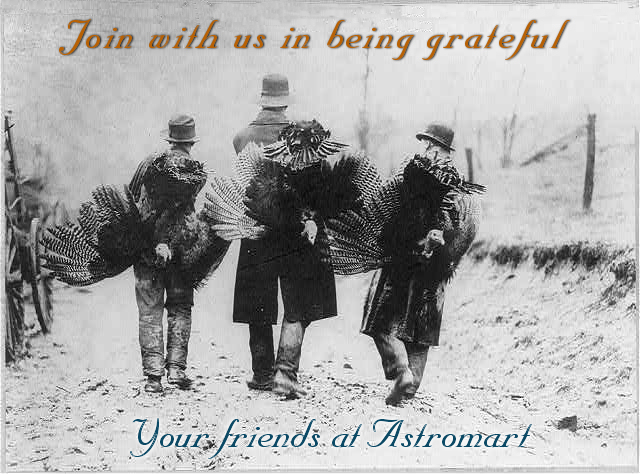
Whatever burdens you carry, set them down this day.
Primordial Dry Ice in Comet Fuels Spectacular Jets of Gas
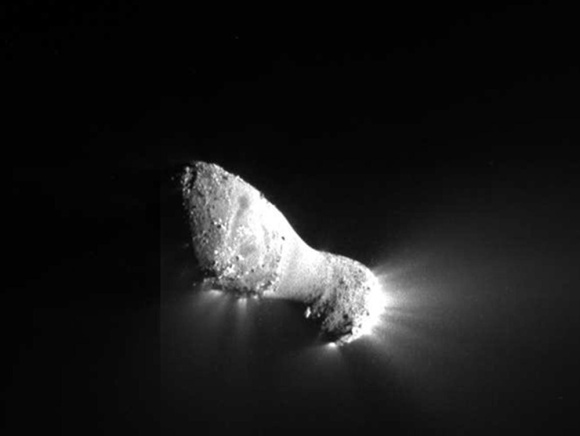
The EPOXI mission's recent encounter with comet Hartley 2 provided the first images clear enough for scientists to link jets of dust and gas with specific surface features of the comet. Images from the flyby show spectacular jets of gas and particles bursting from many distinct spots on the surface of the comet. Analysis of the spectral signatures of the materials coming from the jets shows primarily CO2 gas (carbon dioxide) and particles of dust and ice. The EPOXI mission revealed a cometary snow storm created by carbon dioxide jets spewing out tons of golf-ball to basketball-sized fluffy ice particles from the peanut-shaped comet's ends.
Anti-Matter Trapped

Antimatter atoms produced and trapped at CERN. Geneva, 17 November 2010. The ALPHA experiment at CERN1 has taken an important step forward in developing techniques to understand one of the Universe's open questions: is there a difference between matter and antimatter?
NASA's Fermi Telescope Finds Giant Bubble-like Structure in Our Galaxy

NASA's Fermi Gamma-ray Space Telescope has unveiled a previously unseen bubble-like structure centered in the Milky Way. The bubble, which spans 50,000 light-years, may be the remnant of an eruption from a supersized black hole at the center of our galaxy. At more than 100 degrees across, the structure spans more than half of the sky, from the constellation Virgo to the constellation Grus. The bubble also appears to have well-defined edges. Taken together, the structure's shape and emissions suggest that it was formed as a result of a large and relatively rapid energy release -- the source of which remains a mystery.
OK... So What Was It?

Pentagon officials say they cannot explain reports of a missile launch off the coast of California on Monday, November 8, 2010. So then what was it? I suppose a stray rocket propelled weather balloon that escaped from a weather testing station just won't cut it... but you never know.
Astronomers Discover Most Massive Neutron Star to Date

Neutron stars are the superdense "corpses" of massive stars that have exploded as supernovae. With all their mass packed into a sphere sometimes as small as the size of a city, their protons and electrons are crushed together into neutrons. A thimbleful of neutron-star material could weigh more than 500 million tons. Astronomers using the Robert C. Byrd Green Bank Telescope (GBT) in West Virginia have discovered the most massive neutron star yet found -- a discovery with wide-ranging implications across several fields of physics and astrophysics.
Proper Motion of 100,000 Stars in Omega Centauri Analyzed
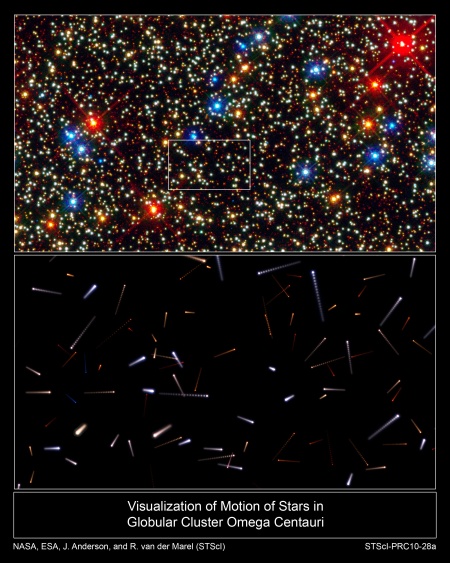
Omega Centauri is one of roughly 150 globular clusters in our Milky Way Galaxy. The behemoth stellar grouping is the biggest and brightest globular cluster in the Milky Way, and one of the few that can be seen by the unaided eye. By analyzing archived images taken over a four-year period by Hubble's Advanced Camera for Surveys, astronomers have made the most accurate measurements yet of the motions of more than 100,000 stars within the cluster - completing the largest and most detailed survey of the internal workings of a globular cluster to date.
Funding Member
