News
Hubble and ESO's VLT Set Record for Finding the Most Distant Galaxy
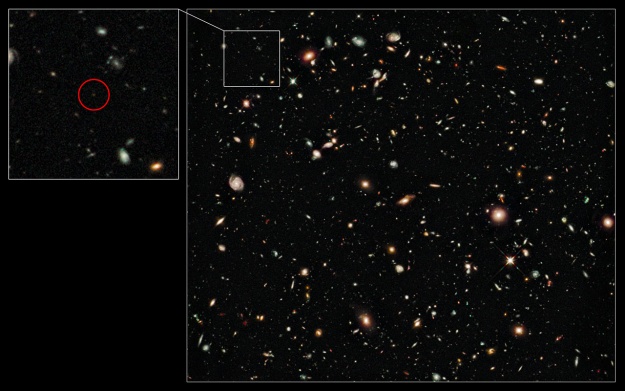
A European team of astronomers using ESO's Very Large Telescope (VLT) has measured the distance to the most remote galaxy so far. By carefully analysing the very faint glow of the galaxy they have found that they are seeing it when the Universe was only about 600 million years old (a redshift of 8.6). These are the first confirmed observations of a galaxy whose light is clearing the opaque hydrogen fog that filled the cosmos at this early time.
Terahertz Telescope in Chile Probes the Molecular Universe
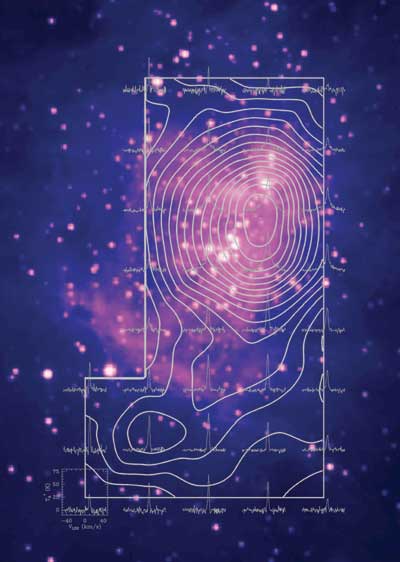
Terahertz astronomy is the science of receiving and analyzing waves of radiation from space emitted by molecules at frequencies of more than 1 Trillion Hertz. The universe is filled with clouds of gas composed of different types of molecules, each of which radiate energy at a different frequency. By measuring the strength of terahertz signals coming from a cosmic cloud at the known frequency for, say, carbon monoxide, terahertz astronomers can determine the amount of carbon monoxide in the cloud. They can also measure where inside the cloud these molecules are congregating and how fast they are moving. Terahertz astronomy holds great potential for new discoveries in interstellar chemistry and star formation according to Christine Pulliam of the Smithsonian Astrophysical Observatory in Cambridge, Mass.
Comet Hartley 2 Makes Closest Approach Tomorrow
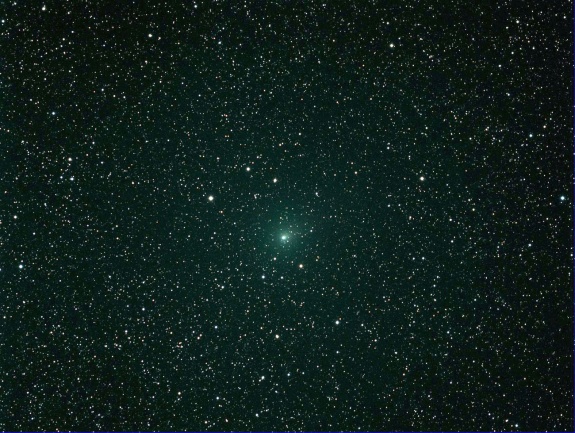
Backyard stargazers with a telescope or binoculars and a clear night's sky can now inspect the comet that in a little over two weeks will become only the fifth in history to be imaged close up. Comet Hartley 2 will come within 11 million miles of Earth this Wednesday, October 20, 2010 at 3 p.m. EDT. NASA's EPOXI mission will come within 435 miles of Hartley 2 on November 4th.
Hubble Captures Images of Possible Asteroid Collision

NASA's Hubble Space Telescope has captured the first snapshots of a suspected asteroid collision. The images show a bizarre X-shaped object at the head of a comet-like trail of material. Astronomers used Hubble to track the object for the last five months. They thought they had witnessed a fresh asteroid collision, but were surprised to learn the collision occurred in early 2009. Catching colliding asteroids is difficult because large impacts are rare while small ones, such as this latest one that is about 400 feet wide, are exceedingly faint.
Yale Astronomers Use Gravitational Lensing to Probe Elusive Dark Energy

A team of astronomers at Yale has used Abell 1689, a massive galaxy cluster, as a cosmic magnifying lens to study the nature of dark energy for the first time. When combined with existing techniques, their results significantly improve current measurements of the mass and energy content of the universe. The way in which the images were distorted from gravitational lensing gave the astronomers clues as to the geometry of the space that lies between the Earth, the galaxy cluster and the distant galaxies.
Water Ice on Asteroids May be More Common than Expected

Water ice on asteroids may be more common than expected, according to a new study from the University of Central Florida. Two teams of researchers who made national headlines in April, 2010 for showing the first evidence of water ice and organic molecules on asteroid 24 Themis have now discovered that asteroid 65 Cybele also contains water ice. This unexpected finding may hold clues to the origins of Earth's oceans and life 4 billion years ago. It helps support the theory that asteroids may have hit Earth and brought our planet its water and the building blocks for life.
WMAP Concludes Observations of the Cosmic Microwave Background
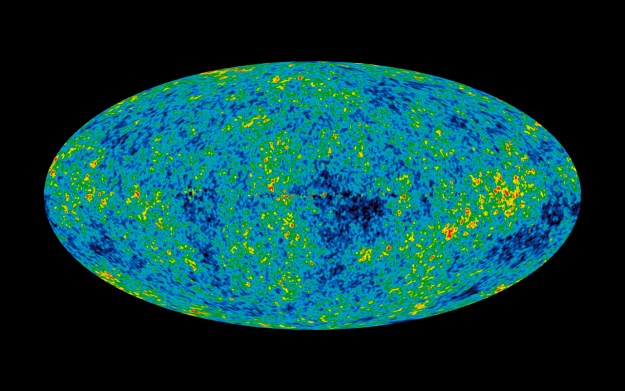
After nine years of scanning the sky, the Wilkinson Microwave Anisotropy Probe (WMAP) has concluded its observations of the cosmic microwave background, the oldest light in the universe. The spacecraft has not only given scientists their best look at this remnant glow, but also established the scientific model that describes the history and structure of the universe.
Potentially Habitable "Goldilocks" Exoplanet Discovered

A team of planet hunters led by astronomers at the University of California, Santa Cruz (UC Santa Cruz) and the Carnegie Institution of Washington has announced the discovery of an Earth-sized planet orbiting a nearby star at a distance that places it squarely in the middle of the star's "habitable zone," where liquid water could exist on the planet's surface. If confirmed, this would be the most Earth-like exoplanet yet discovered and the first strong case for a potentially habitable one.
Were Earth's Rich Surface Minerals Deposited from Space?

According to a study by geologists at the University of Toronto and the University of Maryland, the wealth of some minerals that lie in the rock beneath the Earth's surface may be extraterrestrial in origin, brought here by a rain of asteroids and comets. The extreme temperature at which the Earth's core formed more than four billion years ago would have completely stripped any precious metals from the rocky crust and deposited these metals in the Earth's core. The notion of an extraterrestrial origin my also explain another mystery, which is how the rock portion of the Earth came to have hydrogen, carbon, and phosphorous - the essential components for life. These minerals were also likely lost during Earth's violent beginnings.
Jupiter at Closest Opposition Until 2022 - Enjoy the View
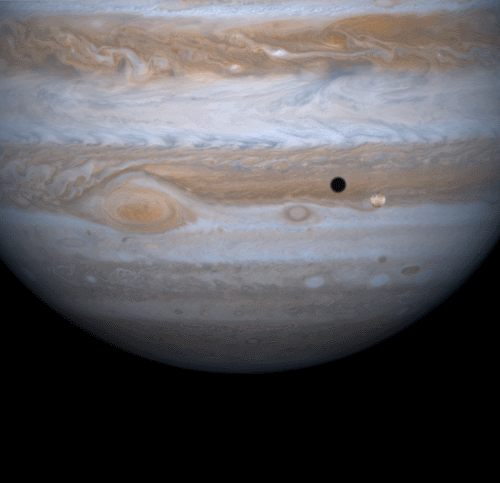
Have you been outside at midnight lately? There's something you really need to see. Jupiter is approaching Earth for the closest encounter between the two planets in more than a decade -- and it is dazzling. Jupiter will not be this close again until 2022.
Fundamental Constants of Nature May Not be Constant After All
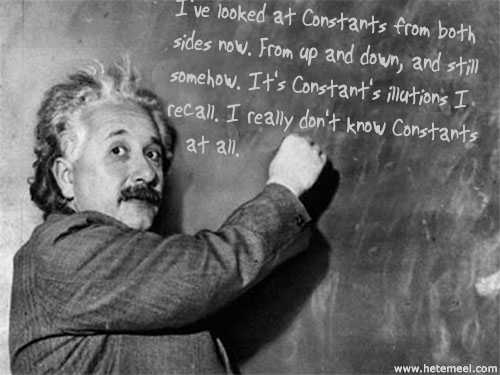
The laws of physics vary in different parts of the universe, according to new evidence uncovered by a team of Australian and British astrophysicists. These conclusions are based on recent measurements taken with the Very Large Telescope in Chile, along with previous measurements from the the Keck Observatory in Hawaii. The researchers found that the "magic number" known as the fine-structure constant, dubbed alpha for short, appears to vary throughout the universe. Alpha indicates the strength of electromagnetism and surprisingly, it seems to vary continuously along an axis through the universe. Looking to the north the researchers detected a smaller alpha in distant galaxies. But when looking south they measured a larger alpha. If the laws of physics turn out to be merely "local laws," then clearly we'll need new physical theories to satisfactorily describe the universe.
NASA Finally Spills the Beans -- The Truth About 2012
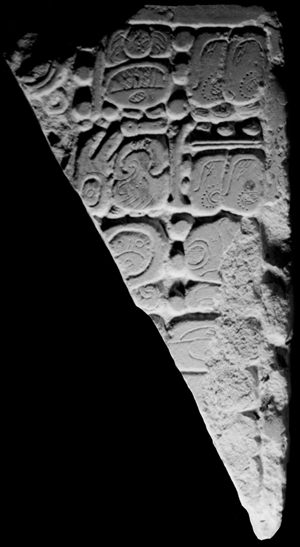
I must apologize for deliberately over-hyping the title of this news item. I got all wrapped-up in the sensationalism surrounding this topic and I just could't resist. Much has been written about the impending approach of the end of the world, as allegedly foreseen by the Maya and represented by the "end" of their calendar on December 21, 2012. Many other assertions, astronomical and otherwise, have also been linked to this date. As 2012 approaches and the mania spreads, even more disaster scenarios are being brought forth for your consideration. In the past few years, NASA has received nearly a thousand questions about 2012. David Morrison, Senior Scientist at the NASA Astrobiology Institute (NAI) tackles the top twenty questions in logical succession and answers each in detail. (Hint: The End is Not Near).
We Are Stardust, We Are Golden - Hubble Reveals "Star Guts" Pouring Out of Supernova 1987A

Observations made with NASA's newly refurbished Hubble Space Telescope of nearby supernova 1987A are allowing astronomers to measure the velocity and composition of "star guts" being ejected into space following the explosion, in a new study led by the University of Colorado at Boulder. Supernovae are responsible for a large fraction of biologically important elements, including oxygen, carbon, and iron found in plants and animals on Earth today. The iron in our blood, for example, is believed to have been made by supernovae explosions.
1976 Viking Lander Results of No Carbon-Based Building Blocks on Mars May be Wrong
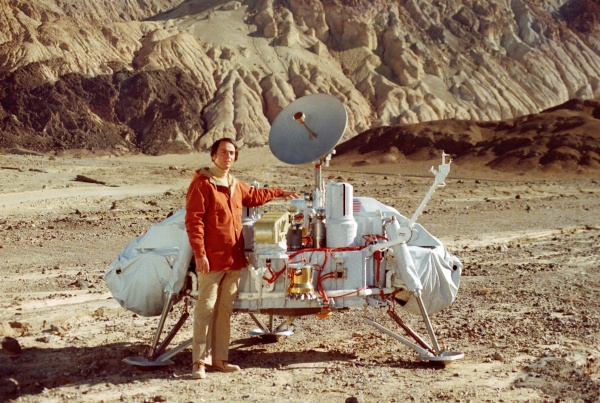
An experiment prompted by a 2008 surprise finding from NASA's Phoenix Mars Lander suggests that soil samples examined by NASA's Viking Mars Landers in 1976 may have contained carbon-based chemical building blocks of life that were destroyed inadvertently during the testing process. If that is the case, then for over 30 years we have been operating under a set of false assumptions. The Curiosity rover that NASA plans to deliver to Mars in 2012, with its ability to chemically analyze a wider variety of rocks and samples, may help solve this mystery once and for all.
NASA's Kepler on Track to Discover Hundreds of Transiting Exo-Planets
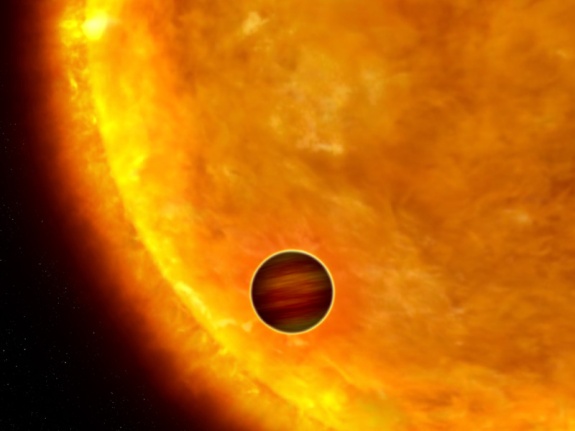
NASA's Kepler, launched a little more than a year ago, follows in the Earth's wake as it orbits the Sun -- its sights focused permanently on a single patch of sky. With its unblinking gaze, the spacecraft searches among 156,000 stars for slight but regular dips in a star's brightness. Such dimmings could indicate a transit - a planet moving across the face of its home star. If scientists' expectations prove true, over its three and a half year mission, Kepler could discover hundreds or perhaps thousands of transiting exo-planets.
Funding Member
