News
Another whip of the blue marble!

We wish you all the very best in the coming year
Yes, 2008 Really Did Seem a Little Longer Than Normal
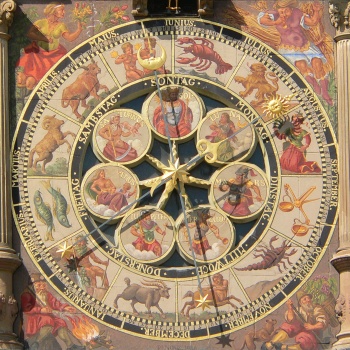
The spin of the Earth is slowing down. Not by much -- only about 0.002 seconds a day. The varying rotation of the Earth is due to the cumulative effect of friction from the ocean's tides, the Moon’s orbital momentum, snow (and the lack thereof) at the polar ice caps, the 23 degree tilt of the Earth, the atmosphere, solar wind, space dust, and magnetic storms. To compensate for this slowing, on December 31, 2008 a “leap second” will be added to the world’s clocks at 23 hours, 59 minutes, and 59 seconds Coordinated Universal Time (UTC). This corresponds to 6:59:59 pm Eastern Standard Time, when the extra second will be inserted at the U.S. Naval Observatory’s Master Clock Facility in Washington, DC. So if 2008 seemed a little longer than normal, now you know why.
Effelsberg Radio Telescope Detects Water in a Quasar 11 Billion Light Years Away
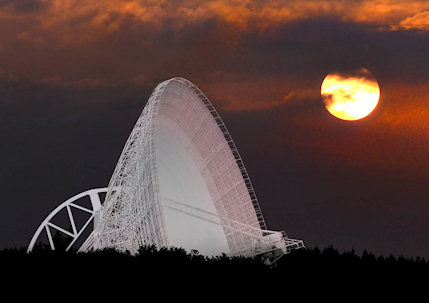
Researchers at the Max Planck Institute for Radio Astronomy have used the 100 meter Effelsberg radio telescope to detect water at the greatest distance from Earth so far. The water vapour was discovered in a quasar at a distance of 11.1 billion light years, at a time when the Universe was only a fifth of the age it is today. The water vapor is thought to exist in clouds of dust and gas that feed a supermassive black hole at the centre of the distant quasar. Of the nearby galaxies within half a billion light years from Earth only about one hundred galaxies show detectable water vapor emissions, and almost all of them are relatively nearby.
From all of us to all of you....

Our very best to you and yours. And to all of our brave men and women in uniform, stationed here and around the world, a heartfelt Thank You. Our hearts and minds are with you this night especially.
Brown Dwarfs Form Like Stars, Not Planets

Brown dwarfs are on the dividing line between planets and stars, and generally have masses between 15 and 75 Jupiters. As a result, brown dwarfs are sometimes called failed stars. However, until now, it was not clear whether they formed like stars (from the gravitational collapse of gas clouds) or if they formed like planets (agglomerating rocky material until they grow massive enough to draw in nearby gas). Using the Smithsonian's Submillimeter Array (SMA), astronomers have uncovered strong evidence that brown dwarfs do indeed form like stars.
NASA Looking to Permanently Park and Display the Retired Space Shuttles
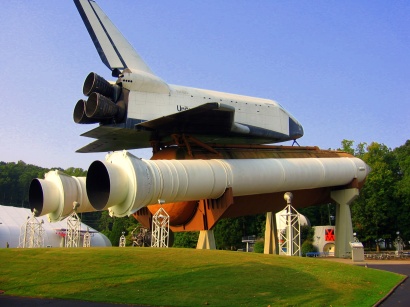
NASA is seeking input from educational institutions, science museums, and other organizations about their interest in acquiring and publicly displaying the Space Shuttle Orbiters and Space Shuttle Main Engines (SSMEs) after conclusion of the Space Shuttle Program. NASA’s primary goal is to collect a wide variety of perspectives on whether eligible recipient organizations are capable of appropriately displaying the Space Shuttle Orbiters and SSMEs and bearing the full cost of preparing the hardware for display and transportation to its final destination. Before you rush to submit an application, you should be aware that the estimted price tag for preparing an Orbiter for final display and delivery on the back of a 747 to a U.S. airport is $42 Million.
16-Year Long Study Tracks Stars Orbiting the Milky Way Black Hole

In a 16-year long study, using several of ESO's flagship telescopes, a team of German astronomers has produced the most detailed view ever of the surroundings of the monster lurking at our Galaxy's heart — a supermassive black hole. The research has unravelled the hidden secrets of this tumultuous region by mapping the orbits of almost 30 stars, a five-fold increase over previous studies. One of the stars has now completed a full orbit around the black hole.
NASA Prepares for New Juno Mission to Jupiter

NASA is officially moving forward on a mission to conduct an unprecedented, in-depth study of Jupiter in 2016. Called Juno, the mission will be placed in a highly elliptical polar orbit around the giant planet to understand its formation, evolution and structure.
When It Comes to Galaxies, Diversity Is Everywhere
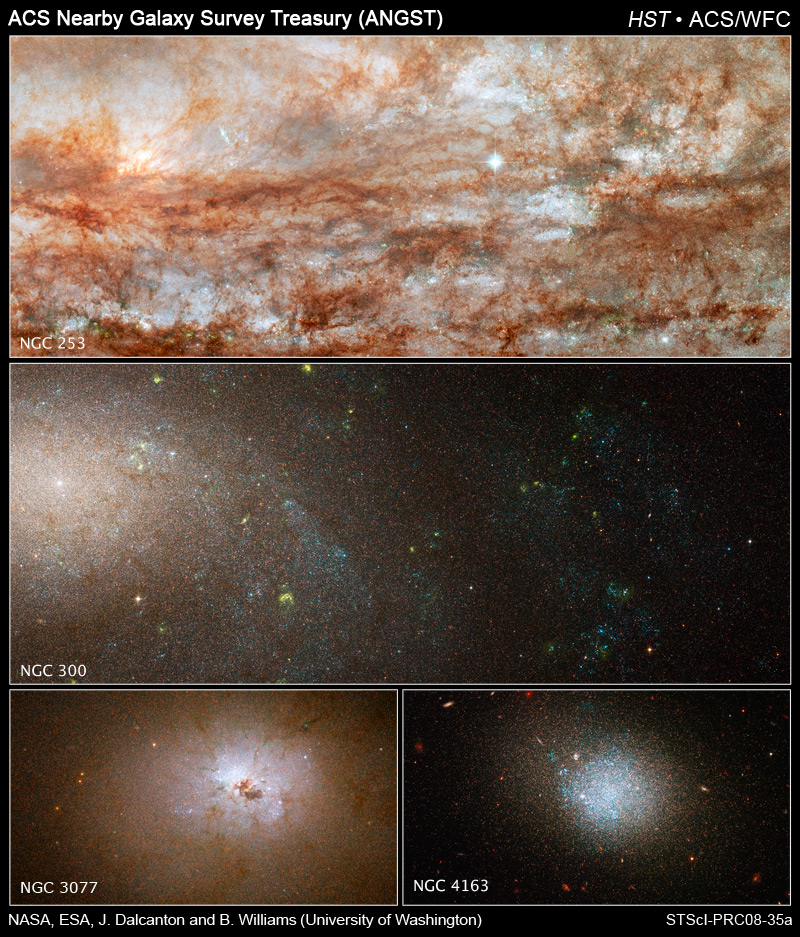
There's an old saying in astronomy: "Galaxies are like people. They're only normal until you get to know them." That view is supported by a group of astronomers after using NASA's Hubble Space Telescope to study a large number of galaxies in our cosmic backyard. The detailed survey, called the ACS Nearby Galaxy Survey Treasury (ANGST) program, observed roughly 14 million stars in 69 galaxies. The survey explored a region called the "Local Volume," and the galaxy distances ranged from 6.5 million light-years to 13 million light-years from Earth. The Local Volume resides beyond the Local Group of galaxies, an even nearer collection of a few dozen galaxies within about 3 million light-years of our Milky Way Galaxy.
The 1843 Eruption of Eta Carinae May Represent a New Class of Star Explosion
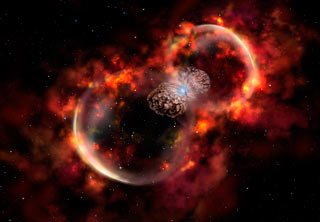
Eta Carinae, the galaxy's biggest, brightest, and perhaps most studied star after the sun, has been keeping a secret -- Its giant outbursts appear to be driven by an entirely new type of stellar explosion that is fainter than a typical supernova and does not destroy the star.
Surprising Results -- Billions of Particles of Anti-Matter Created at Lawrence Livermore Labs
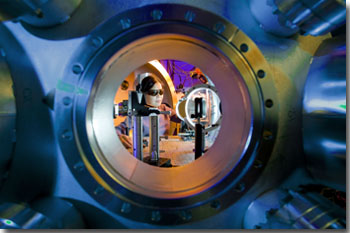
Over the years, physicists have theorized about anti-matter, but it wasn’t confirmed to exist experimentally until 1932. High-energy cosmic rays impacting the Earth’s atmosphere produce minute quantities of anti-matter and physicists have learned to produce modest amounts of anti-matter using traditional particle accelerators. Researchers at Lawrence Livermore National Lab have just discovered a new ability to create a large number of positrons (i.e., positively charged electrons) in a laboratory by taking a gold sample the size of the head of a push-pin and shooting a laser through it. Surprisingly, more than 100 billion particles of anti-matter appear. This opens the door to several fresh avenues of anti-matter research, including an understanding of the physics underlying various astrophysical phenomena such as black holes and gamma ray bursts.
It’s Lights Out for the Phoenix Lander

As the Martian summer turns to autumn and snow falls on the north polar region of Mars, the world’s first spacecraft to reach out and touch, taste, smell, see, and even listen to the Martian environment and the ice that lies just beneath the surface, has fallen silent following more than five months of scientific research and discovery. As the Sun sets on Phoenix, NASA declares the end of a very successful mission.
HUBBLE DIRECTLY OBSERVES A PLANET ORBITING ANOTHER STAR
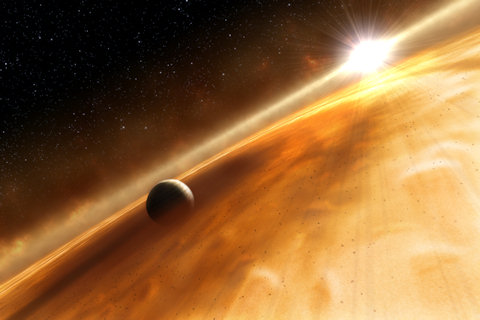
NASA's Hubble Space Telescope has taken the first visible-light snapshot of a planet circling another star
A New Highly Accurate Speedometer for Astronomy Unveiled
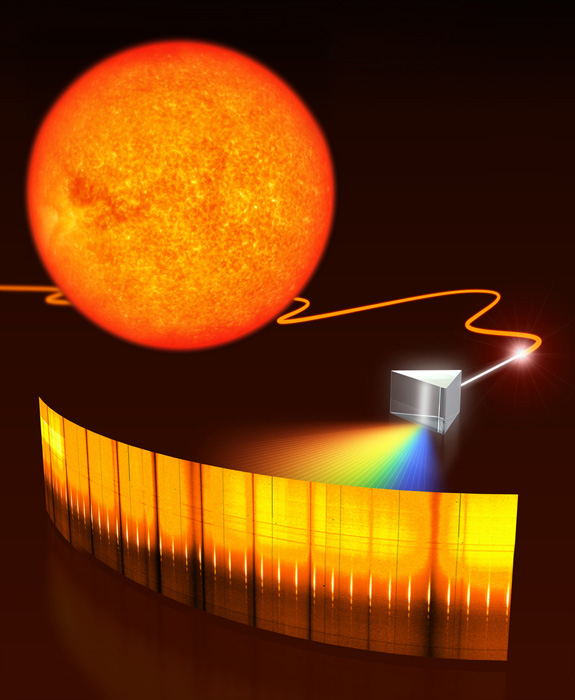
Researchers at the Max Planck Institute of Quantum Optics in Germany have developed a new method for determining the velocities of stars and other celestial bodies which is a thousand times more accurate than previous methods. When deployed, this speedometer will enable scientists to search for Earth-like planets and to test whether the expansion of the universe really is accelerating.
Search for Antimatter in the Universe may Prove More Difficult Than Originally Thought
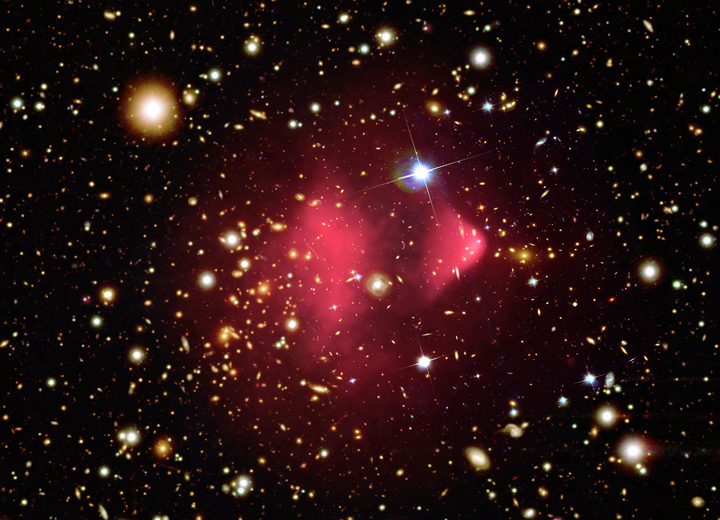
Scientists are on the hunt for evidence of antimatter -- matter's arch nemesis -- left over from the very early Universe. The Bullet Cluster in the constellation Carina provides an excellent test site to search for the signal for antimatter. However, new results using data from NASA's Chandra X-ray Observatory and the Compton Gamma Ray Observatory suggest the search may have just become even more difficult.
Funding Member
