News
Thieving dwarves cause supernovae
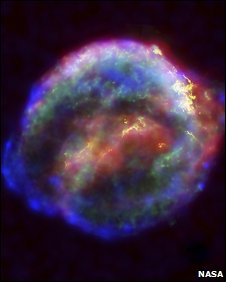
Researchers have come up with a theory for how stars can end in a spectacular so-called Type Ia supernova in less than 100 million years.
NASA's Kepler Telescope Jettisons Dust Cover, Sees First Light
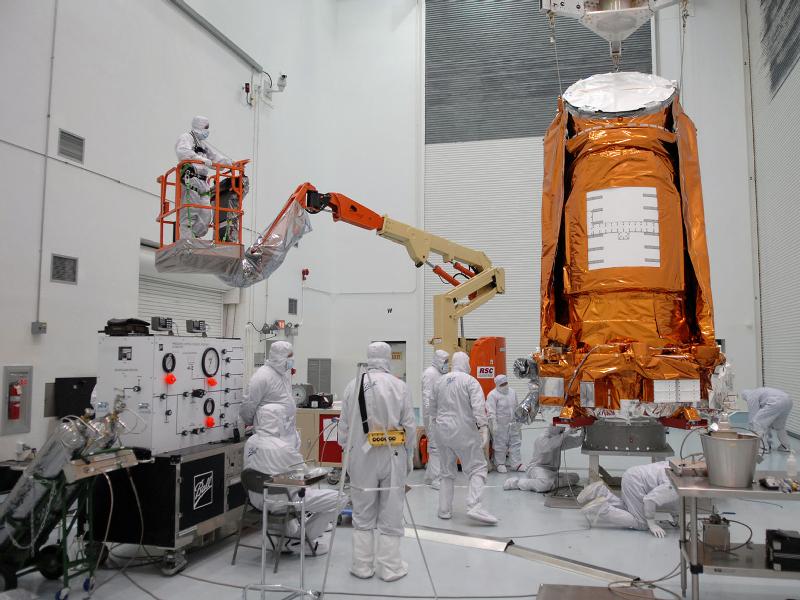
Engineers have successfully ejected the dust cover from NASA's Kepler telescope. With the cover off, starlight is entering the photometer and being imaged onto its focal plane. Kepler, which launched on March 6, 2009 from Cape Canaveral, FL, will spend three-and-a-half years staring at more than 100,000 stars in our Milky Way galaxy for signs of Earth-size planets.
New PBS Documentary about the history of the Telescope.
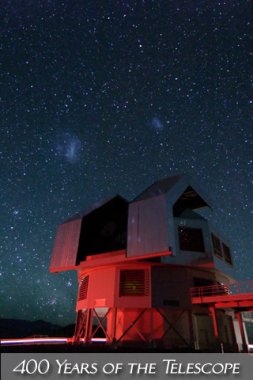
400 years of the Telescope. A journey through Science, Technonogy and Thought. Documentary set to air on PBS. Friday, April 10 at 10:00PM ET. This may vary, so check your local listings.
Sunspot Activity Mimics the Stock Market - Just When You Think It Has Hit Bottom, It Goes Even Lower
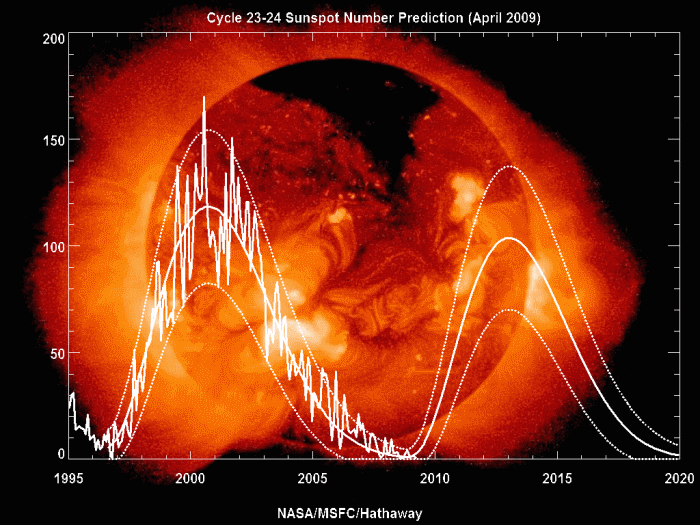
2008 was a bear. There were no sunspots observed on 266 of the year's 366 days (73%). To find a year with more blank suns, you have to go all the way back to 1913, which had 311 spotless days. Prompted by these numbers, some observers suggested that the solar cycle had hit bottom in 2008. Maybe not. Sunspot counts for 2009 have dropped even lower. As of March 31st, there were no sunspots on 78 of the year's 90 days (87%).
IAU Set to Vote on Reopening Saturn's Rings
Reports indicate the International Astronomical Union (IAU) will vote in favor of reopening Saturn's rings at its XXVII General Assembly in early August.
Asteroid Tracked From Space to Earth Entry for the First Time

Astronomers from Queen's University in Belfast and a team of fellow international researchers have, for the first time, tracked an asteroid from space to the ground and then recovered pieces of it.
NASA and Microsoft to Make Universe of Data Available to the Public

NASA and Microsoft Corp. announced plans to make planetary images and data available via the Internet under a Space Act Agreement. Through this project, NASA and Microsoft will jointly develop the technology and infrastructure necessary to make the most interesting NASA content — including high-resolution scientific images and data from Mars and the moon — explorable on WorldWide Telescope, Microsoft’s online virtual telescope for exploring the universe.
Chandra Finds a Geriatric Pulsar that is Still Kicking
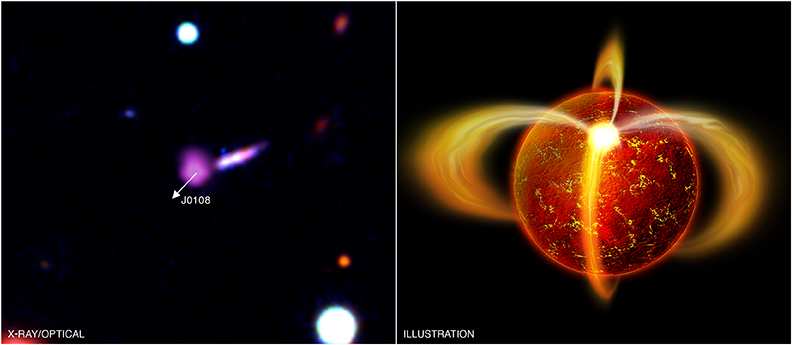
The oldest isolated pulsar ever detected in X-rays has been found with NASA's Chandra X-ray Observatory. This very old and exotic object turns out to be surprisingly active. The pulsar is one of the oldest and faintest pulsars known, spinning only slightly faster than one revolution per second. At a distance of 770 light years from Earth, it is also one of the nearest pulsars.
Saturn's Rings Visible Edge-on Tonight
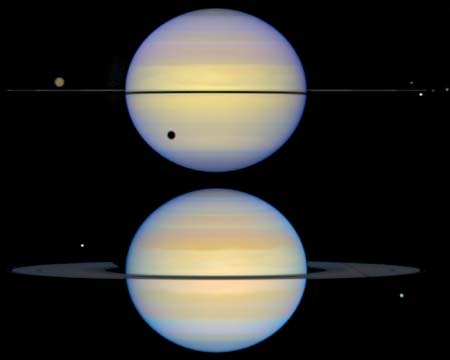
Tonight, night sky observers will have the opportunity to view Saturn's rings edge-on, an astronomical phenomenon that happens only once every 15 years.
Galaxies in gridlock
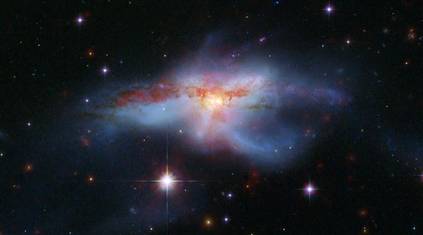
Nothing draws a crowd like a spectacular crash - whether it's a NASCAR auto race or a galactic collision.
Did Bat Hitch a Ride to Space?

Flying Rodent Was Seen Clinging to Discovery's Fuel Tank During Liftoff
Illinois Restores Status of Pluto as a Planet

For many years, Pluto was thought of as the farthest known planet from the Sun. It has a very unusual orbit. Since the year 2000, astronomers realized that Pluto was not like the other eight planets but very much like a new group of objects found in the outer solar system. In 2006, the International Astronomical Union (IAU) re-classified Pluto to be a dwarf planet. Now Illinois has restored Pluto's status as a planet and has officially declared March 13th "Pluto Day."
Asteroid the Size of the Tunguska Impactor of 1908 Just Missed the Earth Yesterday

Near Earth Object 2009 DD45, estimated to be around 120 feet in diameter, passed within 38,000 miles from the Earth's surface yesterday morning (March 2, 2009) at 8:44 AM Eastern US time. It was detected for the first time only two days earlier -- Not very much warning had it been on a collision course with Earth.
Mountain View scientists giddy over NASA's search for faraway planets
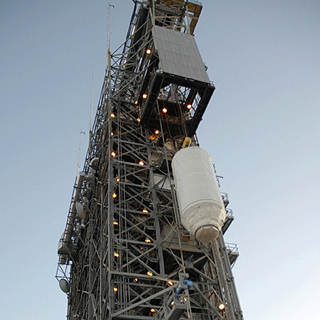
NASA's 2,300-pound Kepler spacecraft is scheduled to thunder into space Friday atop a Delta II rocket on a mission to see hundreds of worlds beyond our solar system. It may also forever change how humans see their place in the universe.
Neanderthal Genome Completed

Neanderthals are the closest relatives of currently living humans. They lived in Europe and parts of Asia until they became extinct about 30,000 years ago. For more than a hundred years, palaeontologists and anthropologists have been striving to uncover their evolutionary relationship to modern humans. Neanderthal mitochondrial DNA was first sequenced in 1997. Now the Max Planck Institute for Evolutionary Anthropology in Germany and the 454 Life Sciences Corporation in the US have announced a new milestone in Neanderthal research. The two groups have sequenced a total of more than 3 billion bases of Neanderthal DNA, generating a first draft sequence of the entire Neanderthal genome. Altogether, these fragments make up more than 60% of the entire Neanderthal genome. These DNA sequences can now be compared to the previously sequenced human genomes in order to arrive at some initial insights into how the genome of this extinct form differed from that of modern humans.
Funding Member
