News
Something's Just Not Right with Newtonian Gravity - First the Pioneer Anomaly... Now the Flyby Anomaly
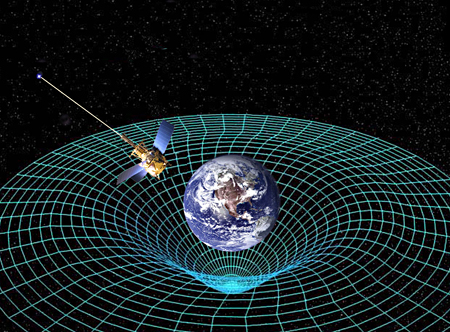
A new study by researchers from the Jet Propulsion Laboratory (JPL) shows that spacecraft that swing by the Earth are subject to a small but unexplained increase in their velocity. Is an unknown physical force at work? Or is it something far more mundane? This new mysterious phenomenon has been labeled the "Flyby Anomaly." The Flyby Anomaly is in some ways similar to that other cosmic enigma – the Pioneer Anomaly, which seems to be affecting Pioneer 10 and 11 as they speed out of the solar system. However, there is an important difference between the two -- the Flyby Anomaly affects a spacecraft's velocity, whereas in the Pioneers' case, it is their acceleration that is being affected.
Dutch Schoolteacher Discoveres a Unique and Mysterious Astronomical Object
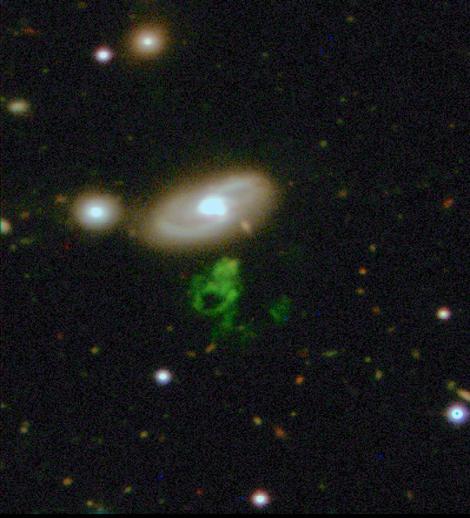
Hanny van Arkel, a primary schoolteacher from the Netherlands, has discovered a mysterious and unique astronomical object through the Galaxy Zoo Project, which allows members of the public to take part in astronomy research online. The strange green gaseous object with a hole in the center has been informally named Hanny’s "Voorwerp" after the Dutch word for "object." The object is believed to be a massive ‘light echo’ produced as light from a distant, now dim, quasar strikes the interstellar gas.
Will Pluto be Reinstated as a Planet Once Again?
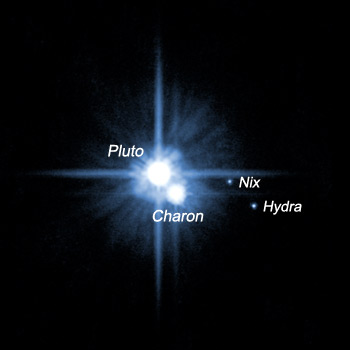
Top scientists and educators will convene at Johns Hopkins University from Aug. 14-16, 2008 to explore a basic, but controversial, question: "What is a planet?" In August 2006, 474 members of the of the International Astronomical Union's 10,000 members took part in the vote that stripped Pluto of its status as a planet. Since then, numerous astronomers have expressed concerns that the new definition of a planet is confusing. Will Pluto be reinstated as a planet once again? Stay Tuned.
Curved image chip opens new possibilities
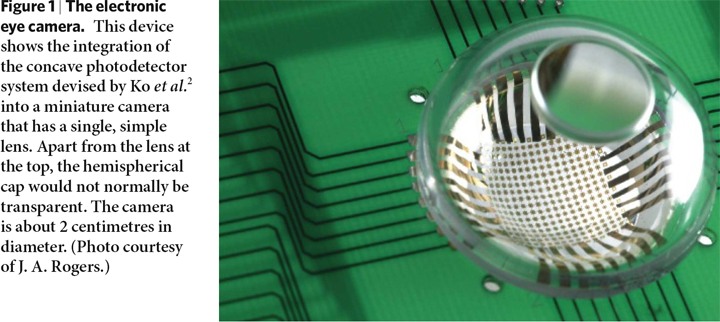
Those old film cassette astrographs may be getting a new lease on life soon if the article published in Nature this past week can yeild practical imaging chips
U of Hawaii Astronomers Find Direct Evidence of Dark Energy
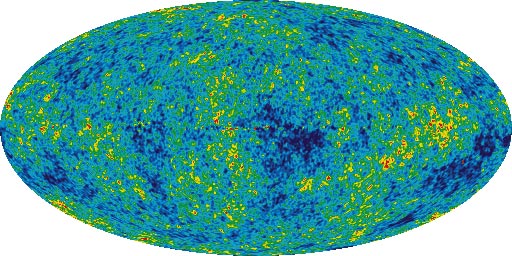
A team of astronomers at the University of Hawaii has found direct evidence for the existence of Dark Energy in Supervoids and Superclusters. Superclusters are vast regions of space, half a billion light-years across, that contain an unusually high concentration of galaxies, while supervoids are similarly sized regions with a below-average number of galaxies. They are the largest structures known in the universe. It is believed that Dark Energy works against the tendency of gravity to pull galaxies together and causes the universe’s expansion to speed up. The nature of Dark Energy (what precisely it is and why it exists) is one of the biggest puzzles of modern science. This work is the clearest detection to date of Dark Energy’s stretching effect on vast cosmic structures.
Researchers Speculate How the First Stars in the Universe Came into Existence

Our universe began with the Big Bang about 13 billion years ago. Soon after that, the gravitational effects of dark matter began to influence wayward gases. How the first stars formed from this dark matter and gas has been a question for years. Now a computer simulation offers the most detailed picture yet of how these first stars in the universe may have fired-up and come into existence.
Where have all the Baryons gone? Long time passing...
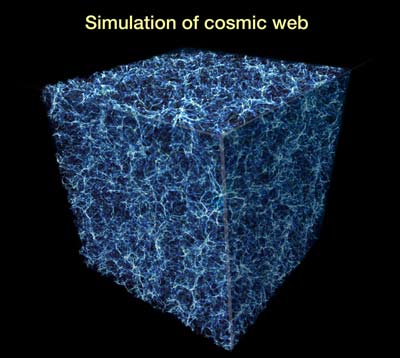
Although the universe contains billions of galaxies, only a small amount of its matter is locked up in these behemoths. Most of the universe's matter that was created during and just after the Big Bang is lost and must be found elsewhere. Now, in an extensive search of the local universe, astronomers say they have definitively found about half of the missing normal matter, called baryons, in the spaces between the galaxies.
NASA's Kepler Mission to Find Earth-sized Exo-Planets Set to Launch in February
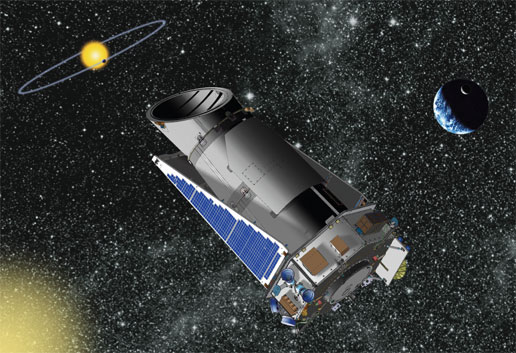
Kepler, NASA's first mission designed specifically to find Earth-size exo-planets, is scheduled to launch in February 2009. Kepler will monitor the brightness of stars to find planets that pass in front of them during the planets' orbits. During such passes or 'transits,' the planets will slightly decrease the star's brightness. Measuring this brief dimming will help scientists detect Earth-size and larger planets in or near the habitable zone, where liquid water can exist on the planet's surface.
How Does One Weigh a SuperMassive Black Hole? - Very Carefully

How do you weigh the biggest black holes in the universe? Astronomers have been seeking different, independent ways of precisely weighing the largest supermassive black holes -- those that are billions of times more massive than the sun. Until now, methods based on observing the motions of stars or of gas in a disk near such large black holes have been used. An alternative method now comes from a completely new and independent technique that astronomers at the University of California - Irvine have developed using data from NASA's Chandra X-ray Observatory.
NASA to Retire the Shuttle Fleet - Final Mission Set for 2010
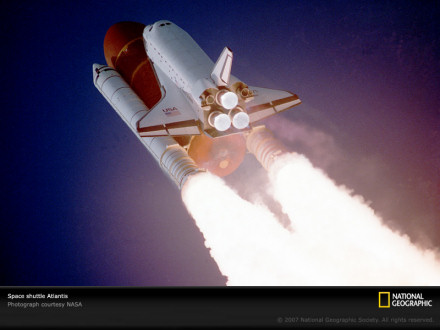
Following a detailed assessment, NASA has selected target launch dates for the remaining eight space shuttle missions in 2009 and 2010. The agency is committed to retiring the shuttle fleet as transition continues to a new family of launch vehicles, including Ares and Orion.
Planetary Nebulae Used to Determine Chemical Composition of the Early Milky Way Galaxy
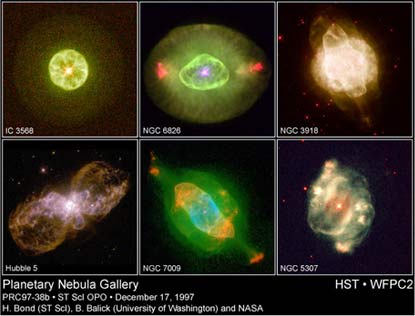
By studying the distribution of chemical elements in planetary nebulae in the Milky Way and Andromeda Galaxies, astronomers at Williams College, the University of Washington, and the University of Oklahoma are uncovering patterns of chemical enrichment that yield clues to how spiral galaxies form and how they develop. Spectral lines from the light emitted by planetary nebulae can be analyzed to determine properties such as chemical composition, temperature, and density.
Rare Double-Pulsar System Provides More Support for General Relativity
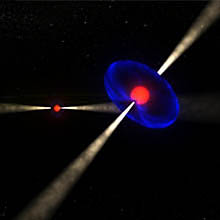
McGill University Astronomers have measured an effect, predicted by Albert Einstein's Theory of General Relativity, in the extremely strong gravity of a pair of superdense Pulsars. Essentially, the famed physicist's 93-year-old theory has passed yet another test.
100th Anniversary of the Tunguska Event - Are We Any Better Prepared Today?

It exploded over Siberia – this object from space – and leveled 2,000 square kilometers of forest, flattening pine trees like matchsticks. June 30, 2008 marked the 100th anniversary of the Tunguska event, the day in 1908 when an asteroid or comet entered Earth’s atmosphere and, in effect, fired an astronomical warning shot across our bow. The fireball that laid waste a vast swath of forest near the Podkamennaya Tunguska River in Russia was most likely exploded before it reached the ground. Such an explosion today over New York, Paris, or Beijing could level the entire city, killing millions. How prepared is Earth today to avoid disaster from the skies?
Not a Quirk But a Quark... a Quark Star that is!
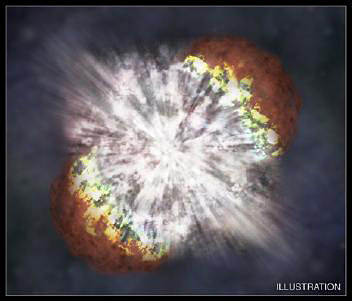
Astronomers recently announced that they have found a novel explanation for a rare type of super-luminous stellar explosion that may have produced a new type of object known as a quark star. A quark star is a hypothetical type of star composed of ultra dense quark matter. Quarks are the fundamental components of protons and neutrons, which make up the nucleus of atoms. The most dense objects known to exist today are neutron stars -- stars composed entirely of tightly packed neutrons. Quark stars would be produced when neutron stars collapse even further.
Seeing Red - A Third Red Spot Appears on Jupiter
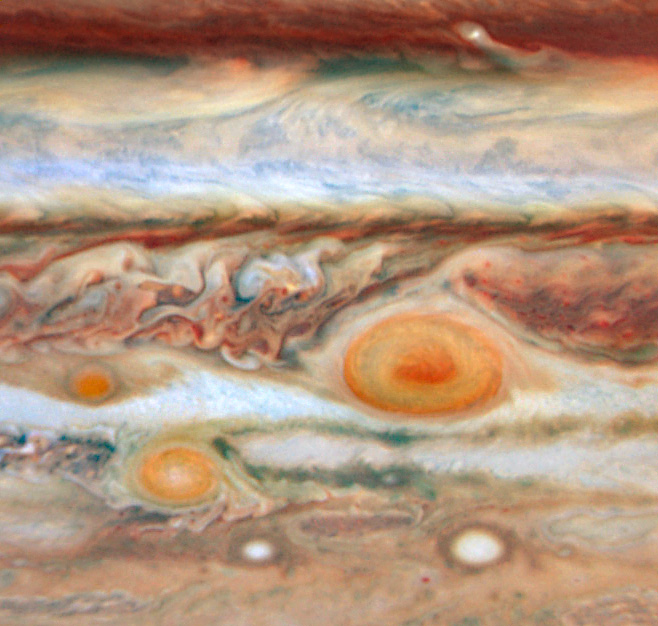
In what's beginning to look like a case of planetary measles, a third red spot has appeared alongside its cousins — the Great Red Spot and Red Spot Jr. — in the turbulent Jovian atmosphere. This third red spot, which is a fraction of the size of the two other features, lies to the west of the Great Red Spot in the same latitude band of clouds. The visible-light images were taken with Hubble's Wide Field and Planetary Camera 2.
