News
NASA Releases Free Hubble and Webb Space Telescope eBooks
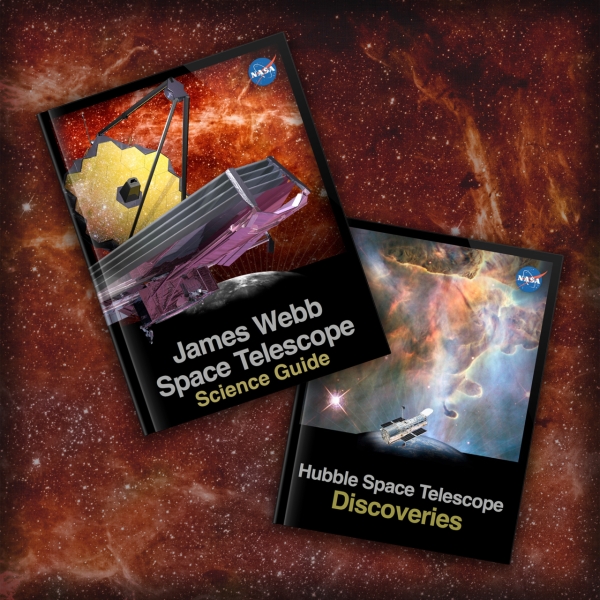
NASA's Hubble Space Telescope has been providing astounding images of the universe since April 1990 and has led to remarkable discoveries. NASA's James Webb Space Telescope is the next-generation telescope that will peer even deeper into space and unveil even more mysteries. Both of these extraordinary telescopes are now the topics of two free e-books available from NASA. The e-book "Hubble Space Telescope - Discoveries" takes the reader on a tour of some of Hubble's most significant science successes, combined with some of the telescope's technology and history. In the e-book called the "James Webb Space Telescope - Science Guide," readers learn how the Webb telescope will reveal, in much more detail, mysteries of the universe that Hubble is not able to see.
A Quantum Microscopy Breakthrough -- Dutch Researchers Image the Inside of a Hydrogen Atom

Astronomy is experiencing a golden era. The past decade alone has brought amazing discoveries that have excited people from all walks of life. Revolutionary new ground-based and space-based telescopes that enable us to peer deeper into space and time are announced almost on a monthly basis. But how about direct observations at the other end of the spectrum - the microscopic quantum level? There is exciting work going on there too. This past month, a team of scientists at the FOM Institute for Atomic and Molecular Physics (AMOLF) in Amsterdam announced the realization of a "Photoionization Microscope" that for the first time has provided a direct visualization of the orbital structure of a hydrogen atom.
ESA's Planck Reveals the Most Detailed Map Ever Created of the Cosmic Microwave Background

The most detailed map ever created of the Cosmic Microwave Background (CMB), the relic radiation from the Big Bang, was recently released by The European Space Agency (ESA). Acquired by the Planck space telescope, the map reveals some surprises that challenge the foundation of our current understanding of the Universe. For example, an asymmetry in the average temperatures on opposite hemispheres of the sky runs counter to the prediction made by the standard model that the Universe should be broadly similar in any direction we look. Also, a cold spot extends over a patch of sky that is much larger than expected. It is hoped that continued analysis of Planck data over the next few years will help shed light on this conundrum.
Thanks to Einstein astronomers can now use BEER to find new planets.
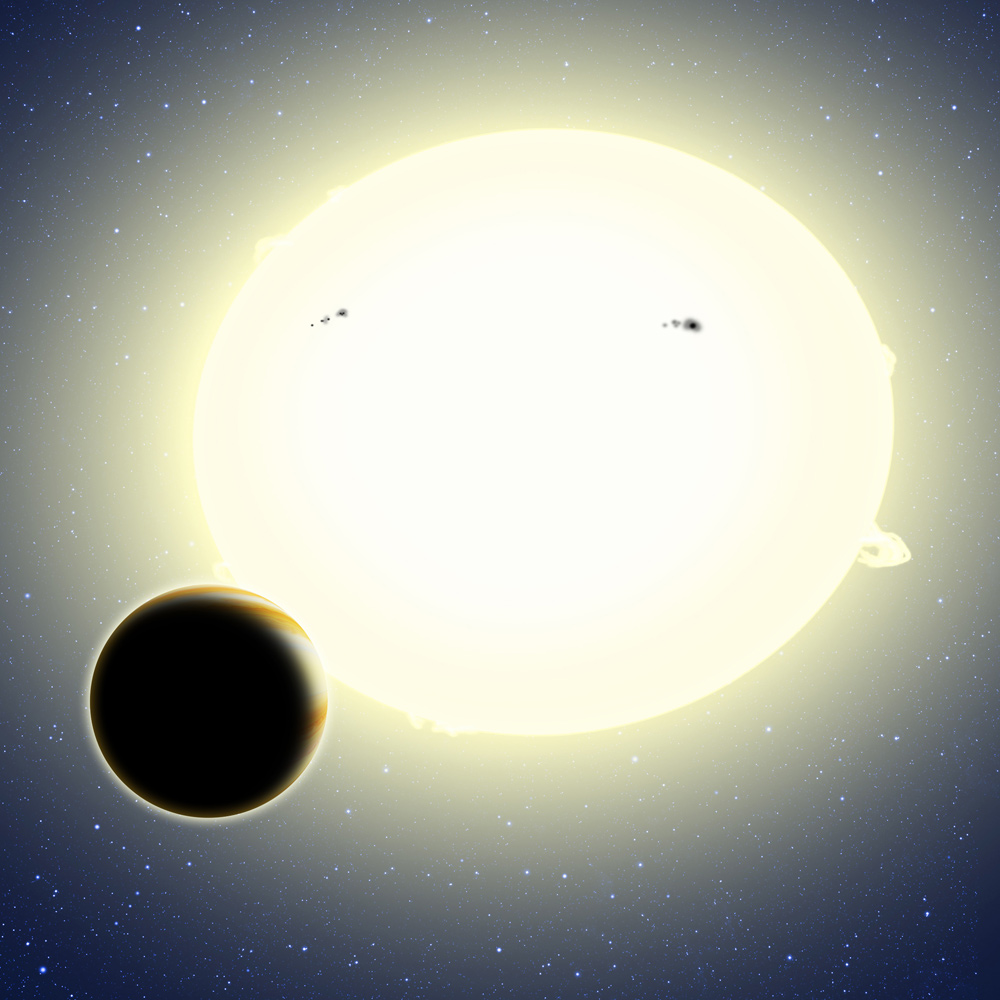
Although many of us use beer while looking at planets, not many of us use BEER to find them. Astronomers at Tel Aviv University and Harvard-Smithsonian Center for Astrophysics for the first time have discovered a new planet by using a new method called BEER (BEaming effect with Ellipsoidal and Reflection/emission modulations).
Virgin Galactic SpaceShip Two Rockets Closer to Space
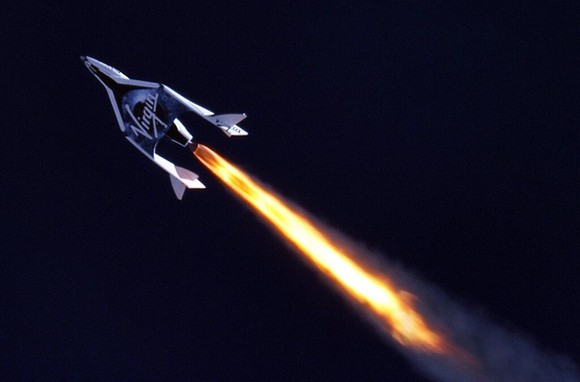
Virgin Galactic, the world's first commercial spaceline, has completed the first rocket powered flight of its space vehicle, SpaceShip Two. The test, conducted by teams from Scaled Composites and Virgin Galactic, officially marks Virgin Galactic's entrance into the final phase of vehicle testing prior to commercial service. In the coming months, the Virgin Galactic and Scaled test teams will expand the spaceship's powered flight envelope culminating in a full space flight from Spaceport America in New Mexico, which the companies anticipate will take place before the end of 2013.
Cassini Observes Meteors Colliding with Saturn's Rings
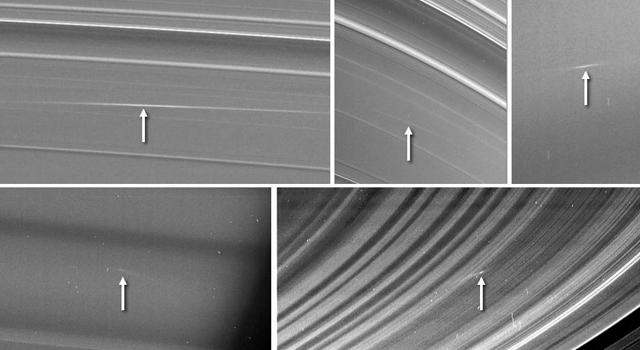
The Cassini spacecraft has provided the first direct evidence of small meteors breaking into streams of rubble and crashing into Saturn's rings. These observations make Saturn's rings the only location besides Earth, the moon, and Jupiter where scientists have been able to observe meteor impacts in real-time.
Herschel Completes Its 'Cool' Journey in Space
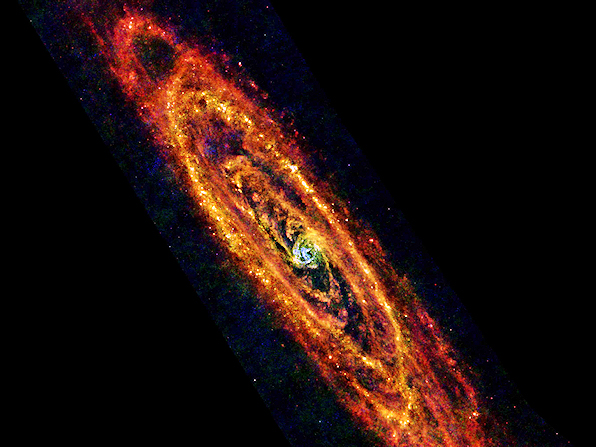
The European Space Agency mission, launched almost four years ago, revealed the universe's "coolest" secrets by observing the frigid side of planet, star and galaxy formation.
Black Hole and Red Dwarf Orbit Each Other at Dizzying Speed

ESA's XMM-Newton space telescope has helped to identify a star and a black hole that orbit each other at the dizzying rate of once every 2.4 hours, smashing the previous record. The red dwarf orbits at a speed of two million kilometers per hour, making it the fastest star ever seen in a binary system. The system was first discovered by NASA's Swift space telescope, with follow-up observations by the Japanese MAXI instrument on the International Space Station, NASA's Rossi X-ray Timing Explorer, ESA's XMM-Newton and ESO's ground-based Very Large Telescope.
Researchers Provide Most Complete Experimental Proof of Quantum Entanglement

Quantum Entanglement, a term first coined by Erwin Schrodinger in 1935, is a phenomenon where a strong correlation exists between two particles, regardless of the distance between them. For example, if two particles are entangled, a measurement on one particle simultaneously affects the other particle irrespective of the distance between the two particles. You can separate them as far as you like -- in theory these particles could be at opposite ends of the universe -- and a change in one will instantly be reflected in the other. On the trail of this odd "faster than light" property, physicists at the University of Vienna have provided the most complete experimental proof that the quantum world really does work in strange ways, in conflict with our everyday experience and intuition.
Nuclear Fusion Rocket Could Send Humans to Mars in 30 to 90 Days
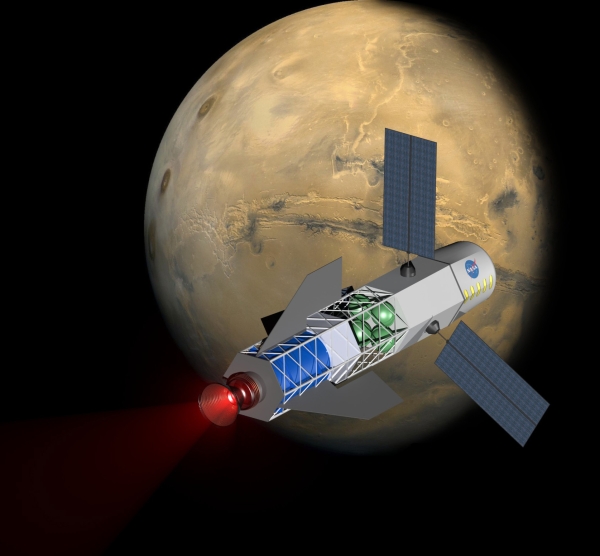
Human travel to Mars has long been the dangling carrot for the space program. Now, we could be a step closer to our nearest planetary neighbor through a unique manipulation of nuclear fusion -- the same energy that powers the sun and stars. University of Washington researchers and scientists are building components of a fusion-powered rocket that may clear many of the hurdles that block deep space travel, including long transit times, exorbitant costs, and health risks. Using current technology, a round-trip expedition to Mars would take more than four years. A rocket powered by fusion has the potential to send humans to Mars in 30 to 90 days.
ISON -- Comet of the Century? Or Just Another Dud?
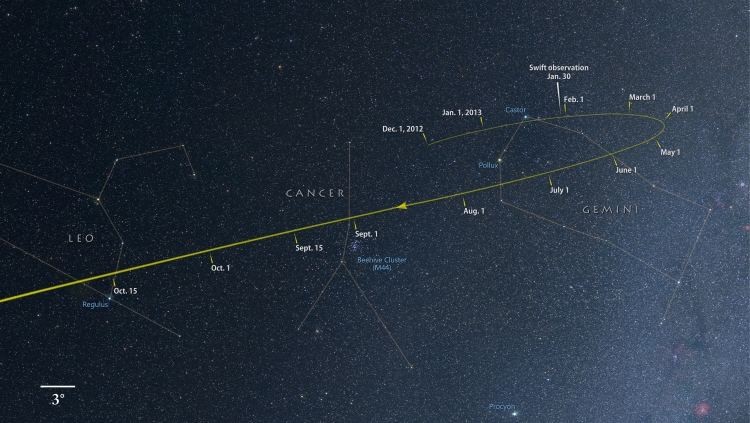
Out near the orbit of Jupiter, a faint speck of light is moving through the black of space. At first glance it doesn't look like much -- no brighter than a thousand distant stars speckling in the velvet sky behind it. Indeed, it takes a big telescope to make out that it is a comet. But what a comet it could turn out to be... Later this year, "Comet ISON" could blossom into a striking naked eye object visible even in broad daylight. Whether we'll look back on ISON as the "Comet of the Century" or as an over-hyped cosmic dud remains to be seen. But astronomers are planning to learn the most they can about this unusual visitor no matter what happens.
NASA top climate scientist James Hansen to retire from Goddard Institute and sue the government

NASA's James Hansen, director of the Goddard Institute for Space Studies and a controversial and highly vocal voice of alarm about the planet's changing climate, will retire as the director of the space institute, NASA announced Tuesday -- and plans to immediately sue his former employer.
Astronomer's Conundrum -- Can the Methuselah Star be Older than the Universe?

A team of astronomers using NASA's Hubble Space Telescope has taken an important step closer to finding the birth certificate of a star that's been around for a very long time. Estimates from observations dating back to 2000 placed the star's age at 16 billion years. This figure, if correct, would make it older than the universe's calculated age of about 13.8 billion years -- an obvious dilemma for cosmologists. The "Methuselah Star" has been known about for more than a century because of its fast proper motion across the sky. The high rate of speed is evidence that the star is simply a visitor to our stellar neighborhood. The latest measurements indicate that the star is 14.5 billion years (plus or minus 0.8 billion years), which still has astronomers scratching their heads. But at least that age is more in line with the estimated age of the universe.
Evidence that Comets Could Have Seeded Life on Earth

It's among the most fundamental of questions: What are the origins of life on Earth? A new experiment simulating conditions in deep space reveals that the complex building blocks of life could have been created on icy interplanetary dust and then carried to Earth, jump-starting life here. Chemists from the University of California - Berkeley and the University of Hawaii - Manoa showed that conditions in space are capable of creating complex dipeptides – linked pairs of amino acids – that are essential building blocks shared by all living things. The discovery opens the door to the possibility that these molecules were brought to Earth aboard comets or meteorites, catalyzing the formation of the proteins, enzymes, and sugars that are necessary for life.
Supermassive Black Hole Spins at Nearly the Speed of Light

Imagine a sphere more than 2 million miles across, spinning so fast that its surface is traveling at nearly the speed of light. Such an object exists -- the Supermassive Black Hole at the center of the spiral galaxy NGC 1365. Astronomers measured its jaw-dropping spin rate using new data from NASA's NuSTAR and the European Space Agency's XMM-Newton X-ray satellites.
Funding Member
