News
SpaceX Shows-Off Grasshopper -- A New Type of Hovering Rocket

On Thursday, March 7, 2013, SpaceX's Grasshopper rose 24 stories or 80.1 meters (262.8 feet), hovered for approximately 34 seconds and landed safely using closed loop thrust vector and throttle control. Reminiscent of hovering rocket ships from classic 1950s SciFi movies, Grasshopper touched down with its most accurate precision thus far on the center-most part of the launch pad. Grasshopper is the centerpiece of SpaceX's efforts to achieve one of its key goals -- to develop fully reusable rockets -- a feat that will transform space exploration by radically reducing its cost.
Lowell Observatory Looks to the Public for Help in Restoring the World-Famous 24 Inch Clark Refractor
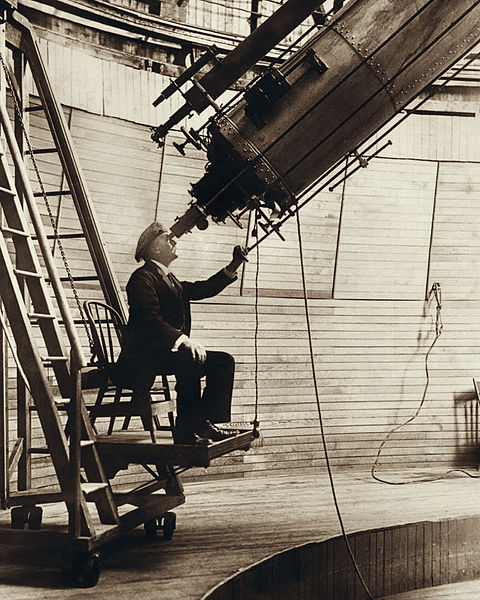
In 1895, Lowell Observatory founder Percival Lowell commissioned the Alvan Clark and Sons firm of Cambridgeport, Massachusetts to build a state-of-the-art 24 inch refracting telescope. Percival Lowell initially used the telescope to further his legendary theories about intelligent life on Mars, research that brought worldwide attention to Lowell Observatory. In the 1960s, a team of scientists and artists used the Clark Telescope to create detailed maps of the moon in support of America's manned voyages to the moon. After 117 years of service, the massive Clark Telescope needs an overhaul so it can continue to be the centerpiece of the Lowell Observatory public program for the next century. Raising $257,000 will enable improvements that are necessary to keep the telescope in operation. The observatory is looking to the public for help.
Curiosity Rover Finds Conditions Once Suited for Ancient Life on Mars

An analysis of a rock sample collected by NASA's Curiosity rover shows ancient Mars could have supported living microbes. Scientists identified sulfur, nitrogen, hydrogen, oxygen, phosphorus, and carbon (some of the key chemical ingredients for life) in the powder Curiosity drilled out of a sedimentary rock near an ancient stream bed in Gale Crater on the Red Planet last month. Scientists were surprised to find a mixture of oxidized, less-oxidized, and even non-oxidized chemicals, providing an energy gradient of the sort many microbes on Earth exploit to live.
World's Most Advanced Mirror Completed for the Giant Magellan Telescope
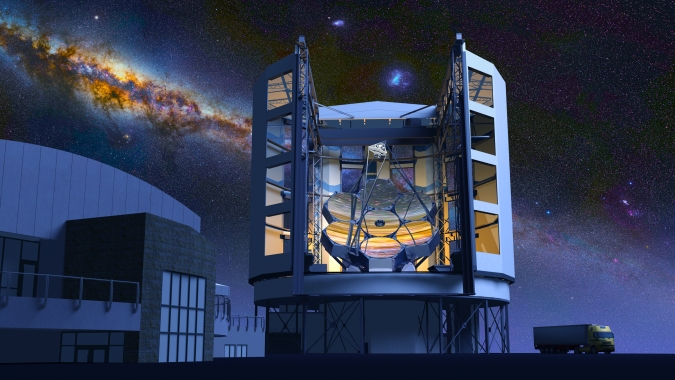
The first mirror for the Giant Magellan Telescope (GMT) has been completed. This 8.4-meter (27.5-foot) mirror is the most challenging large astronomical mirror ever made. Scheduled to become operational in the next decade, GMT will be the first in a new generation of giant telescopes to explore the nature of dark matter and dark energy, and glimpse the formation and evolution of extrasolar planets, stars, galaxies, and black holes. The GMT will peer more deeply into the universe's hidden history than humans have ever attempted. The instrument's combined mirrors will be sensitive enough to detect a candle on the moon, or to see the face on a dime 200 miles away.
A Possible Naked-eye Comet in March
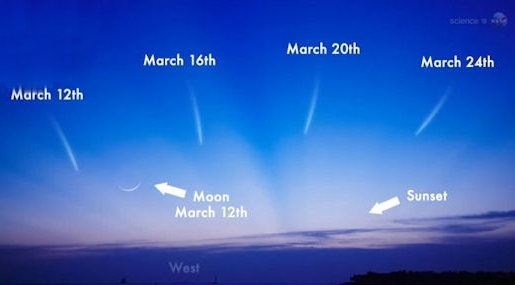
Feb. 6, 2013: Far beyond the orbits of Neptune and Pluto, where the sun is a pinprick of light not much brighter than other stars, a vast swarm of icy bodies circles the solar system. Astronomers call it the "Oort Cloud," and it is the source of some of history's finest comets. One of them could be heading our way now.
New Evidence that Asteroid Impact Played a Major Role in Dinosaur Extinctions
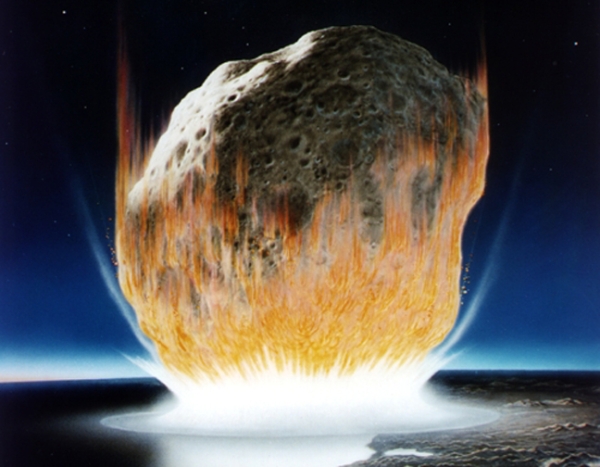
The demise of the dinosaurs is the world's ultimate who-dunit. Was it a comet or asteroid impact? Volcanic eruptions? Climate change? All of the above? None of the above? In an attempt to resolve the issue, scientists have now determined the most precise dates yet for the dinosaur extinction 66 million years ago and for the well-known Chicxulub impact that occurred around the same time. The dates are so close, the researchers say, that they now believe the asteroid, if not wholly responsible for the global extinction, at least dealt the dinosaurs their death blow. It is now believed that the dramatic climate variation over the previous million years, including a sustained series of volcanic eruptions in India that produced the extensive Deccan Traps and long cold snaps amidst a general Cretaceous hothouse environment, probably brought many creatures to the brink of extinction. In the end, the impact kicked them over the edge.
When a Planet Behaves Like a Comet

ESA's Venus Express has made unique observations of Venus during a period of reduced solar wind pressure, discovering that the planet's ionosphere balloons out like a comet's tail on its night-side. For Earth, which has a strong magnetic field, the ionosphere is relatively stable under a range of solar wind conditions. By comparison, Venus does not have its own internal magnetic field and relies instead on interactions with the solar wind to shape its ionosphere. A similar effect is also expected to occur around Mars, the other non-magnetized planet in our inner Solar System.
FBI probe of defense tech allegedly leaked from NASA stonewalled, sources say

A four-year FBI investigation into the transfer of classified weapons technology to China and other countries from NASA’s Ames Research Center is being stonewalled by government officials, sources tell FoxNews.com.
Cast Your Vote to Name Pluto's Two Newest Moons
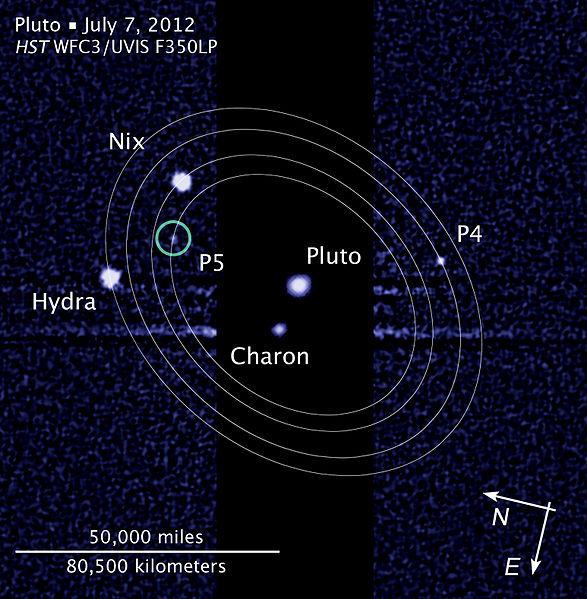
Images taken by the Hubble Space Telescope in 2011 and 2012 revealed two previously unknown moons of Pluto. So far, the moons are referred to as P4 and P5, but the time has come to give them permanent names. By tradition, the names of Pluto's moons come from Greek and Roman mythology and are related to the ancient tales about Hades and the Underworld. The P4/P5 Discovery Team will be proposing names for the two new moons to the International Astronomical Union (IAU), and is asking for your help in making the selections. An online poll has been set-up by the SETI Institute and Dr. Mark Showalter on behalf of the P4/P5 Discovery Team and they are requesting your input. There are twenty one candidate names, so pick your favorites on the online ballot. The top five choices so far are Vulcan, Cerberus, Styx, Persephone, and Orpheus. Voting ends at noon EST on Monday February 25, 2013.
NASA's OSIRIS-REx Spacecraft Targets Near-Earth Asteroid

According to NASA's Near Earth Objects (NEO) program, there are more than 1,300 Potentially Hazardous Asteroids(PHAs) with at least a very small chance of impacting us someday. Anything over 150 yards across that appears to be on a potential collision course with Earth at some time in the future is very worrisome. But the main difficulty in making predictions is in obtaining sufficient observations to determine the orbits of the PHAs. Scheduled for launch in 2016, NASA's OSIRIS-REx mission will make precise measurements of one potentially dangerous PHA called 1999 RQ36. OSIRIS-REx will arrive at RQ36 in 2018 and orbit the asteroid until 2021, all the while getting a much better view of subtle changes in the asteroid's orbit. As an added bonus, the spacecraft will collect a sample and return it to Earth.
Amateurs team with Hubble to produce extraordinary image
Working with astronomical image processors at the Space Telescope Science Institute in Baltimore, Md., renowned astrophotographer Robert Gendler has taken science data from the Hubble Space Telescope (HST) archive and combined it with his own ground-based observations to assemble a photo illustration of the magnificent spiral galaxy M106.
Talk About a Close Shave -- Asteroid to Pass Very Close to the Earth

Talk about a close shave. On February 15, 2013, an asteroid about half the size of a football field will fly past Earth only 17,200 miles above our planet's surface. This is so close that the asteroid will actually pass inside the ring of geosynchronous satellites, which is located about 35,800 kilometers (22,200 miles) above the equator. There's no danger of a collision, but the space rock, designated 2012 DA14, has NASA's attention.
At Least One in Six Stars Has an Earth-sized Planet
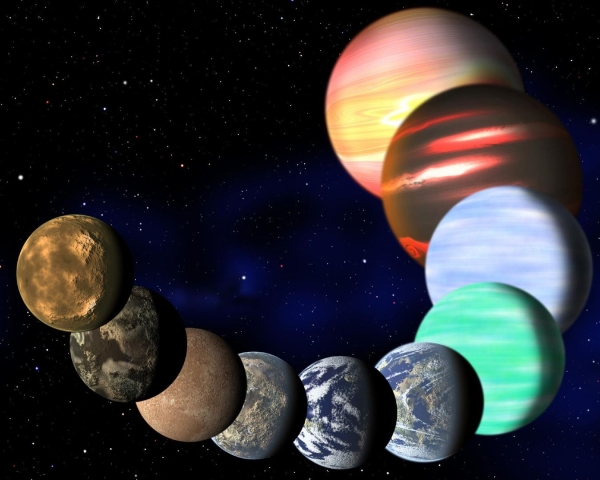
Using NASA's Kepler spacecraft, astronomers are beginning to find Earth-sized planets orbiting distant stars. Kepler detects planetary candidates using the transit method, watching for a planet to cross a star and create a mini-eclipse that dims the star slightly. A new analysis of Kepler data shows that about 17 percent of stars have an Earth-sized planet in orbit. Since the Milky Way has about 100 billion stars, there are at least 17 billion Earth-sized worlds out there.
Large Quasar Group is the Largest Structure in the Universe to Date

Quasars are galaxies from the early days of the universe that undergo brief periods of extremely high brightness, making them visible across huge distances. Since 1982 it has been know that quasars tend to group together in clumps or structures of surprisingly large size, forming Large Quasar Groups or LQGs. A team of astronomers at the University of Central Lancashire in the UK has announced the discovery of a 4 billion light year-wide Large Quasar Group. This is significant because the LQG is so large that it puts Einstein's Cosmological Principle into question.
ALMA Shows How Young Stars and Planets Grow Simultaneously
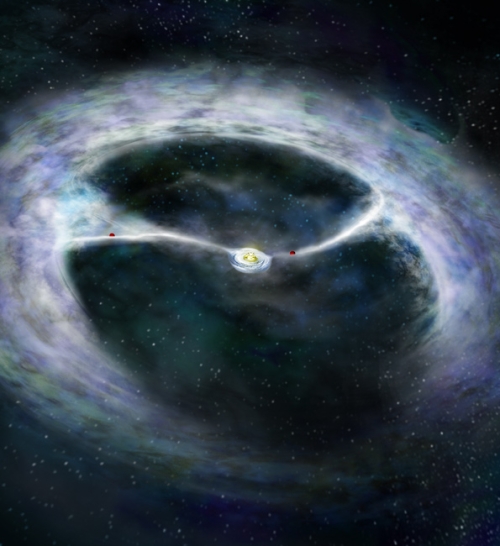
Astronomers have used the ALMA telescope in Chile to get their first glimpse of a fascinating stage of star formation in which planets forming around a young star are helping the star itself continue to grow, resolving a longstanding mystery. The young system, about 450 light-years from Earth, is revealing its complex gravitational dance to the ever-sharpening vision of the Atacama Large Millimeter/submillimeter Array (ALMA).
Funding Member
